
Sudan drone strike kills over 150 at Abyei Market

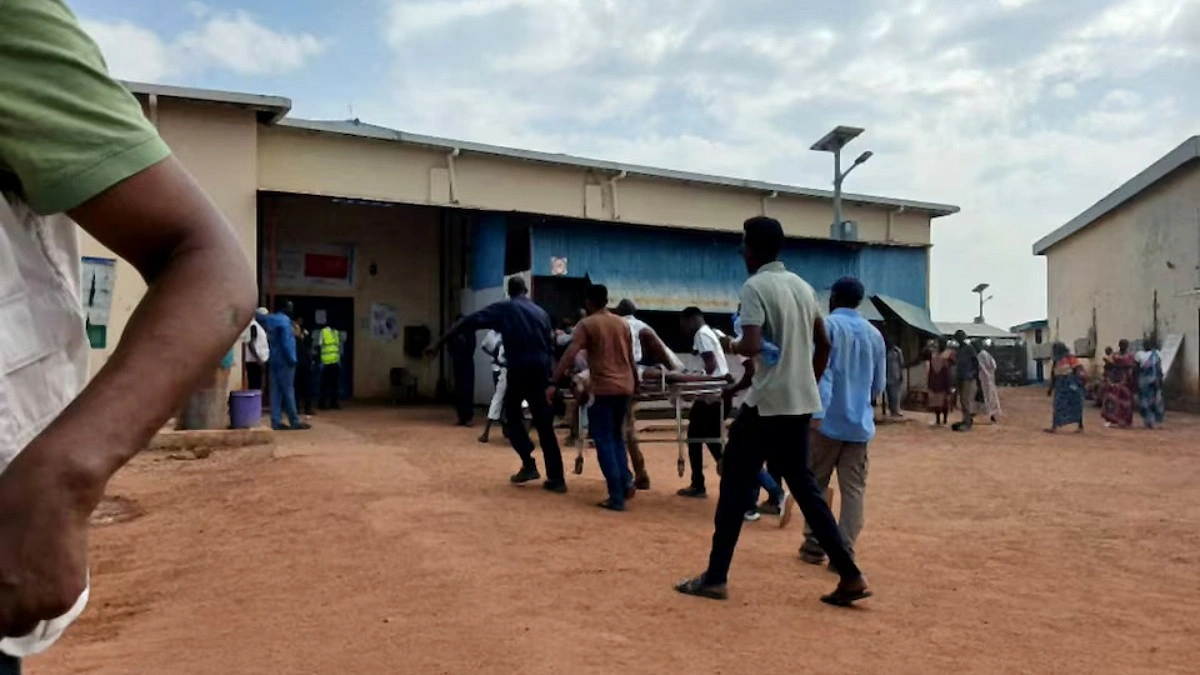
Photo: REUTERS
South Sudanese officials reported on Tuesday that drone strikes conducted by Sudan’s military hit a market in the disputed Abyei region, killing more than 150 people during one of the deadliest weeks in a conflict that has spilled across Sudan’s borders.
The attack pushed the death toll from strikes in recent days past 250, highlighting the lethality of aerial bombardments in the ongoing war.
The conflict erupted in April 2023 between the Sudanese Armed Forces (SAF) and the paramilitary Rapid Support Forces (RSF), sparking a severe humanitarian crisis while pulling in foreign powers and local militias.
Speaking to Reuters, Yohana Akol Ngor, the caretaker minister of information in Abyei, confirmed that the fatality count from Monday’s assault on the Abyei market jumped from 73 to 153, warning that the number will likely rise further.
Ngor said, “The fire is still burning. So the recovery process of the dead ones is still continuing. The situation is terrible,” while noting that flames burned some victims’ bodies to ashes.
A video filmed at the location on Tuesday and authenticated by Reuters depicted the charred, mangled remnants of buildings and vehicles, with flames continuing to billow from one structure as residents surveyed the destruction.
Although Ngor held Sudan’s army responsible for the strike without offering evidence, a spokesperson for Sudan’s armed forces did not immediately reply to a comment request.
Three diplomatic sources, an aid worker, and a conflict expert informed Reuters that the air attack struck a fuel depot inside the market. According to the diplomatic sources, the RSF previously utilized the depot to resupply its forces, though an RSF spokesperson did not immediately respond to requests for comment.
Following South Sudan’s declaration of independence from Sudan in 2011, both nations have claimed ownership over oil-rich Abyei, which they administer jointly. Abyei borders Sudan’s Kordofan region, an epicenter of intense fighting in the war.
While officials in Sudan’s military-led government told Reuters that RSF fighters operate in parts of Abyei, Ngor denied any RSF presence in the territory, claims that Reuters could not independently verify.
Back in May, the United Nations Interim Security Force for Abyei (UNISFA) cautioned that the presence of RSF forces in Abyei heightened regional instability, adding that ongoing delays in determining the disputed territory’s final status endangered both civilians and UNISFA personnel.
Condemning the series of drone strikes across Abyei and surrounding areas, UN spokesperson Stephane Dujarric told reporters in New York, “We remain alarmed by the relentless drone attacks across Sudan, as well as the damage they are causing to critical infrastructure - these attacks are taking a devastating toll on communities already struggling with the consequences of more than three years of conflict.”
Ngor explained that raging fires caused by the strikes severely hindered emergency teams attempting to recover bodies. He added that Monday’s bombardment displaced around 8,000 people.
Late on Monday, South Sudan’s foreign ministry confirmed that drones targeted a market situated north of Abyei town, though it refrained from providing specific civilian casualty figures. The ministry then summoned the Sudanese ambassador to register an official protest.
Describing the scene, an eyewitness recounted hearing five massive explosions that instantly set the fuel market ablaze. The witness, who requested anonymity over safety concerns, recounted, “People started evacuating the casualties. They had injuries from shrapnel on their stomach and legs ... In one site, I saw 28 bodies that were burnt.”
The witness emphasized seeing no uniformed RSF fighters or other combatants in the market, which also distributes basic consumer goods including sugar, flour, and biscuits for transport into Sudan.
Recently, both Sudanese armed forces and the RSF intensified drone strikes, targeting RSF-controlled Nyala alongside the army-controlled Khartoum airport. On Sunday, drone strikes in West Kordofan state - an area under RSF control - killed roughly 84 people and injured 65 others, according to the local Emergency Response Room.
On Monday, repeated drone bombardments hitting the SAF-controlled Khartoum airport claimed the lives of four children. Local volunteers reported that a Friday assault on a market in the RSF stronghold of Nyala killed 23 people and wounded 44.
Meanwhile, Chadian authorities accused Sudan’s military of executing drone strikes within Chad’s borders, a territory that UN experts identify as a regular transit hub for RSF supply lines. In late August, Sudan’s foreign ministry maintained that its armed forces acted solely to safeguard national security.
A local rights group reported that an October 10 airstrike near Sudan’s border with Egypt killed more than 70 artisanal miners.
While Abyei frequently experiences violent clashes between rival ethnic groups or armed militias, this strike represents the deadliest assault in years to hit the region, where medical resources and healthcare facilities remain extremely scarce.
Although South Sudan’s government insists it maintains neutrality in its neighbor’s war, diplomats and experts contend that Abyei serves as a critical transit node for RSF logistics, particularly fuel resupply.
At the nearby Ameth Bek Hospital, the medical charity Medecins Sans Frontieres (MSF) reported treating more than 20 wounded patients, several suffering from severe burn injuries. Christian Lindauer, MSF medical activities manager at the facility, said, “We are providing surgical services and wound dressing, along with other emergency care.”
Official social media photos published by MSF showed bandaged victims lying on the hospital floor while receiving emergency medical care.
Source: Reuters (adapted)
