Love for Seba Prokashoni

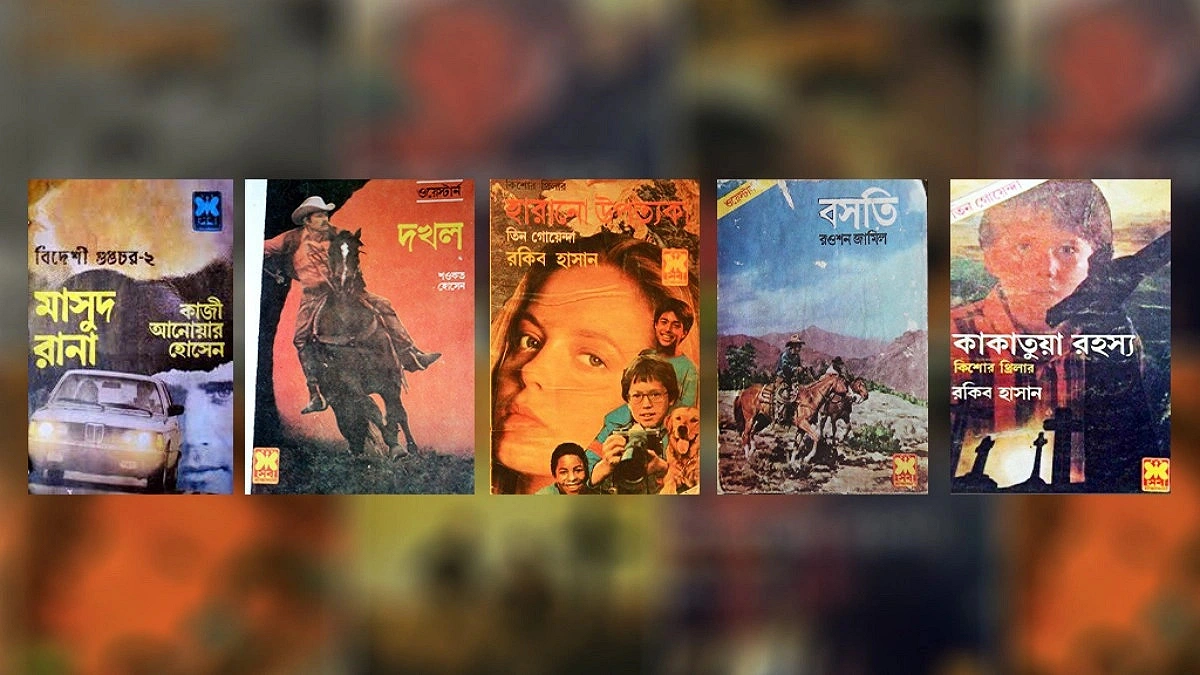
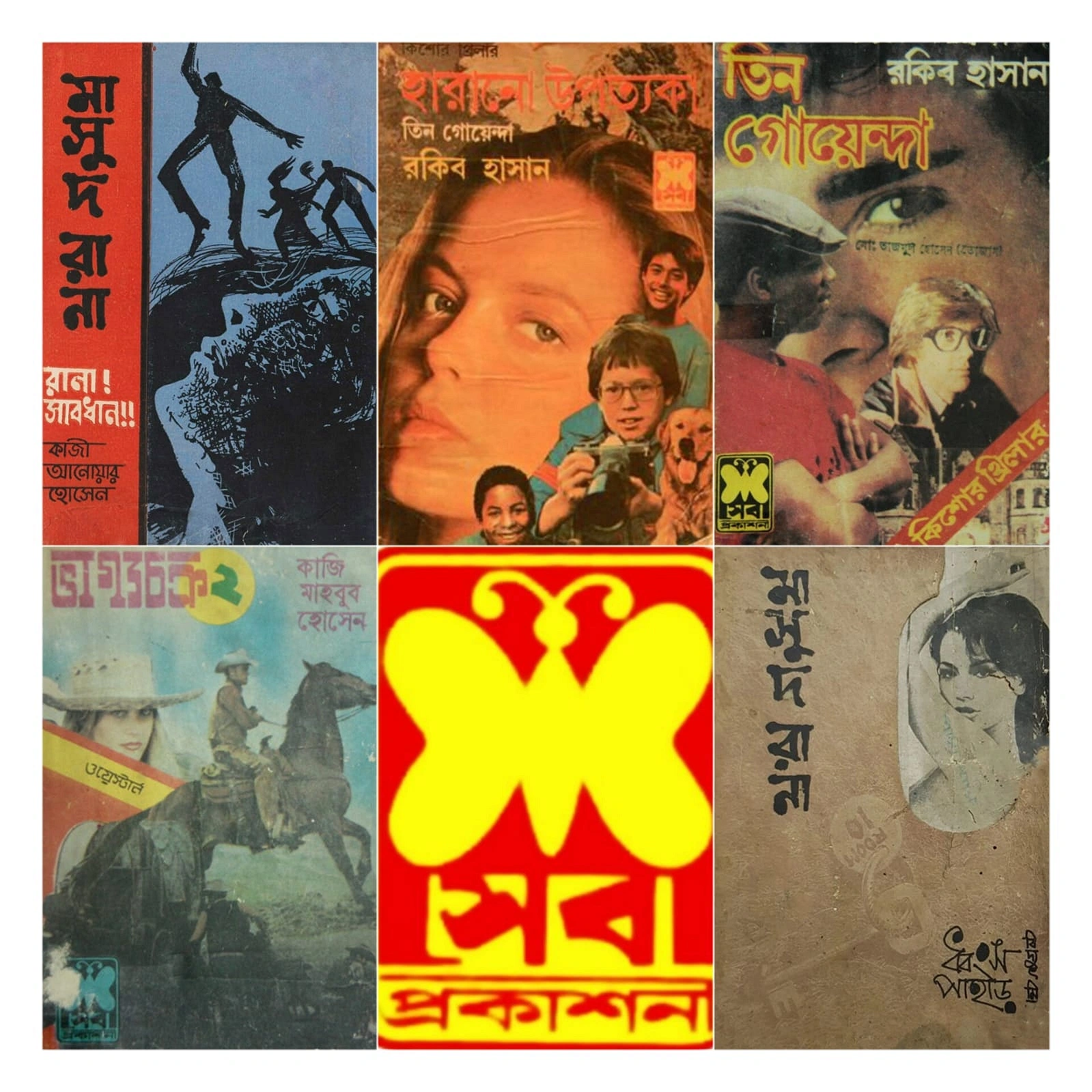
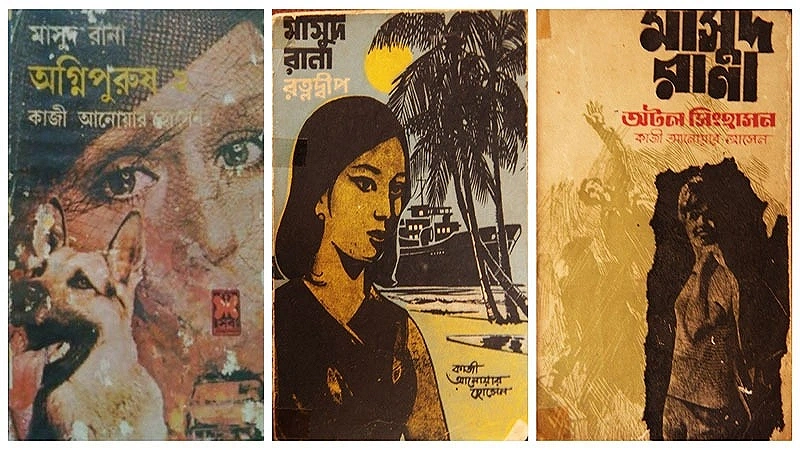
Some of the Seba Prokashoni Books. Photo: Collected.
On a sweet winter morning, a sliver of sunlight slips through the window and falls across my eyes, my face, and the open book in my hands. Lying comfortably in a tiny 7-by-6-foot room next to the veranda at my grandfather’s house, I cross a boundary and lose myself in another world. Endless mountain ranges touching the sky, vast desolate deserts, dust-covered roads of border towns, the clinking of glasses in a saloon, the curses of a rough-looking cowboy suddenly pulling his hat down over his head, the sudden gunfire between two pistol-wielders, or a horse-drawn wagon entering a town—scenes that soon became familiar.
Truly, it was a time to be immersed in Westerns. Seba gave me—and us—the chance to taste that wonder. I no longer remember exactly which Western first led me into that wild frontier world. I was probably in Class Five. I’m certain it began with one of the books from my grandfather’s book cabinet, which I’ve described in an earlier piece. Because at our own home, in my father’s collection, there were no Westerns at all.
But my real fascination with Westerns probably began when I was in Class Six. At the time, we lived in Brahmanbaria. I would drop by the Solaimania Library in our alley in search of Westerns. I’ll write in detail about that library in a piece on Tin Goyenda someday. Among the books I bought from there, I still remember the names Epit-Opiṭ and Rider.
Near our house lived Noman bhai and his family. Two huge trunks in their home were crammed with Seba books—Westerns, Henry Rider Haggard, and more. The problem was, Noman bhai was extremely reluctant to lend books. So sometimes I would go over when he wasn’t home. Pushing open the gate, crossing the small courtyard, if I found any one of his other siblings—Jilani bhai, or Kalyani or Victoria apa—it was mission accomplished. They would take me into that half-dark room where, once the lock was opened with a key, the space would fill with the strange, intoxicating scent of books. I would breathe it in deeply and then dive into the trunk in search of a book I liked.
There’s another sad memory tied to Noman bhai and Westerns. We used to come to Dhaka quite often back then. On the return journey, it was almost mandatory to buy two or four books from the Railway Book Stall, Camlet, or Srijoni. By sheer luck, once I found Bathan-1.
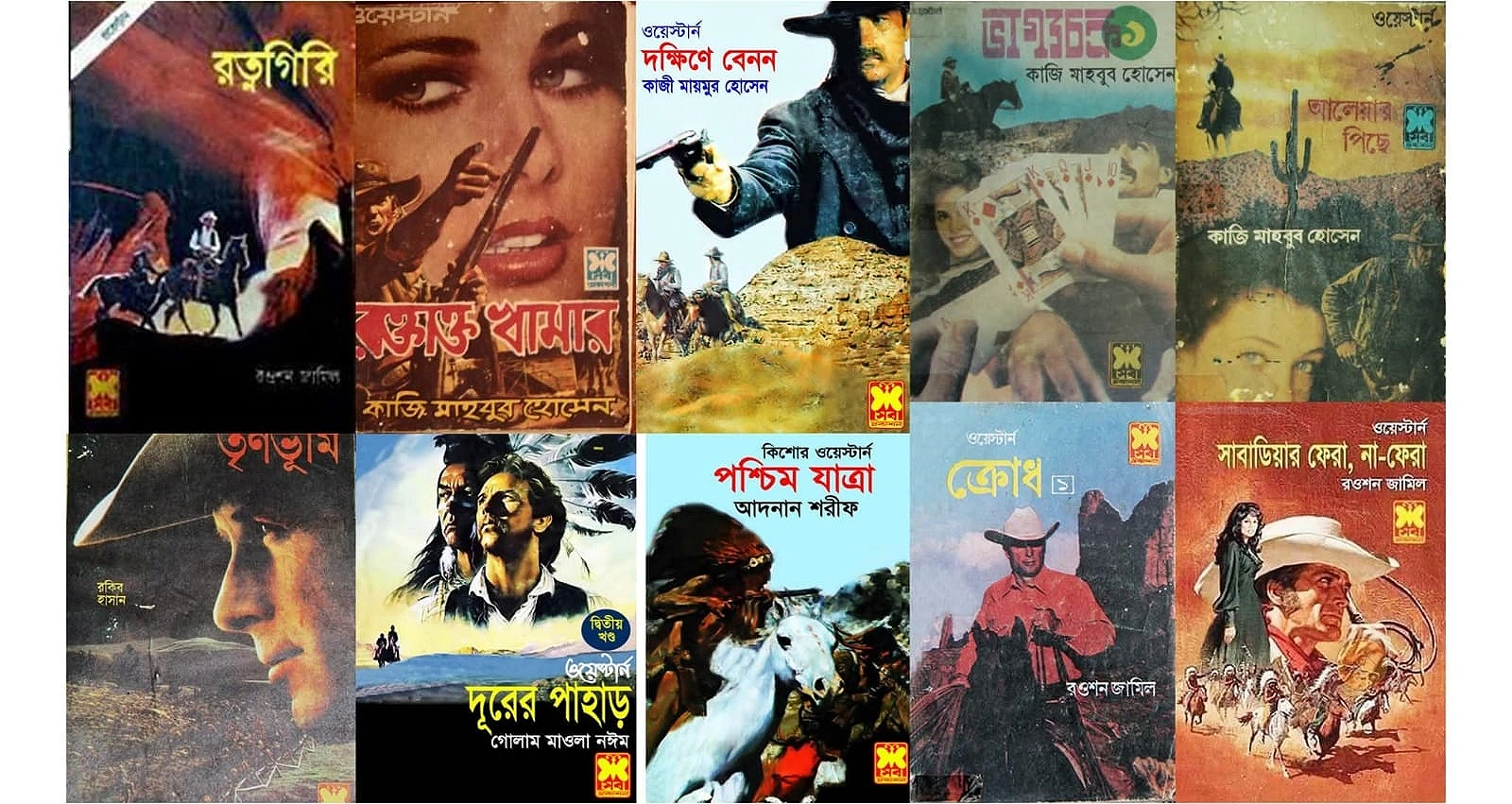
Bathan by Juan Cortés Sabadier was one of Seba’s finest Westerns. So I bought that single volume. Back in Brahmanbaria, I managed—through Victoria or Kalyani apa—to get hold of Bathan-2 and read it as well. Then one day, Noman bhai asked me for Bathan-1. He said his copy wasn’t within reach and he had a strong urge to read it. I gave it to him—and never got that book back. Later I found out that Bathan-1 was not in Noman bhai’s collection at all!
Another Memory Comes Flooding Back
Another memory comes vividly to mind. It was the month of Ramadan. I was probably in Class Seven. Fatigue was an accepted excuse then, and we were given plenty of leeway with studies. I had already finished reading the Westerns from my own small collection, and for some reason it wasn’t possible to borrow books from Noman bhai’s stash. From our house in Datyara, Alal bhai’s place was about a fifteen-minute walk. Despite fasting, I would walk there under the harsh midday sun. Alal bhai had a few Westerns. I’d bring one back home and, with a hollow, hungry stomach, lose myself once again in that long-gone Wild America. How strangely joyful reading Westerns felt in those days. Among the books I read during that phase, one I still remember was Muktapurush.
Why did I become such a devoted fan of Westerns? I’ve asked myself that question many times. The answer I’ve found is this: at that boyhood–adolescent age, discovering myself in a completely different environment and landscape; the extraordinary courage of the heroes; the gunfights of outlaws; the astonishing lives of cowboys riding on horseback; vast ranches; untamed nature; marshals and sheriffs; tension at every turn—along with a touch of romance. Taken together, they utterly captivated me. And even now, in this half-old age, Westerns still draw me in just as strongly.
I collected the largest number of Westerns after passing SSC and getting admitted to Dhaka City College. Newly acquainted with Nilkhet, I bought so many books from there—Sanghat, Rupantor, Bhagyachakra, Ratnagiri, Pataki, and countless others. New books from various shops were added to my collection as well. This time, I finally managed to bring both volumes of Bathan into my own bookcase. I also claimed Buno Pashchim and Western Volume-1 from my grandfather’s collection. That volume was one of the books my grandfather had bought himself, walking all the way to Seba whenever he came to Dhaka.
If I try to name my favorite Western characters, I fall into real confusion. Which one should I leave out? Tom Preston of Buno Pashchim, Harry Carter of Ferar, Erfan Jassap from Alayer Pichhe (several books were later written about Erfan, but it was Alayer Pichhe that secured his place in my heart), Sabadia of Bathan–Chhayashatru, Dan of Bhagyachakra, Gordon Fables of Rupantor, Orin–Angel–Noel Osman, Rock Bannon—so many beloved heroes still live vividly within me.
How could I forget Mustang Williams, Tom Preston’s assistant, or Phobian from Epit-Opit, the good man hiding behind the mask of a villain? Nor is there any shortage of favorite heroines—Raka West, Belinda, Nora, Drusilla… I reached all these beloved characters thanks to Seba Prokashoni and the contributions of Kazi Mahbub Hossain, Rowshan Jamil, and Shawkat Hossain.
Two
Let me return once more to my grandfather’s house. One of my dearest childhood memories is lying down in the north room or the corner room of the west wing at my grandfather’s place, reading storybooks. Back then, villages had not yet fully taken on an urban character. The north room was entirely tin-roofed, and the west wing also had a tin roof. During the day, sunlight filtering through the edges of drawn curtains or slipping in through cracks and holes in the tin made reading a pleasure. My grandfather’s cupboard was crammed with piles of books. There were some by Indian authors, but Seba novels dominated. My maternal and paternal cousins were equally drawn to that treasure trove.
There Were Almost All the Books of the Kuasha Series There
Almost all the books from the Kuasha series were there. There were plenty of Westerns and Masud Rana books as well. Since I wasn’t initially allowed to read Masud Rana, all my attention was focused on Kuasha and Westerns. While reading Westerns, I would effortlessly drift into the Wild West; while reading Kuasha, I would lose myself on islands of unknown cannibals, in the jungles of Africa, or even on alien planets. I became acquainted with so many kinds of characters. Sometimes I myself would enter the forest as Western heroes like Tom Preston or Erfan Jessap; at other times, I became Kuasha himself, or the seasoned detective Shahid Khan.
Once, after going to my grandfather’s house, I realized that I had finished reading all the Westerns and Kuasha books there. Around that time, my younger uncle began carefully selecting Masud Rana books that were suitable for me. I thoroughly enjoyed books like Leningrad and Ambush—such “good, decent” books! When those few were done, my uncle would fold certain pages of other Masud Rana books (the ones with a bit too much “adult content”). Those folded pages were strictly off-limits for me. My cousins still refuse to believe that I truly didn’t read those pages back then!
Some of the books that swept us into this ocean of mystery and adventure were added later, when my uncles began staying in Dhaka or Chattogram for college or university. Whenever my grandfather came to Dhaka, he would sometimes wander off on foot to Seba Prokashoni and return with piles of books.
There is a remarkable story involving these books and my grandfather. The Liberation War had begun. Pakistani forces started approaching the Devnagar area of Madhabpur in Habiganj, where my grandfather’s house was located. The Indian border wasn’t very far from their village. As the situation worsened, it was finally decided that most of the family members—including the women—would take shelter across the border at a friend’s house.
As they were preparing to leave, everyone was astonished to discover that although my grandfather left behind all the valuable household belongings, he packed all his storybooks into a trunk and took it with him. No one objected. His children knew very well that once he had chosen to take his beloved books, there was no way he would leave them behind.
That trunk contained Kuasha, Masud Rana, Rahasya magazine, and many Seba novels—in fact, a large portion of the books published by Seba before independence. It also held novels by renowned Indian authors. Interestingly, after the war ended, my grandfather himself dragged that same trunk back home.
Now let me say a few words about Kuasha. Though considered a major criminal by the police, Kuasha—a brilliant scientist who naturally helped the poor—won over my young heart completely. It felt wonderful to unravel gripping mysteries with him at times, and at other times to set out on adventures to the most inaccessible places. Alongside Kuasha, Shahid, Kamal, Mohua, Lina, D’Costa, Mannan, Kalim, Simpson, and even Kuasha’s arch-enemy Nur Box all became dear to me.
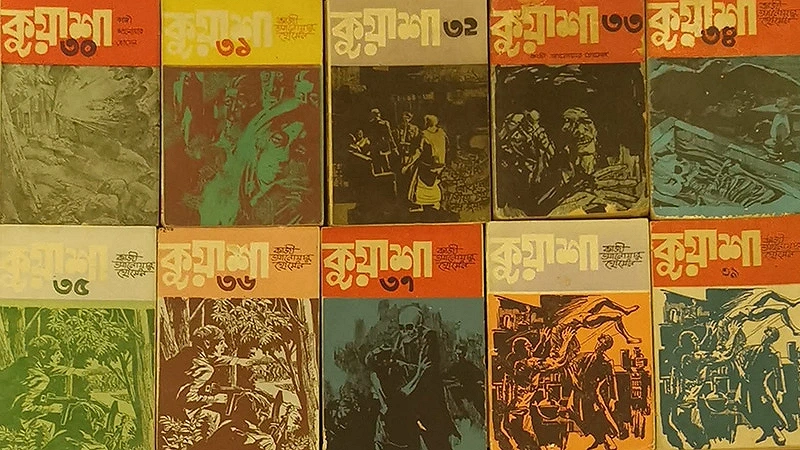
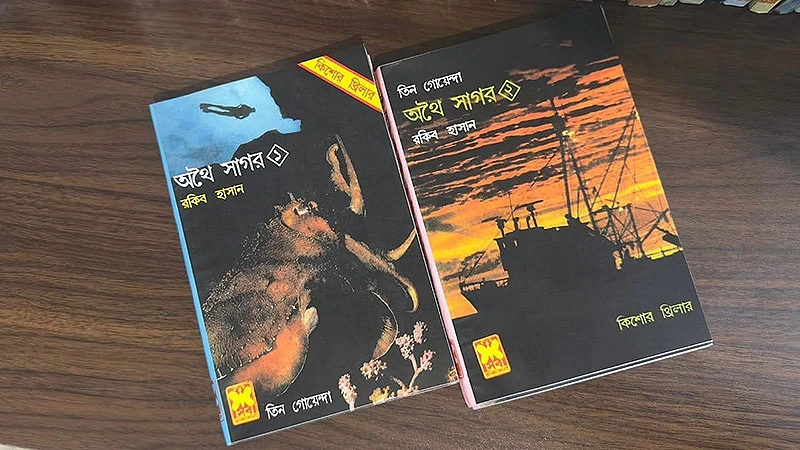
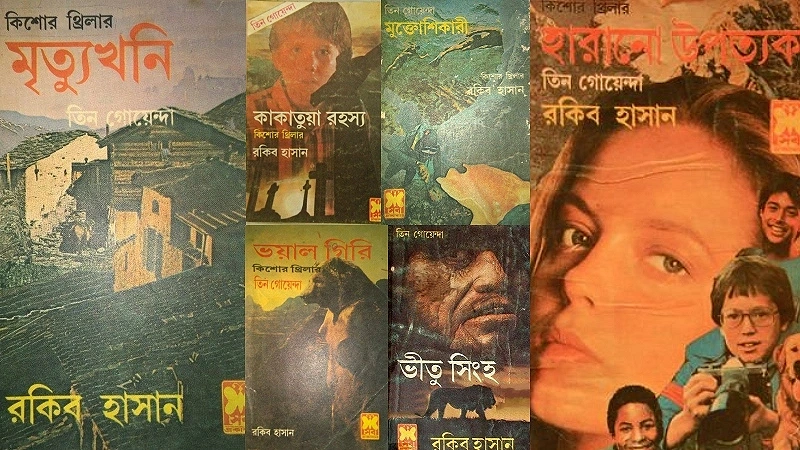
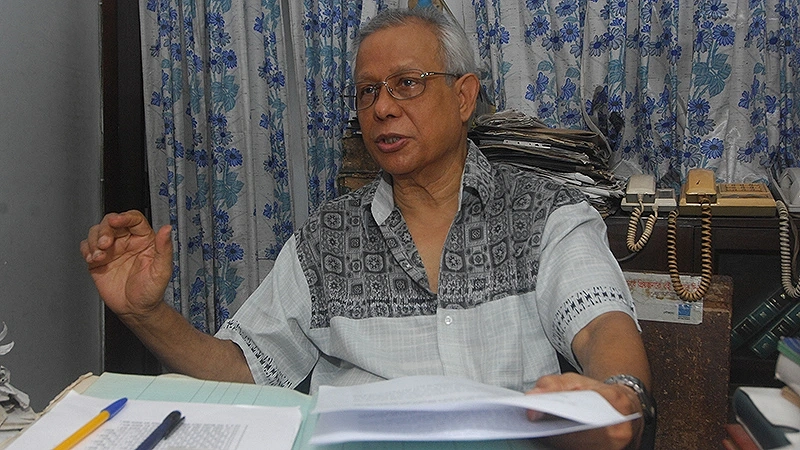
Kazi Anwar Hossain founded Sheba Prokashoni. Photo: Selim Zahid.
When I first entered Kuasha’s thrilling world of mystery and adventure, I was probably in Class Five. Lying in the north room or the small corner room of the west wing at my grandfather’s house, I would read books as sunlight slipped through the gaps in the curtains and fell upon the pages. I would lose myself in a world of imagination. Even now, those scenes seem to appear vividly before my eyes.
Naturally, at that time I had no opportunity to build my own separate collection of Kuasha books. So I bought the volumes instead. Though now, at times, I feel it would have been better if I had brought my grandfather’s books with me.
Because those rare Kuasha books were taken by people and never returned—mostly after my grandfather passed away. That’s what happens when books no longer have an owner!
Kuasha remains dear to me even today. Whenever time and opportunity allow, I sit down with the old books and start reading again. I have also collected original prints of almost all the Kuasha books. Although the Kuasha series eventually came to an end, Kuasha’s appearances in Masud Rana later on brought immense joy in between.
Three
I was probably in Class Three at the time. My reading world was limited to fairy tales—ogres, demons, giants, princes and princesses—and a few Islamic books. We lived in a small town. But because of medical needs and family ties, trips to Dhaka were fairly regular. On one such trip, a completely new door opened for little me.
That day I went out with my childhood hero—my cousin Nahid bhaiya. He was four classes ahead of me, older in age, and even older in wisdom. Much later, I would name my own series Nahid—The Investigator after him. Back then, their house was on Bailey Road. Walking together, we reached Shantinagar Mor.
Shantinagar in those days was a small kingdom of books. There were at least three “Sabuj Library” bookshops nearby. Each shop felt like a treasure house wrapped in paper. Shelves packed with storybooks—and most eye-catching of all were the colorful covers from Seba Prokashoni. But I had no idea then that inside those books lay countless sleepless nights waiting for me in the future.
Seeing the shops, I said, “I want to buy a book.”
Nahid bhaiya asked, “What kind of book?”
“A fairy tale,” I replied.
He smiled slightly and said, “Let me buy you a different kind of book today.”
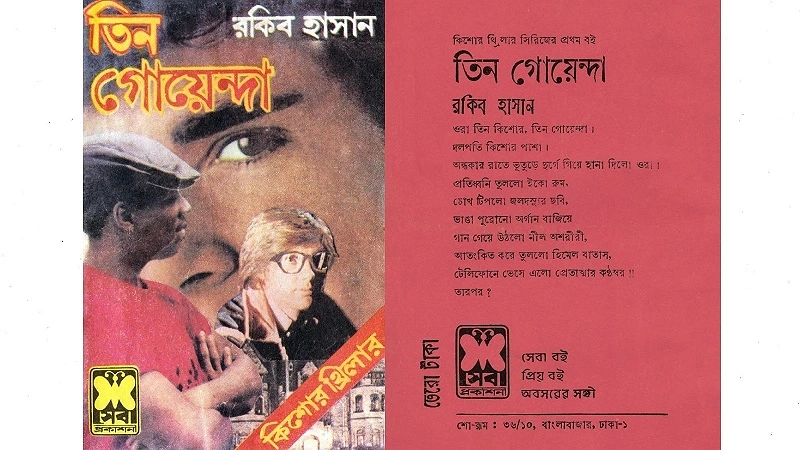
Then he placed a thin but strangely gripping book in my hands—The Lost Valley. On the cover were two more words: Three Detectives.
I still remember—I had 11 taka. The price was 13. Nahid bhaiya paid the remaining two. That 11 taka may well have been the greatest literary investment of my life.
That very day marked my entry into the mystery-and-adventure world of the Three Detectives. It was as if an ordinary boy had suddenly opened a secret door and stepped into a dark tunnel of adventures.
I didn’t fully understand the book the first time. I wasn’t used to that kind of story. But a few days later, I read it again. Then again. And then countless times more. Of all the books I ever bought, this is probably the one I read the most. Even today, when I think of the Three Detectives, the first image that appears before my eyes is the cover of The Lost Valley.
Beyond Kishore, Robin, and Musa, characters like Vicky, Auntie, and Julian still feel alive somewhere. It feels as if, with my eyes closed, I could start running with them again.
I still have that old copy. Later I got it again in a six-book volume. Recently, I even bought an original mint-condition copy. Yet the smell of those pages, the trembling memories embedded in that first book—those exist nowhere else.
My bond with the Three Detectives grew stronger on my next visit to Dhaka—once again thanks to Nahid bhaiya. I remember buying Volume 3, which contained six books. After discount, the price was 69 taka. This time, Nahid bhaiya had to add eight taka.
After that, it didn’t take long for me to become a devoted fan. Back in Brahmanbaria, I found a few fellow bookworms like myself. Three Detectives books circulated hand to hand. While reading, a few of us friends decided—we would become detectives too. We formed our own investigation team.
What a wonderfully strange time that was! Any unfamiliar person seemed suspicious, any vehicle looked like it might be carrying gold or smuggled goods. Even a scrap of paper with unclear writing on the road felt like—surely this must be a treasure map!
And it wasn’t just us. Countless boys and girls of that generation formed their own detective teams after reading the Three Detectives. Some named their groups “Five Detectives,” others “Seven Detectives.” Those three boys from the pages became the true companions of our dreams and childhood games.
Four
Yesterday, a post on the official Facebook page of Seba Prokashoni made my heartbeat pause for a moment. It announced that Seba Prokashoni’s activities were being temporarily suspended. The news spread quickly. From readers to media circles, discussions and concern erupted everywhere. My phone started ringing one call after another. I spoke with several people closely connected to Seba. By then, I could feel a strange sting in the corners of my eyes.
Because Seba is not just a publishing house; it is our adolescence, a doorway to imagination, a companion through countless sleepless nights.
In the end, however, reassuring news arrived. This morning I spoke with one of Seba Prokashoni’s co-owners, Kazi Shahnoor Hossain, and adviser Masuma Maimur. After speaking with them, I felt even more at ease—we are not losing Seba.
Both confirmed that this is not a dispute between brothers; rather, after allegations of corruption involving a few long-serving employees surfaced, this temporary decision was taken in the interest of a neutral audit.
Masuma Maimur assured that readers have nothing to worry about. Once the audit process is completed, Seba’s online activities will resume after Eid. So this is not a farewell story; it is a brief pause—a beloved institution preparing to present itself more transparently before its readers.
Five
Not through a time machine, but through a tunnel of memory, I return to nearly two decades ago. Seba Prokashoni’s third floor. As the iron door was unlocked and I stepped inside, my heart began to pound. I was accompanied by the renowned writer Sheikh Abdul Hakim—my beloved Hakim Uncle. He was taking me to meet a legend, a name that made my hands tremble and my pen freeze back then. It felt as if I were about to enter Rahat Khan’s chamber.
The moment of pulling aside that heavy curtain on the third floor still plays before my eyes like a scene from a film. From inside came a deep yet gentle voice—
“Come in.”
The man sitting before me was none other than the creator of Masud Rana, the architect of Kuasha, the guiding force of Seba Prokashoni, the mystery man of our literature—Kazi Anwar Hossain.