
The 64-Team Debate: The World Cup as a golden goose

Collected Photo
Even before the current World Cup has concluded, discussions have already begun about the number of teams for the 2030 tournament. The topic was raised by Alejandro Domínguez, president of the South American football confederation CONMEBOL. Within hours of the World Cup final, he took to social media to advocate for a 64-team format, writing: "A 64-team World Cup in 2030 would be great. CONMEBOL is working to make this happen. With 64 teams, no country in the world would be left out of the football festival."
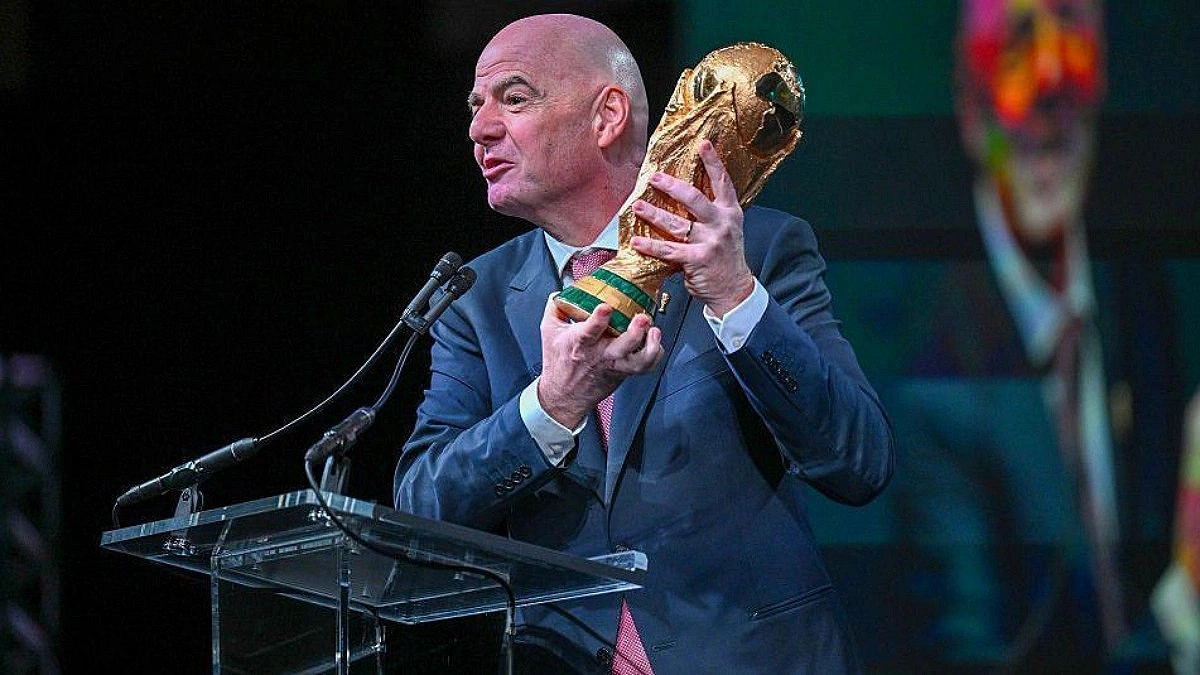
CONMEBOL first proposed a 64-team World Cup in 2025 and has repeated that stance on various occasions since. Later, similar sentiments were echoed by FIFA President Gianni Infantino. He too has been positive on the issue—though not explicitly, the FIFA president appears to be leaning in favor of the proposal.
FIFA Presidential Elections and Finances
Analyzing Infantino's tenure, it becomes clear that he has always prioritized financial growth. When he was first elected FIFA president, he spoke of greater financial cooperation. Today, each national football association receives $8 million from FIFA over a four-year period, with weaker nations receiving an additional $1.2 million in support. Furthermore, each continental football confederation receives $60 million for development, promotion, and operational purposes.
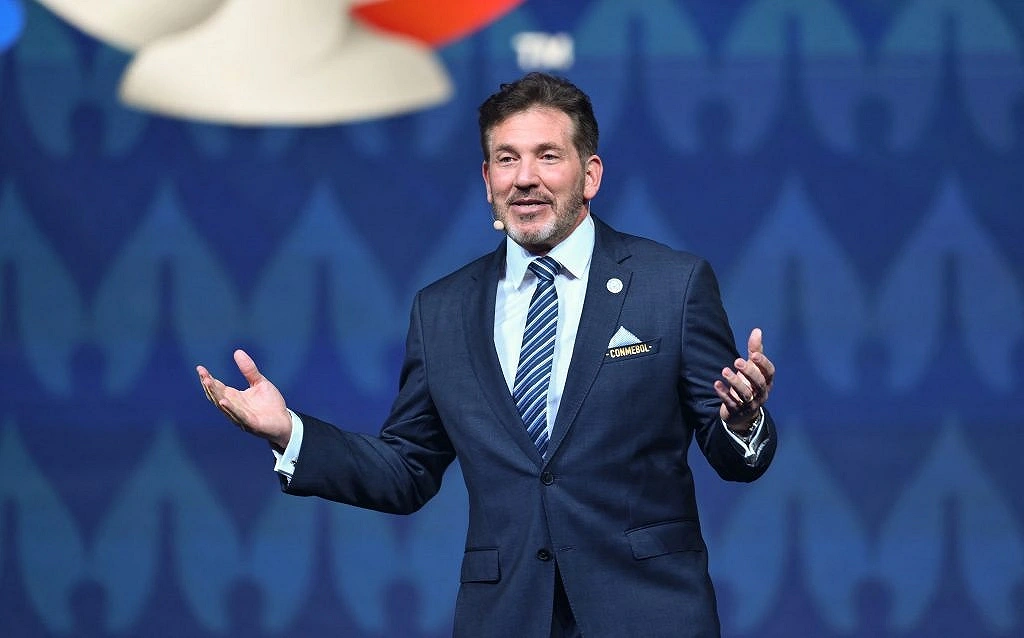
Alejandro Domínguez, president of the South American football confederation CONMEBOL.
This financial assistance has become a major tool for Infantino in presidential elections. Thanks to the money, he can count on the support of many nations. It is widely assumed that he will secure another term as president this time around.
But the source of this enormous funding is the World Cup itself. Infantino believes in a simple formula: a bigger tournament generates more revenue. So, in sync with CONMEBOL, the FIFA president continues to argue: "If smaller countries are not given the opportunity to play in the World Cup, they will have no room for improvement."
The current 48-team World Cup is expected to generate approximately $9 billion in revenue for FIFA. A 64-team tournament would further increase income from television broadcasting rights, sponsorship deals, and ticket sales.
In pursuing greater financial returns, this World Cup seems to have drifted somewhat away from the essence of football itself. A long halftime break—modeled after the Super Bowl—was introduced for entertainment purposes during the final, lasting 27 minutes and 22 seconds, a first in football history. And what about the hydration breaks—are they merely for players to refresh themselves with water? Beyond that, they also create commercial break opportunities for broadcasters. There is little doubt that the FIFA president will stand firmly in favor of a 64-team format.
How Has the 48-Team World Cup Fared?
While many new teams participated in this World Cup, it was the African sides that performed notably well. Out of Africa's 10 representatives, 9 advanced to the second round or knockout stage. In contrast, only 2 of Asia's 9 teams made it through, and only 3 of CONCACAF's 6 teams reached the knockouts. Although many European and African teams are comparatively strong, teams from Asia and CONCACAF have yet to reach that level. Among the newcomers, Cape Verde stood out as an exception, even surprising some of the bigger teams.
However, if the World Cup is to be expanded further, a quota system for European nations should be considered. That could open the door for teams like Italy, Denmark, and Poland to qualify.
Will the 64-Team Idea Receive Approval?
The 2030 World Cup will be hosted by Spain, Morocco, and Portugal. As it marks the centenary of the tournament, one match each will also be held in Uruguay, Argentina, and Paraguay.
Expanding the tournament to 64 teams has not received strong support from continental confederations. UEFA President Aleksander Čeferin has dismissed it as a "bad idea." CONCACAF President Victor Montagliani has described the concept as harmful, arguing that it would not serve the broader interests of football.
AFC President Sheikh Salman bin Ibrahim Al Khalifa is also not in favor. He believes that "this could create chaos in the expansion of football."
In truth, the World Cup has become a golden goose—a cash cow. By increasing the number of teams, FIFA aims to generate even more revenue from the tournament. Despite significant opposition, it is difficult to say that it will not be implemented. The final decision rests with the 37 members of the FIFA Council.
