
Kailash-Mansarovar: Where people of four faiths go on pilgrimage for centuries

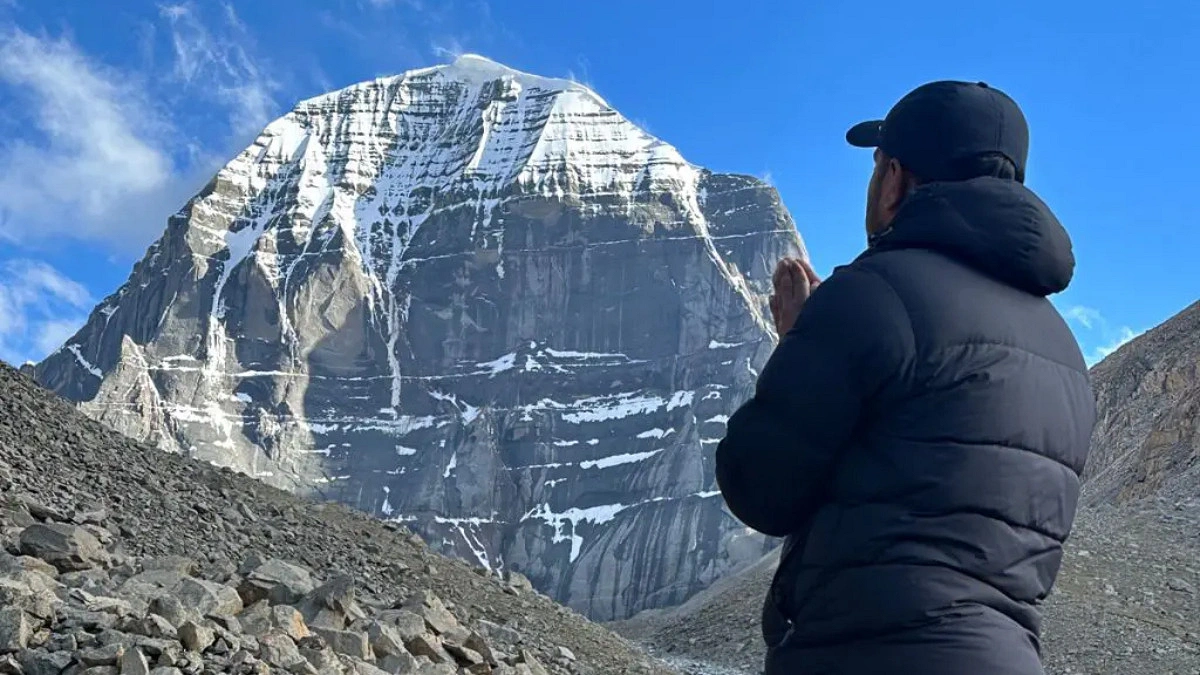
Mount Kailash, a sacred mountain and pilgrimage for people of four faiths. Photo: Collected.
At an altitude of over 4,500 metres above sea level lies the blue expanse of Lake Mansarovar. Standing tall beside it is Mount Kailash. For much of the year, this area—one of the most inaccessible places on earth—remains covered in snow and ice.
Reaching Kailash-Mansarovar is no easy task, due to rugged mountain trails, extreme cold, harsh weather, and low oxygen levels. Yet, for centuries, people have travelled from far and wide to this region. Some circumambulate Mount Kailash, while others merely visit the shores of Mansarovar. Although some come to see its natural beauty, most journey here for religious reasons.
This site is sacred to followers of Hinduism, Buddhism, Jainism, and Tibet’s ancient Bon religion. However, the beliefs surrounding Kailash differ among these four traditions. For some, it is the abode of a deity; for others, it is a sacred ground for spiritual practice.
Pilgrims to the area do not ascend to the summit of Kailash. Instead, they circumambulate the mountain—a practice known in Tibetan tradition as kora. The direction of circumambulation varies according to religious customs. Meanwhile, many consider the waters of Lake Mansarovar to be holy.
Recently, the site has come into the spotlight again after several people, including foreign nationals, went missing during a pilgrimage due to a sudden flash flood.
Where are Kailash and Mansarovar?
Both Mount Kailash and Lake Mansarovar are located in Tibet, an autonomous region of China, close to the borders of Nepal and India.
Mount Kailash is approximately 6,638 metres (21,778 feet) high—more than 2,000 metres lower than Mount Everest. Lake Mansarovar, situated south of Kailash, is a freshwater lake at an altitude of about 4,600 metres. According to Chinese authorities, it covers an area of roughly 412 square kilometres and is about 46 metres deep.
Nearby is another lake, Rakshas Tal (or Lanag Tso). While Mansarovar is freshwater, Rakshas Tal is saline. UNESCO has listed Mansarovar, Rakshas Tal, and Kailash as part of the broader "Sacred Mountains and Lakes" region.
Geographically, the area is significant as the source of four major Asian rivers: the Indus, Sutlej, Brahmaputra, and Karnali.
Why is it sacred to four religions?
UNESCO notes that the history of religious worship in this region dates back nearly 3,000 years.
In Hinduism, Kailash is believed to be the abode of Lord Shiva and Goddess Parvati. Dr. Kushal Baran Chakraborty, Assistant Professor of Sanskrit at the University of Chittagong, told BBC Bangla that Shiva has been worshipped since the Vedic era. The Rigveda mentions Lord Shiva residing on the golden peak of Mount Kailash. Lake Mansarovar is also considered sacred; Hindus pray and perform rituals on its shores and collect its holy water. Traditionally, bathing in the lake is believed to cleanse sins and bring spiritual purification.
In Buddhism, Kailash is known as Kang Rinpoche, meaning "Precious Snow Jewel". Some Buddhists believe Kailash is the mythical Mount Meru, the centre of the universe.
In the Bon religion, Kailash holds an even more ancient significance, serving as a spiritual centre and one of the holiest sites of worship.
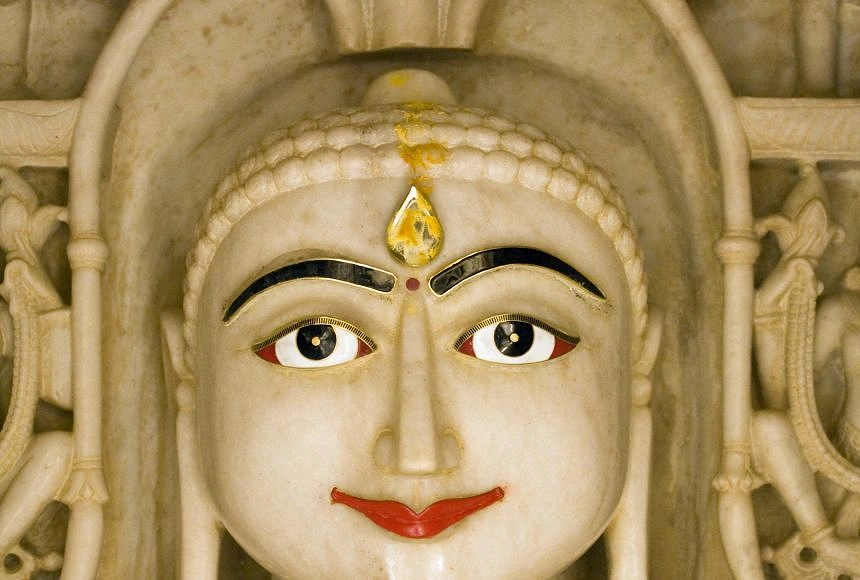
In Jainism, Kailash is sacred because it is believed that their first Tirthankara, Rishabhadeva, attained nirvana there.
Mahavira was the 24th and final Tirthankara (supreme preacher and savior) of Jainism (Collected photo).
The Pilgrimage Route
Hindu and Buddhist pilgrims generally circumambulate Kailash clockwise—known as parikrama in Hinduism and kora in Tibetan Buddhism. Bon and Jain followers, however, circumambulate counter-clockwise. The entire circumambulation route is about 52 kilometres long and typically takes three days to complete on foot.
Pilgrims face extreme cold, sudden weather changes, landslides, and difficult terrain.
There are several routes to reach Kailash-Mansarovar. Indian citizens can go via the Lipulekh Pass in Uttarakhand or the Nathu La Pass in Sikkim. Foreign pilgrims, including Bangladeshis, usually enter Tibet through Nepal. This requires a Chinese visa, special permits to travel to Tibet, and arrangements through an authorised tour operator.
The Tibet region is politically sensitive. China incorporated Tibet into its territory in 1950 and has controlled it since.
(Source: BBC News Bangla)
