Is it permissible in Islam to keep a marriage secret?
- Is a marriage valid simply by meeting Islamic requirements, or must it also be publicized?
- What does Islam say about secret marriages?

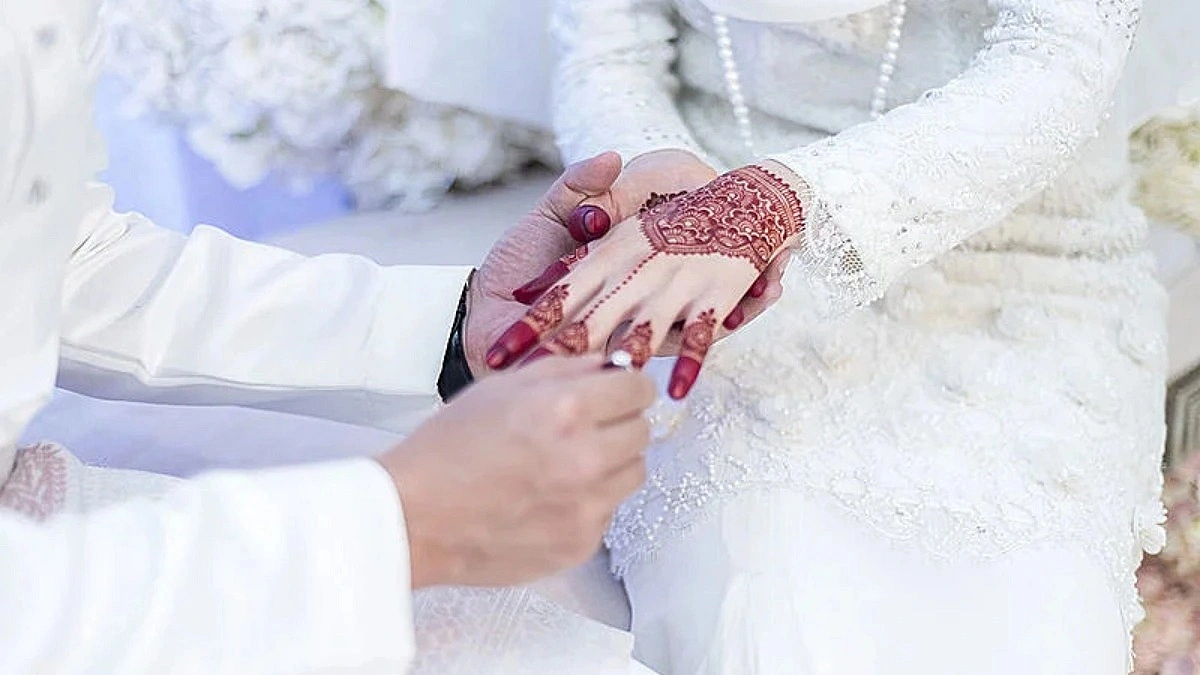
Symbolic photo
In Islam, marriage is not merely a private relationship between two individuals. It forms the foundation of a family, a society, and a civilization. The Holy Quran describes marriage as a ‘mithaqan ghaliẓan’ (a solemn covenant) (Surah An-Nisa, verse 21). While Islam encourages making marriage easy, it does not promote a culture of secrecy. Instead, it establishes a marital system that clearly safeguards the rights of spouses, the identity of children, and social dignity.
Today, many people conceal their marriages for extended periods because of family opposition, social pressure, financial uncertainty, or the desire to keep a second marriage hidden. In many cases, that secrecy later leads to family breakdown, legal disputes, inheritance conflicts, and mutual distrust. This raises an important question: Does Islam support secret marriages?
Allah Almighty says, "And among His signs is that He created for you spouses from among yourselves so that you may find tranquility in them. And He has placed between you affection and mercy. Surely in this are signs for people who reflect." (Surah Ar-Rum, verse 21)
This verse makes it clear that the purpose of marriage extends beyond fulfilling physical desires. It aims to build a stable family, provide emotional peace, and establish social harmony. Concealing such a relationship, therefore, does not fully align with the fundamental objectives of Islam.
Why does Islam emphasize publicizing marriage?
Islam seeks to maintain a clear distinction between lawful and unlawful relationships. For that reason, the Prophet Muhammad (peace be upon him) instructed Muslims to publicize marriages, saying,
أَعْلِنُوا هَذَا النِّكَاحَ وَاجْعَلُوهُ فِي الْمَسَاجِدِ وَاضْرِبُوا عَلَيْهِ بِالدُّفُوفِ
"Announce the marriage, conduct it in the mosque, and beat the duff." (Jami' at-Tirmidhi, Hadith 1089)
Another hadith states,
فَصْلُ مَا بَيْنَ الْحَرَامِ وَالْحَلاَلِ الدُّفُّ وَالصَّوْتُ
"What distinguishes a lawful marriage from unlawful relations is the public announcement of the marriage and the beating of the duff." (Jami' at-Tirmidhi, Hadith 1088; Sunan An-Nasa'i, Hadith 3369)
The Prophet (peace be upon him) also strongly encouraged holding a walimah (marriage banquet). Upon learning of the marriage of Abdur Rahman ibn Awf (may Allah be pleased with him), he said,
أَوْلِمْ وَلَوْ بِشَاةٍ
"Hold a walimah, even if with one sheep." (Sahih al-Bukhari, Hadith 5167)
In Islam, the walimah is more than a meal for relatives and neighbors. It publicly affirms that the marriage is lawful and honorable.
What constitutes a secret marriage?
Not all forms of secret marriage carry the same legal ruling. Islamic jurists distinguish between different situations.
One type involves a marriage in which the offer and acceptance, witnesses, dowry, and all other Islamic requirements have been fulfilled, but the couple later chooses to keep the marriage hidden from family or society for certain reasons.
Another type is a so-called secret marriage in which there are no witnesses, Islamic procedures are not followed, or two individuals simply declare themselves married. Such a union does not constitute a valid marriage under Islamic law.
The Prophet (peace be upon him) said, "There is no marriage without a guardian and two trustworthy witnesses." (Sunan al-Bayhaqi, Hadith 14257; Sunan ad-Daraqutni. The hadith has multiple chains of narration and jurists have relied on it in establishing the requirement of witnesses.)
What do the four schools of Islamic jurisprudence say?
Although the four major schools differ on certain juristic details, they largely agree that marriages should be publicized. They regard announcing a marriage as Sunnah and important for the welfare of society.
According to the Hanafi school, a marriage between two consenting adults is valid if two witnesses are present. However, concealing the marriage or hiding it with the intention of denying it later contradicts the objectives of Shariah. (Al-Hidayah; Bada'i al-Sana'i)
The Maliki school adopts the strictest position. Imam Malik (may Allah have mercy on him) held that if even the witnesses are instructed to keep the marriage secret, it becomes Nikah al-Sirr (a secret marriage) and is not acceptable. (Al-Mudawwanah al-Kubra, 2/153)
Imam An-Nawawi of the Shafi'i school said that announcing the marriage and holding a walimah are Sunnah because they remove suspicion and establish the legitimacy of the relationship. (Al-Majmu', Vol. 16)
The prominent Hanbali jurist Ibn Qudamah wrote that publicizing marriage is recommended because it creates a clear distinction between marriage and adultery. (Al-Mughni, Vol. 7)
Shaykh al-Islam Ibn Taymiyyah stated that all rulings of Shariah seek to promote people's welfare and prevent discord. A marriage that remains unknown to society and results in suspicion, disputes, or the loss of rights runs contrary to the objectives of Islamic law. (Majmu' al-Fatawa, Vol. 32)
Ibn al-Qayyim also wrote that every Islamic ruling aims to protect people's rights and establish justice, and that publicizing marriage is one of the key means of achieving those objectives. (I'lam al-Muwaqqi'in, Vol. 3)
Concealing a second marriage
One of the most widely discussed issues today is keeping a second marriage secret. While Islam permits polygamy under specific conditions, it does not allow deception, falsehood, or the violation of anyone's rights.
Allah Almighty says, "But if you fear that you cannot deal justly, then marry only one." (Surah An-Nisa, verse 3)
This requirement of justice includes not only financial responsibility but also fairness in time, respect, honesty, and family obligations. If secrecy deprives a wife or children of their rights, it becomes sinful.
The social and family consequences of secret marriage
One of the principal objectives of Islamic law (Maqasid al-Shariah) is to protect religion, life, lineage, property, and honor. Secret marriages often undermine more than one of these five essential objectives.
As a result of a concealed marriage, a wife may be denied financial support, a husband may later deny the marriage, disputes may arise over a child's identity and inheritance, mistrust may grow within the family, and slander may spread throughout society. Preventing such harm is one of the key objectives of Islamic law.
Views of contemporary scholars
Many contemporary scholars, including the International Islamic Fiqh Academy, say that marriage registration and public recognition have become increasingly important in the modern era. They argue that registration helps protect the legal and social rights of wives, children, and heirs. State registration does not replace Shariah; rather, it serves as a mechanism that helps fulfill its objectives.
In Islam, publicizing a marriage is more desirable and more consistent with the Sunnah than concealing it. A marriage conducted in accordance with Islamic requirements and in the presence of witnesses may be valid. However, deliberately keeping it secret for a prolonged period, depriving a wife or children of their rights, concealing the relationship for deceptive purposes, or evading social responsibilities is inconsistent with Islam's principles of justice, honesty, and transparency.
A Muslim should conduct marriage in a way that earns acceptance from Allah as well as recognition and respect from society. Islam seeks to build a society where relationships rest on truth, responsibility, trust, and justice. For that reason, transparency and social recognition, not secrecy, reflect the true spirit and beauty of the Islamic institution of marriage.
Author: Religious scholar and journalist