
Six months of mistakes must be corrected to move forward

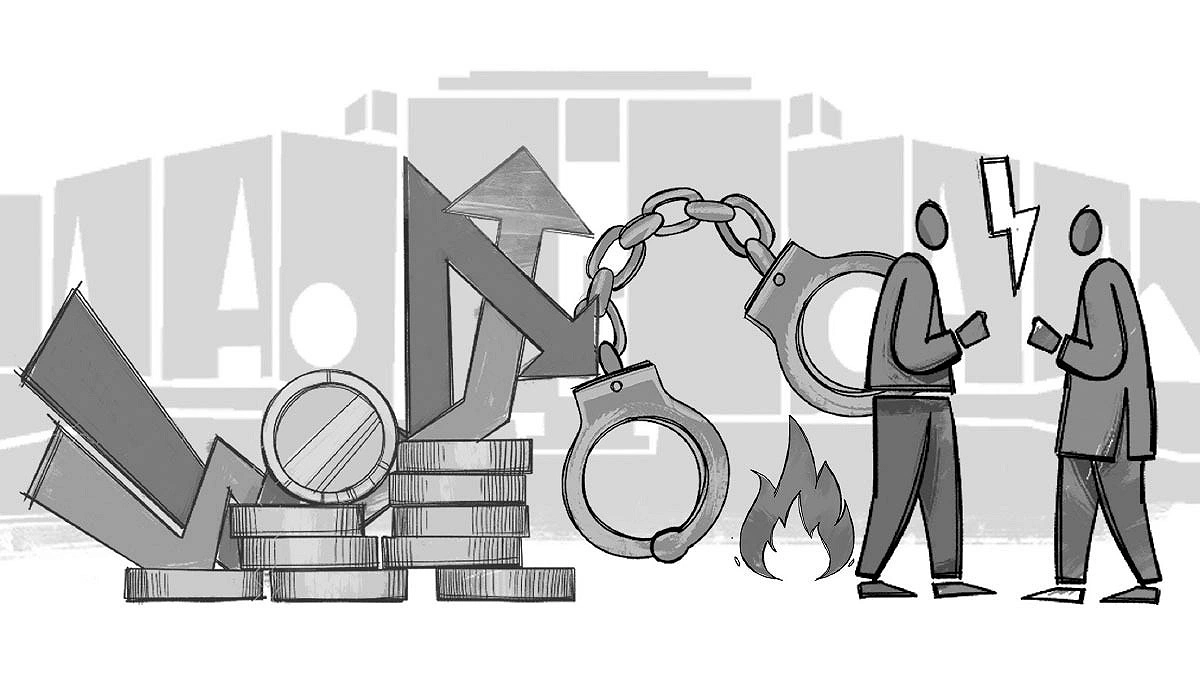
Graphics: Agamir Somoy
The BNP government, led by Tarique Rahman, has taken responsibility for running the state through a free and fair election. Forming a government through a fair and credible election is undoubtedly a major positive milestone for the country, especially after the political changes and the distrust that had developed among ordinary people toward the election system over many years. If we objectively analyze the first six months of a government that began its journey under enormous public expectations, we find a complex mix of a positive beginning and democratic goodwill on one hand, and international crises, administrative shortsightedness and policy ambiguity on the other.
Political Culture and International Challenges
One of the major achievements of these six months in running the state has been a qualitative change in political culture. In the past, even constructive criticism of the government seemed to be treated as a conspiracy against the state. The culture of widespread persecution and repression of opposing views, or restricting freedom of expression, that had been practiced for a long time now appears to have largely receded. At present, it is possible to criticize the government and express opinions. This is a major sign of a free and democratic environment.
However, alongside this positive domestic environment, the government had to face an extremely difficult international reality from the very beginning. In particular, the ongoing war situation in the Middle East has dealt a major blow to our economy. Bangladesh imports most of its important raw materials, such as oil, from that region. The war has not only driven oil prices in the global market to sky high levels, but has also made the availability of the product extremely scarce. As a result, the country’s import costs have increased enormously, putting overall economic stability under a serious challenge. Even under these adverse circumstances, the government’s continued efforts to maintain economic stability and ensure supplies are positive.
Public Administration, Political Appointments and the OSD Debate
Although the government has promised a merit based civil service or a merit-based administration as part of its policy, that commitment has not been reflected in the picture at the field level during the past six months. Rather, the opposite picture is emerging.
First, a large number of retired officials have been appointed on a contractual basis and placed in various agencies, bypassing skilled and young officials who are regularly performing their duties. Bringing back retired people on a widespread basis while excluding those who have been serving in regular positions for a long time is not at all healthy for the well-structured civil service. The practice of contractual appointments needs to be gradually reduced.Second, leaders of political parties are being placed in administrative and technical positions at some agencies, something that had never happened in the past. Political leaders have been appointed as chairmen and to other policy making positions at at least 10 to 11 highly important specialized agencies, including BSCIC and BIWTA. Even in technical and service-oriented organizations such as WASA, where a professional managing director or chairman is needed, party leaders have been appointed. These leaders have not resigned from their party positions while holding office. They are performing official duties while also leading political meetings and processions. It may be reasonable to appoint a political figure as an administrator of a city corporation until elections are held. But placing political figures in technical, service oriented and autonomous organizations will undermine their normal working environment and core objectives.
Third, a practice has emerged in the administration of placing large numbers of officials on OSD, and forcing or hastily sending them into retirement. This is creating extreme misunderstanding, uncertainty and frustration among civil service officials and employees. If an official has genuinely committed an offense or been involved in wrongdoing in the past, they should certainly face exemplary punishment through a proper investigation and a regular criminal or departmental case. But imposing widespread administrative punishment without an investigation does not contribute to improving the professionalism or standards of public administration. The government needs to reassess this issue.
If we objectively analyze the first six months of a government that began its journey under enormous public expectations, we find a complex mix of a positive beginning and democratic goodwill on one hand, and international crises, administrative shortsightedness and policy ambiguity on the other.
Administrative Austerity Versus the Lack of Good Governance
The government has taken some commendable steps toward administrative reform and reducing state expenditure. For example, VIP protocol for the prime minister has been significantly reduced, the previously existing tax-free vehicle and plot benefits for members of parliament have been completely abolished, and effective directives have been issued to prevent state waste.
However, in contrast to these measures, no clear roadmap for long term administrative reform and combating corruption has been visible. The government’s stagnation in this area becomes clear when looking at the Anti-Corruption Commission, or ACC. After the then commission resigned, the positions were left vacant for four to five months without appointing a new commission. Under legal provisions, when the commission is not operational, its officials cannot file new FIRs in cases or approve charge sheets. Allowing such a long period to pass without a commission in such a sensitive and urgent area as combating corruption has weakened the fight against corruption itself.
Inflation, Market Control and Social Protection
High prices of essential goods and inflation are currently the country’s biggest concerns. The wide gap or mismatch that has developed between the daily cost of goods such as rice, lentils and cooking oil and the purchasing power of ordinary people cannot be solved overnight. It is fundamentally a structural economic problem that has accumulated over a long period. It is difficult to bring the market fully under control in a short period such as six months, and the problem will continue to some extent until economic prosperity is achieved. To provide relief to the people, the government must continue market monitoring and take effective measures over time.
At the same time, some of the government’s initiatives in social protection have offered a ray of hope. The distribution of Family Cards and Farmer Cards, expanding the coverage of the social safety net and the initiative to introduce a school feeding program for primary school students are commendable. However, as has happened in the past, strict monitoring is necessary to ensure that nepotism, politicization or corruption does not spread through these public welfare projects.
Six months is not a very long period for measuring a government’s overall capacity. In this short period, the BNP government has come to power through a fair election, restored a democratic environment and created some positive examples of austerity. But alongside addressing the global economic crisis, keeping the bureaucracy free from political influence, properly evaluating experienced and regular officials, and taking a strong stand against corruption by creating an institutional framework will be the real test for Tarique Rahman’s government. To turn public expectations into reality, the government must correct its own mistakes and move forward in a more organized manner.
Author: Former Secretary of the Cabinet Division and former Adviser to the Interim Government
