There is no way to stop a multipolar world order

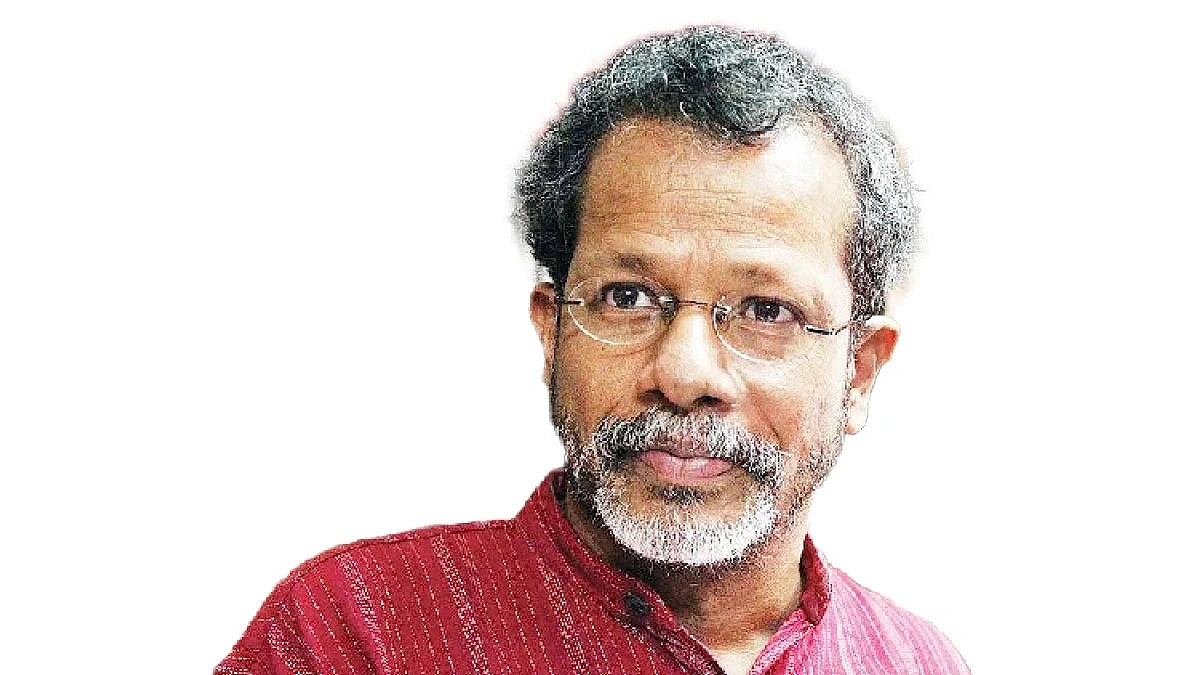
Dr. Imtiaz Ahmed. Photo: Collected.
Although a polycentric world has never been seen before, the possibility now seems quite bright. We may soon face the complex structure of this multipolar world. But do we have the experience, the diplomatic and cultural skills required to deal with it?
The world is changing; the world has always been changing. At one time, a large-scale unipolar structure was established in the world by Great Britain, which was called Pax Britannica. Then, under the impact of the Second World War, it collapsed, and a bipolar world was formed, with the United States and its friends on one side—broadly the Western structure—and the Soviet Union and its allies on the other. That bipolar world broke down when Gorbachev came to power in the Soviet Union.
At that time, the Soviet Union might have been growing in military strength, but it was completely weak in terms of economic power. The world saw Gorbachev break up the Soviet Union through structural changes via the proposals of Perestroika and Glasnost. Then Russia thought it best to leave Eastern Europe. From that time, the discussion of a unipolar world began to emerge. It was named Pax Americana. However, in the early part of this century, this structure was creating various problems, and when the economic crash occurred in the 2008 financial crisis, it became clear that it would be difficult for America to maintain its single-handed dominance. A major reason for this was, of course, China, alongside multiple countries like India, Brazil, and Turkey that were increasing their economic capabilities. Since then, it was evident that the world was moving toward multipolarity.
Here, the history of Bangladesh achieving independence is particularly notable within that global power structure. It must be remembered that Bangladesh became independent at the very peak of the Cold War. The United States had significantly opposed Bangladesh's liberation war and sided with Pakistan. On the other hand, the Soviet Union supported Bangladesh's independence. With the two superpowers taking opposite sides in the bipolar world of that time, the question of Bangladesh becoming independent became complicated. We were born amidst that Cold War. As a result, the concept of maintaining friendship with all entered into Bangladesh’s thinking, which the two major political parties of Bangladesh, the Awami League (currently banned) and the BNP, have broadly tried to follow. Perhaps because Bangladesh became independent in a Cold War world, this awareness was created.
In addition, an obligation has now been created worldwide to maintain economic relations with everyone. A perception is ongoing that the more countries one has relationships with, the more economic benefit there will be. In that regard, it seems we will see a multipolar world order by 2050. There is no way to stop this; the main reason is that a massive aspiration has grown among the people of all nations, and the people of no country are willing to return to the previous colonial setup.
However, a popular world order like a multipolar one has never existed across the globe before. It might have existed regionally. There was multipolarity in Europe, Africa, and even South Asia. But a global multipolar system has never happened. There was unipolarity, like Britannica or later Pax Americana, or else the Cold War world, which maintained a balance of power by being bipolar. For the first time, the possibility of a multipolar system is visible across the entire world. However, doubts and fears are all present within this. This is because a preparation is required for it, and the lack of that preparation still persists.
It must be remembered that this multipolarity will not be a rigid multipolarity. Bipolar or unipolar systems, however, were very rigid. This multipolarity will be fluid. This is because, as a result of globalization, it will not be possible to import and export everything by maintaining a relationship with just a single pole; relationships must be maintained with multiple poles, and through this, a complex structure is being created.
The professionalism, efficiency, and knowledge required to deal with this multipolar structure have not yet been developed by all countries. More or less, everyone has a basic experience of navigating relationships with either a unipolar or a bipolar structure. Therefore, relating to a multipolar system has not happened or has not been necessary. For this reason, there is a large-scale deficit in knowledge. Along with linguistic proficiency, there is also the matter of acquiring diplomatic and cultural skills here. Changes must be brought to the diplomatic structure. Not all countries have the same kind of diplomatic framework; different types of diplomatic frameworks used to operate in different polarizations. Consequently, it is necessary to become familiar with all forms of diplomacy in a multipolar world structure. We, too, have a need to become educated in this regard.
If Bangladesh is to confront this multipolar world by 2050, we must increase our cognitive capability. In addition, if the culture of internal political division in our country does not change, and if there is no national consensus, then dealing with a multipolar world will be very difficult. A new kind of politics is needed here.
If we want to gain on a large scale in a multipolar world, it must be said that we still have deficits. We have not yet been able to establish a world-class education system in that sense, and it must be remembered that this should not start from the university level; it must begin right from the primary school level. Primary schools first need to be brought to a global standard. After that will come colleges, and only after that will universities be considered. For a country like ours, which is not actually a regional superpower in that sense—meaning we have India and Pakistan beside us—even if we put aside Western or global thinking and create a strategy by confronting regional geopolitics, we still need to fix our education system.
We have several examples before us when it comes to expanding our knowledge structure. Iran has demonstrated a major example of this. This is because Iran created a strategy paper based on their vision 20 or 21 years ago. Iran decided how it would respond if the United States and Israel were to launch an attack on them at the very time they were drafting their strategy paper. They realized that there was no benefit in buying technology, aircraft, or drones from abroad, because that would create a dependency on those countries. They fought a war with Iraq for eight years. In that war, Western countries had assisted Iraq. That experience proved useful to Iran. As a result, they decided that they needed capability in missile and drone technology.
Then, after careful consideration, they thought about investing in female education. They moved forward on the path of producing female scientists and engineers. Because of this, as we speak today, Iran is number one in terms of producing the highest number of engineers per capita in the world. In terms of absolute numbers within the per capita population, they are quite possibly fourth; but since their population is 93 million—while China, India, or the United States might be higher in absolute numbers—Iran is number one on a per capita basis. Similarly, they are number one in the world for female scientists.
Similarly, Singapore can also be brought into this discussion. They, of course, did not focus on the military aspect; there was no need for it either. But the core point here is that there are certain countries that thought ahead and brought structural changes to their systems. For this, they focused on the education system and utilized that benefit strategically. Bangladesh also needs to think in that manner—how to build a cognitive capability, and how to acquire and utilize that power. Currently, the complexity for Bangladesh is slightly higher because it is flanked by two major nations like India and China. On the other hand, Bangladesh shares a significant relationship with the United States, especially since that is where we send most of our exports.
Many of our policymakers have one foot in Western countries. I do not believe there is an opportunity for Bangladesh to grow with this kind of structure. In these areas, fresh thinking is needed on how to keep both of their feet within Bangladesh. It is also necessary to look at our geopolitical structure. If we talk about passports, we need to think about whether we should change the provision that allows holding two or three passports.
Therefore, if we want to look toward the year 2050, right now is the final time to begin those preparations. There is a lot to be done here. However, I believe that Bangladesh is a structure of an old civilization. The history here is very strong; one can easily trace it back a thousand years. So, if we can begin thinking about how Bangladesh can stand with both feet firmly on the ground of that historical foundation, then it can be said that we will be able to carve out our own place in the multipolar world order.
Author: International Relations Specialist and Political Analyst