
Will emergency or governor’s rule bring peace to Khyber Pakhtunkhwa?

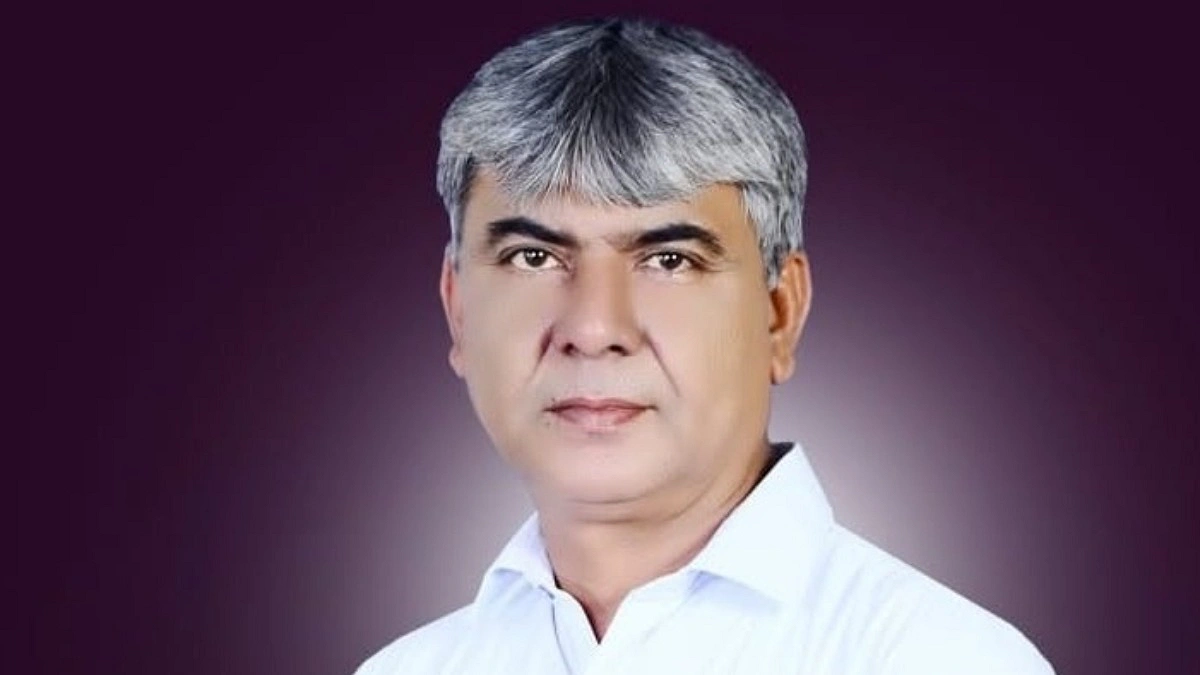
Aijaz Mahar, editor of Daily Sindhyar
Some analysts believe that removing the Pakistan Tehreek-e-Insaf (PTI) government in Khyber Pakhtunkhwa and imposing emergency or Governor’s Rule could give fresh momentum to the opposition’s movement and prove to be a turning point against both the federal government and the real power brokers.
This possibility may also be recognised in Pakistan’s power corridors, which could explain why the matter is being examined in detail from all angles rather than being rushed into a decision.
A high-level meeting was held at the Presidency on Saturday under President Asif Ali Zardari, who is widely regarded as a master of political reconciliation and power politics. Prime Minister Shehbaz Sharif, key federal ministers and senior security officials attended the meeting, where the situation was reviewed closely for a second time.
Geo News has reported that separate sessions of both the houses of the parliament the National Assembly and the Senate have been summoned for October 13. According to the channel, the meeting discussed the country’s security situation in detail, and a decision has been taken to impose emergency rule.
If the president imposes emergency or Governor’s Rule in Khyber Pakhtunkhwa, it will not be the first time such a step has been taken. Similar measures have been imposed in the province on three previous occasions, and this would be the fourth. Zulfiqar Ali Bhutto, the founder of the Pakistan Peoples Party (PPP), ordered Governor’s Rule in 1975; PPP President Farooq Ahmed Khan Leghari did so in 1994; and General Pervez Musharraf imposed it in 1999.
President Zardari had also imposed Governor’s Rule in Punjab in 2009, where it lasted for approximately one month. If he issues such an order now, it would be the second time he has done so, while for the PPP it would be the third such intervention in Khyber Pakhtunkhwa, previously known North West Frontier Pakistan (NWFP).
The decision to summon separate sessions of both the houses of Parliament following the high-level meeting at the Presidency has further strengthened the impression that the government is preparing to take action.
Under Pakistan’s Constitution, following the 18th Constitutional Amendment, Article 232 provides for the imposition of an emergency, while Article 234 deals with the imposition of Governor’s Rule when the constitutional machinery of a province fails.
Article 232 provides for a resolution by the relevant provincial assembly in connection with an emergency. However, it also empowers the president to act on his own initiative. If the president independently proclaims an emergency, the proclamation must be placed before both houses of Parliament for approval within 10 days.
Article 234 deals with a situation in which the constitutional machinery of a province fails. Unlike Article 232, it does not explicitly prescribe the same 10-day deadline for parliamentary approval. However, the proclamation must be placed before Parliament and will cease to operate after two months unless approved by both the houses.
On the face of it, the decision to summon Parliament appears to be part of this process. However, the move is also being viewed as a component of political bargaining with PTI.
It is being reported that the banned Tehreek-e-Taliban Pakistan (TTP) has an effective presence, either partially or completely, in around one-third of Khyber Pakhtunkhwa’s nearly three dozen districts. Some districts are said to be under its complete control. These include areas rich in mineral resources that were formerly part of the Federally Administered Tribal Areas (FATA) and were later merged into the province.
The Taliban want formal control over some of these areas. In certain places, they reportedly operate their own unofficial courts and administer affairs according to their own interpretation of Islam.
The PTI believes that whatever decision is taken, a committee comprising representatives of all political parties in the province should be formed, and its decisions should be implemented.
At first glance, the proposal appears reasonable. However, the history of the powerful actors sitting in Pakistan’s corridors of power suggests that they have generally preferred decisions made by a handful of individuals over broad-based consultation.
History bears witness to the fact that whether military dictators or political leaders have been in power, they have repeatedly wrapped their own decisions—whether justified or questionable—in the mantle of national interest. Yet, over 78 years, decisions taken in the name of “national interest” have largely failed to bring positive change to the lives of ordinary citizens.
Some analysts argue that it politically suits the ruling Pakistan Muslim League-Nawaz (PML-N) and the Pakistan Peoples Party to keep the gulf between the establishment and the PTI wide. This, they believe, allows the two parties to remain politically indispensable to the establishment.
Meanwhile, local media have also reported that the government assigned Maulana Fazlur Rehman the task of facilitating talks with the PTI and that he had begun making contacts.
If the government has already decided to impose emergency and Governor’s Rule, it would amount to making a mockery of Maulana Fazlur Rehman’s efforts. Following the meeting at the Presidency, Maulana led a delegation of his party, Jamiat Ulema-e-Islam (JUI), to the Prime Minister’s House, where he met Shehbaz Sharif.
If the government has taken him into confidence and he consequently distances himself from the PTI, that would represent a significant concession to the government. But Maulana is unlikely to offer such a concession for nothing. His price for supporting emergency or Governor’s Rule would probably be nothing less than the governorship of Khyber Pakhtunkhwa.
Alternatively, if Maulana convenes an All-Parties Conference and joins an anti-government movement, the government could face a serious challenge. In that scenario, the combined street power of the PTI and Maulana could fuel an effective movement against the government.
Whatever the political circumstances, the fundamental question remains: Will imposing emergency or Governor’s Rule in Khyber Pakhtunkhwa this time completely eliminate terrorism and restore peace in the province? Or, like the dozens of military operations conducted in the past, will this step also fail to benefit the public and instead give rise to further problems?
The author is the editor of Daily Sindhyar. He previously worked with the BBC and is the author of the book 'Power corridors, Conspiracies' (Iqtadari Sazishoon).
