
Must learn to value child’s consent and discomfort

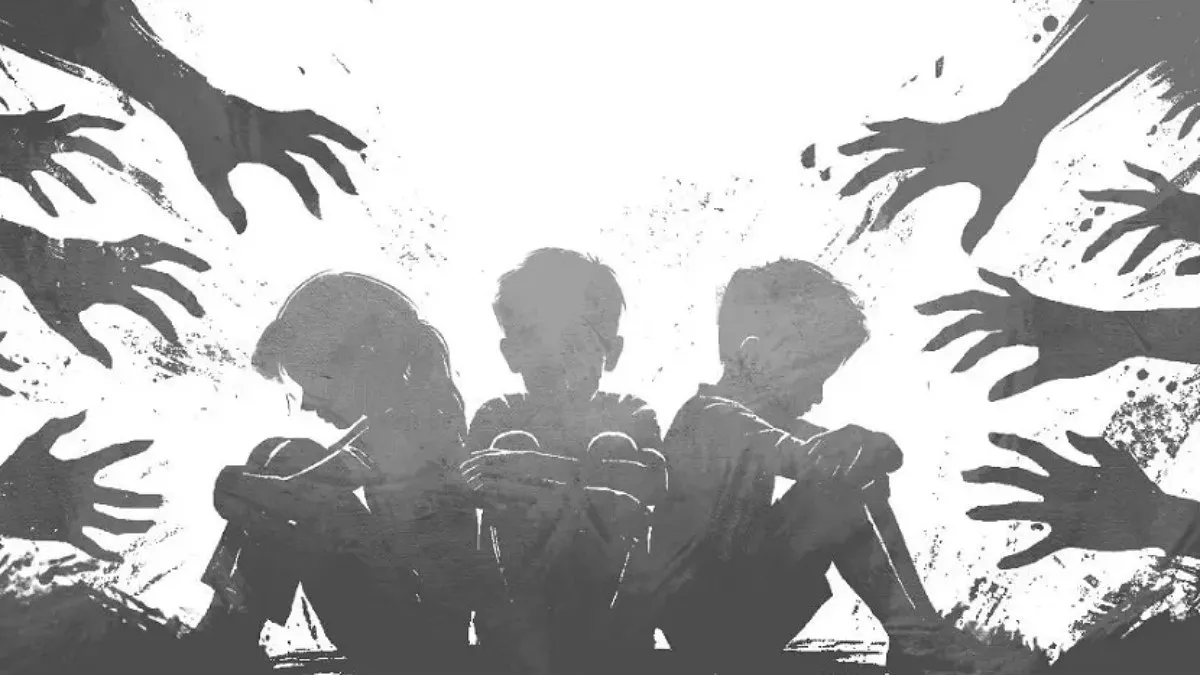
Graphics: Agamir Somoy
The development of a country cannot be measured solely by growth, per capita income, or large infrastructure projects. One must see how safe the children of that country are, whether they are getting nutritious food, whether healthcare and quality education are ensured, or whether there is a social environment for them to grow up.
These are linked to the attitudes of the family and society. Social economist Hossain Zillur Rahman spoke with Agamir Somoy regarding this crisis. The interview was conducted by Syed Zuberi.
Question: Although Bangladesh overall holds a better position in the Global Hunger Index compared to several countries in South Asia, there are concerns regarding child nutrition and development. Outside of economics, how do you view this issue in terms of social reality?
Hossain Zillur Rahman: First, the global situation must be examined. The situation regarding hunger and food security across the world is fragile. Agricultural production is coming under threat. The food supply chain is being disrupted. Irregular rainfall, droughts, storms, and floods are also creating pressure on agriculture.
However, another factor is important in the case of Bangladesh. When we say our position is better compared to India or Pakistan, we usually talk about average calculations. But the situation cannot be understood solely through overall indices. Which segment of the population is in what condition must also be analyzed.
The issue of children is particularly important here. Children’s health and nutrition should not be seen merely as an economic problem. It is connected to the social environment, the public health system, and the state’s priorities.
Question: Bangladesh once had notable success in children’s health and nutrition. What is the reason for falling behind from that position?
Hossain Zillur Rahman: We had several good achievements in child health. The vaccination program is one example. But recovery did not occur from the shock that came during COVID-19. In recent times, measles infection and child mortality have brought that weakness to the forefront again. The weakness of primary healthcare has been added to this.
Another factor is rapid urbanization. We are unable to maintain a social and natural environment suitable for children. The environment required for a child’s natural development is shrinking. The social consequences of technology must also be understood. Young children are also falling under its influence.
Economic pressure has been added to this. The actual purchasing power of families is decreasing. When income decreases, families have to cut expenses. And the pressure of this reduction also falls on children’s nutrition, education, and development.
Question: There is inflationary pressure; but even then, there should be a minimum level of attention toward children’s food, that is, the supply of nutrition - is there any deficit there?
Hossain Zillur Rahman: Two issues need to be seen separately here. One is the decrease in attention toward children, and the other is the decrease in the ability to give attention. The two are not the same. Suppose due to economic pressure, a family is compromising on the quality and quantity of food.
This is not always happening due to indifference toward children; many times the family’s capacity itself is decreasing. The prices of many essential foods for children, including milk, have increased. The effect of inflation is also present in the market for imported powdered milk.
In other words, the family’s economic crisis is shrinking the environment for children’s development. Expenditure behind children’s food, health, and education is decreasing. For this reason, to understand the child nutrition situation, one cannot look only at average income or average poverty calculations; the distribution of resources within the family and the allocation for children must also be examined.
Question: Are the special needs of children being taken into consideration in food-friendly programs within state policy?
Hossain Zillur Rahman: In the state’s traditional food assistance programs, importance is usually given to rice, pulses, or basic food items. But nutrition for children is not ensured merely by filling their stomachs. In the case of social security programs as well, greater importance must be given to the special needs of children.
Similarly, vaccination, Vitamin A programs, women’s health, and child health - everything must be seen as an integral part of primary healthcare. Our primary health system is weak. There is a manpower shortage in family planning activities. As a result, delivering necessary services to people become difficult. The greatest impact of these falls on women and children.
Question: How far reaching is the question of child protection in connection with the weakness of the family planning program?
Hossain Zillur Rahman: The impact of a policy stance can go very far. The then prime minister of the ousted regime suddenly said population is not a problem, but a strength. Her statement impacted family planning projects.
Population can certainly be an asset; but the health, education, and capability of that population must be ensured. In a country of limited land and resources, there is no scope to deny the importance of population management and family planning. If population management and family planning programs weaken, their impact falls on women’s health and childcare.
The core point here is not a debate over the number of children; the core point is forming responsible families, ensuring women’s health, and arranging necessary care for children. Family planning is not an isolated program.
Question: Various problems also come forward regarding school midday meals for children. Why is this initiative not turning into an effective national program?
Hossain Zillur Rahman: In the case of midday meals, the most important elements are policy clarity, an appropriate implementation structure, and accountability. We are still at the stage of various experiments and pilot projects. We have not been able to convert this into an effective national program.
We were involved in research to formulate a national policy on school meals with the support of the World Food Programme. There we saw that a clear plan is needed regarding how this program can be implemented, where success comes from, and where problems are created.
But instead of policy, initiatives have sometimes been taken that deviate from the main objective. For example, instead of ensuring food for children at school, initiatives like providing tiffin boxes came forward. Benefits were created for tiffin box suppliers, but that does not solve the problem of children receiving regular nutritious food.
In the case of midday meals, the roles of contractors, food suppliers, teachers, the local community, and parents must be made clear. Community involvement is extremely essential here. It will not suffice to merely plan the program centrally; how food will be supplied and distributed at the school level must also be taken into consideration.
If local producers can be connected through decentralized management, the local economy can also benefit. For instance, if milk is kept on the food menu, a guaranteed market can be created for dairy farmers. But to do all this, policy must be clarified first. A consolidated national program must be built with children at the forefront.
Question: You are saying that defects exist within the overall system. Could you explain this a bit?
Hossain Zillur Rahman: The government’s project adoption ecosystem itself is a major problem here. How policy is formulated and who remains connected with it - these questions are important. Just as research is needed before adopting a project, evaluation of results is also needed during implementation and at the end.
What was supposed to be achieved, what was actually achieved in reality, who benefited, who was excluded - there must be clear indicators regarding these matters. Who is providing data for those indicators and how reliable that data is must also be taken into account. This is not a problem confined only to children’s food or health programs.
From large infrastructure projects to roads - the process of adopting and implementing projects needs to be reviewed in all fields. If a project is undertaken for children, children’s welfare must be at the center of that project.
Question: Incidents of sexual abuse against children are coming forward in homes, educational institutions, and even residential institutions. Are these isolated crimes, or symptoms of a deeper social problem?
Hossain Zillur Rahman: There is no scope to view these as isolated incidents. The media is bringing these issues forward, and concern is being created among the public—this is important. But at the same time, effective steps must be taken immediately to stop crimes.
In particular, ensuring the safety of children in residential educational institutions is essential. In many institutions, children stay outside their families for long periods. As a result, the importance of supervision, rules and regulations, grievance reporting mechanisms, and accountability increase even further.
One matter needs to be kept clear here - discussing the educational system or tradition of an institution is one thing, and sexual abuse of a child is a specific crime. These two should not be conflated.
Whichever institution a crime occurs in, that institution must be brought under accountability. No identity politics or loyalty to an institution can grant anyone immunity from criminal liability.
Appropriate supervision and responsible personnel are required to ensure the safety of women and children in residential institutions. Who will be in charge of supervising girls’ residential institutions - this question must also be looked at with importance.
At the same time, a child’s perspective must be understood. Many times, behavior that adults consider normal or an expression of affection may feel uncomfortable to a child.
Children must be taught to value consent, personal boundaries, and their discomfort. Awareness regarding good touch and bad touch needs to be raised. Many children cannot express their experience of abuse.
Sometimes they accept it as a normal event, and sometimes they remain silent out of fear or shame. Therefore, creating a safe environment to report complaints and listening attentively to children’s voices is extremely essential.
Question: Has the state neglected to take steps in these cases, and is that why recent incidents can be called social resistance?
Hossain Zillur Rahman: In the presence of the state’s absence or weakness, society often steps forward. Public anger may be generated in reaction to crime; but taking the law into one’s own hands is not a permanent solution.
The state must play a strong role, investigate allegations of crime, protect the victim, and bring those responsible under the law. No crime should be made a matter of political debate to shroud the main incident.
Three issues must be examined with importance here - crime, social order, and the crisis of moral values. Although these are interconnected, they are not the same thing. Crime must be tackled as crime.
Alongside, a social environment must be created where disrespect or abuse toward children will not be accepted as normal. Children’s safety is not a matter of a popular decision. It is the responsibility of the state.
Question: Various considerations such as poverty, discipline, or religious education work behind sending children to residential institutions. How should the expansion and supervision of these institutions be thought about?
Hossain Zillur Rahman: Some families are economically insolvent; there, opportunities for food and education are important. Some families believe that a child will learn discipline in a residential institution. Some value the opportunity for religious education.
It will not be right to mix these reasons together. But the safety of children, supervision, and quality education in a residential environment must be ensured.
Particularly in recent times, various types of institutions have expanded rapidly. Whether quality education, appropriate supervision, and child protection measures exist in all institutions needs to be verified. The responsibility of the state is to enforce necessary rules and regulations and ensure an accountability mechanism for all institutions.
When an allegation of crime arises against an institution, it cannot be viewed merely as a question of protecting the institution’s reputation. First, one must see what happened to the child, how their safety will be ensured, and how justice will be established.
In all areas - environment, healthcare, food, sports, and cultural development - the needs of children must be given importance. Awareness creation is also needed in the family. Parents must listen to the child’s experiences and ensure that they are safe.
Opportunities must be created for children to speak. Importance must be given to their discomfort, fear, or complaints. Many times, children cannot express their experiences because they think adults will not listen to them. This mindset must change.
Question: You are also talking about a crisis in the education system. How broad is the extent or scope of this crisis in society?
Hossain Zillur Rahman: The condition of education in Bangladesh has reached the level of a national crisis. This is not merely a problem of a specific type of educational institution; there are questions regarding the quality of the entire system, inequality, and the educational environment.
The disruption that occurred in many children’s educational lives since COVID-19 has not been properly overcome. A disinterest in education has been created. How suitable educational institutions are for children, what they are learning there, in what kind of environment they are growing up - these questions need to be brought forward.
In our society, discussions have been ongoing for a long-time regarding corruption, nepotism, abuse of power, and the tendency to disrespect people. The young generation is seeing these and raising questions about injustice and unfairness. Their questions need to be given importance. The moral environment of the society we are building for children also influences their development.
Question: We say children are the future; but what does this statement mean when their present is endangered? What can the state do to make their present unhindered?
Hossain Zillur Rahman: First, we must ask ourselves what the purpose of state reform is. We talk about reforming the police, the economy, education, or other sectors. But ultimately, how much these reforms will improve people’s lives and what changes they will bring for children must be considered.
We need a state system where there will be policy continuity, implementation accountability, and where people’s needs will be prioritized. Children’s nutrition, health, and protection are not the responsibility of a single ministry or a single project. Multiple sectors are connected with this.
At the same time, changes in the social environment are also essential. Children must be given an environment where they can play and grow up socially on their own initiative. This is a national responsibility. The state, government, opposition party, political forces, businesspeople, media, and social organizations - everyone has a role.
Question: You are talking about a child-friendly state and society. But in reality, our families, society, and state seem to be increasingly becoming child-hostile. What is the way forward?
Hossain Zillur Rahman: Trends are being seen in reality that are concerning. To change this situation, one cannot rely solely on large projects or new programs. We must face the deep crises of our society. During long periods of authoritarian rule, alongside problems like corruption, nepotism, and the curtailment of human rights, deep wounds were created in people’s minds.
Even after the 2024 mass movement, there are questions as to whether sufficient initiatives have been taken to overcome this psychological trauma of society.
Initiatives are needed to make society humane. The impact of this falls on children. In a society where people disrespect one another and consider inequality normal, children do not get a safe and dignified environment. We must deeply face ourselves.
Answers must be given to whether we truly want a humane society, whether we want a safe environment for children, and whether we want to ensure respect for women and non-discrimination. Building a child-friendly society cannot be an isolated project of a single government.
It is the collective responsibility of the family, state, and society. We must bring children’s childhood, safety, and development to the center of our development thinking. Facing ourselves is what is most essential today.
