
Red Sea maritime security alliance is pragmatic

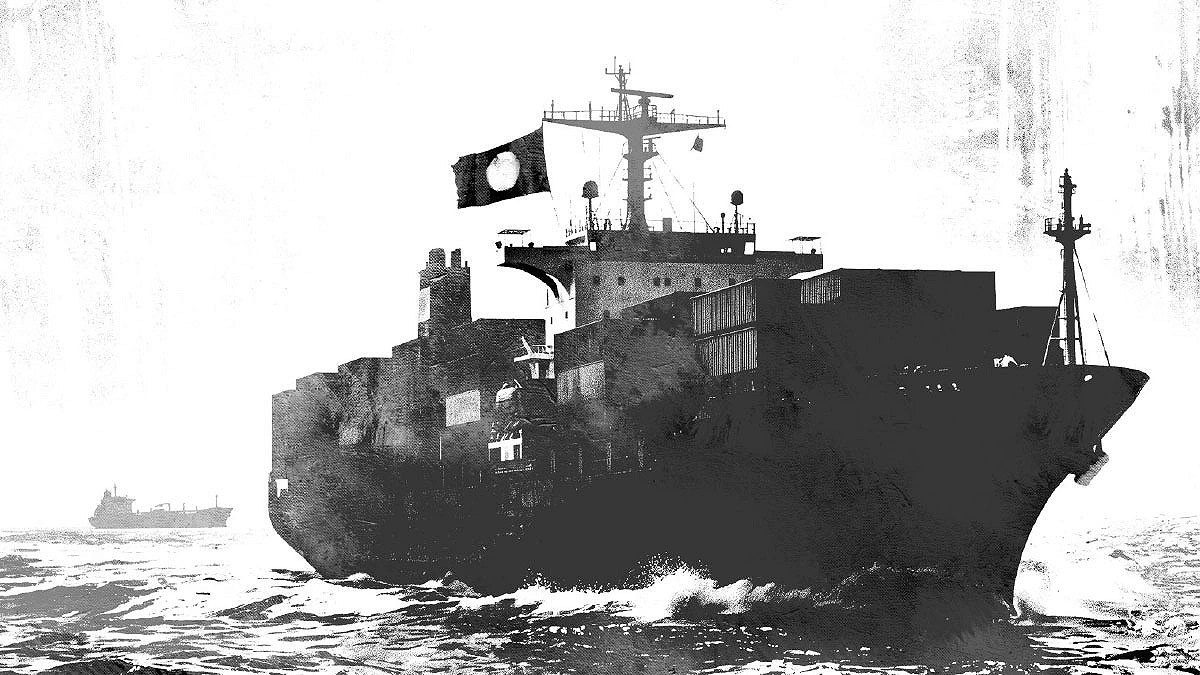
Graphics: Agamir Somoy
Recently, Bangladesh’s decision to join a 14 country maritime defense alliance led by Saudi Arabia to ensure the safety of commercial shipping along internationally important waterways such as the Red Sea, Bab el-Mandeb Strait and Gulf of Aden has sparked widespread discussion.
At a time when geopolitical tensions in the Middle East are intensifying day by day, it is natural that Bangladesh’s decision to become part of such a security framework has raised questions and prompted analysis. Many are asking whether this signals a departure from Bangladesh’s long practiced policy of neutrality and balanced foreign relations, or whether the decision is driven purely by emerging economic and strategic security imperatives.
First, we need to clearly understand the structural nature of this alliance and the main context behind Bangladesh’s decision to join. Some may initially suspect that this is an offensive military bloc similar to NATO. This is different from the mutual defense agreement recently signed among Saudi Arabia, Turkey and Pakistan. From a strategic perspective, however, there is no basis for equating that type of military defense agreement with the Red Sea commercial shipping security alliance. The routes through the Red Sea, Bab el-Mandeb and Gulf of Aden are extremely important to Bangladesh’s international trade. A significant portion of Bangladesh’s exports and imports, particularly its ready made garment trade with Europe and various countries in the Western world, moves through these routes. In recent times, geopolitical tensions have created major risks of attacks on commercial vessels and disruptions to shipping in the region. Bangladesh’s own economic interests and national well being are directly connected to these risks.
If we consider the situation realistically, Bangladesh faces certain challenges in this region as a country. If Bangladesh remains inactive from outside any regional security or protection framework, who would take responsibility for protecting a Bangladeshi flagged commercial vessel if it were attacked in the Red Sea? It appears that Bangladesh decided to join this initiative primarily by considering this practical and direct risk. The objective is not to fight on behalf of any side in a regional or ideological conflict in the Middle East. Rather, the goal is to keep the uninterrupted movement of the commercial routes that serve as the lifelines of Bangladesh’s economy.
The question arises that when Saudi Arabia had invited more than 50 countries to join this maritime alliance, most countries had exercised some caution. Why did Bangladesh agree to it so quickly?
However, following this decision, Iran’s strategic response and the question of Bangladesh’s own risks naturally come to the forefront. Historically, Bangladesh has had no bilateral hostility with Iran from a strategic or diplomatic perspective, and that remains the case today. Even amid complicated political circumstances in the past, as well as various complications involving ships in the Strait of Hormuz or incidents in which vessels became stranded, Bangladesh has been able to maintain its own position and balance in its relations through diplomatic communication. The diplomatic and social relationship between Bangladesh and Iran is not so fragile that Iran would consider Bangladesh’s participation in an integrated alliance for the protection of commercial vessels as a direct act of military aggression against it.

The Iranian government and its policymakers also understand very well that Bangladesh’s presence in the Red Sea is solely in the interest of economic and security protection. Bangladesh does not possess any offensive military capability or armed warships capable of striking Iranian territory or sovereignty. Moreover, given Bangladesh’s geographical position and the broader global political equation, the people and government of Bangladesh have always favored stability, avoiding conflict and peace in the Middle East.
Another important question arises here. When Saudi Arabia invited more than 50 countries to join this maritime alliance, most countries exercised some caution. Why did Bangladesh agree to join so quickly, and does this decision expose Bangladesh to any military risks in the future?
It cannot be said with certainty that the risks are zero. Every international and regional alliance carries various types of risks. In this case, however, the risk is essentially two sided. First, if Bangladesh had not joined the alliance and its international trade through the Red Sea were later disrupted or its vessels came under attack, the resulting damage to the country’s economy could have been enormous. On the other hand, after joining the alliance, the primary caution must be maintained at the policy and diplomatic levels. Bangladesh must ensure that while protecting this trade, it does not become militarily involved in a major regional conflict or a direct war situation. It is acceptable as long as the arrangement functions as a deterrence or a mechanism to prevent attacks. But under no circumstances should Bangladesh be used on a military front there. Our Foreign Ministry and security analysts must keep a very close watch on this matter.
Many believe that joining such a multinational alliance without a direct United Nations resolution or mandate could undermine Bangladesh’s image as a peacekeeping country and its neutral diplomatic position in the international arena. However, looking at modern global politics, it is evident that the United Nations’ sole role and global governance structures are facing stagnation in many areas. As a result, in the current era, various states are joining case by case or issue specific alliances based on their specific national interests, economic security and strategic needs. Bangladesh has earned a unique global image through its longstanding contributions to peacekeeping and international policy. It is unlikely that this image will easily be damaged simply because of an alliance formed to protect maritime trade.
In short, there is no reason to view Bangladesh’s participation in this Red Sea maritime alliance led by Saudi Arabia as a definitive shift toward any particular geopolitical bloc. Rather, it is more reasonable to view it as a pragmatic strategic effort to ensure the security of Bangladesh’s international trade and economy. However, what is most needed in such a sensitive step is the highest level of diplomatic wisdom and vigilance. Bangladesh must protect its economic interests and vast labor market in Saudi Arabia and the broader Middle East while ensuring that it does not create any distance with Iran or any other friendly country. Maintaining this delicate and rational balance in foreign policy is now the biggest challenge of the time.
Author: International relations expert
