
Days go by...

Graphics: Agamir Somoy
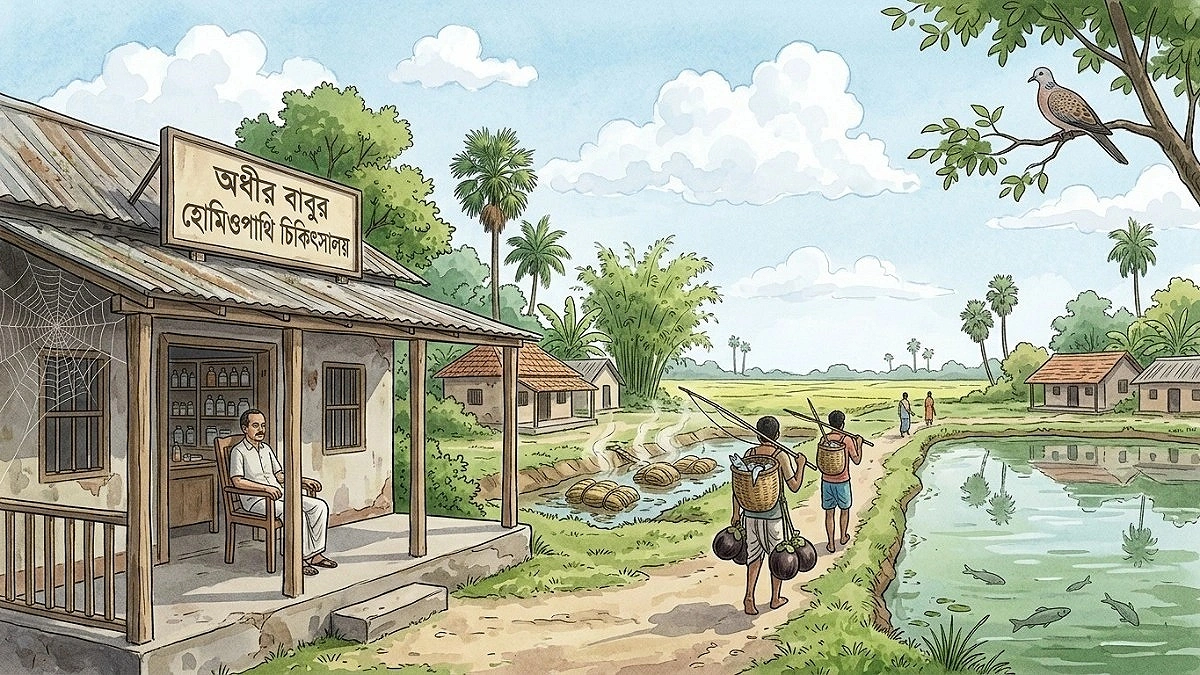
Outside Adhir Babu’s homeopathic clinic, the Bhadra sun shines brightly on a warm day. The sky has a milky white appearance. In the corner of the veranda a spider keeps weaving its web as usual in anticipation of the coming winter. The days of Bhadra move little by little like a turtle. In the green water of the pond near Baraipara the shadows of fish can be seen floating. The sky of village after village watches those shadows intently. Somewhere nearby a dove calls through the restless breeze.
Not many patients come to Adhir Babu’s clinic anymore. In the evening a few elderly villagers come to read newspapers. Some days a hurricane lamp is lit because of power outages. Adhir Babu sits motionless on a wooden chair looking at the small bottles and vials arranged on the shelves.
The days of Bhadra move slowly in the intense heat. They gasp like a patient lying on a hospital bed. In village life bundles of tosha jute sleep in the pond beside the house. The smell of rotting jute weighs heavily on the air. Some people return home in the afternoon after the sun has gone down a little with fishing rods over their shoulders and their baskets filled with fish. Some carry black and solemn palmyra fruits in their hands.
They had left early in the morning after eating panta rice with crushed green chilies and onions. After returning they will eat rice again sitting under the small shed tied up in front of the kitchen. They will talk quietly among themselves. At that time countless fine hairs on the ash gourd lying on a platform behind the eastern room will grow larger like dew before falling away.
In the village the Bhadrapada star quietly appears in the evening sky during Bhadra every year along the boundary of the Andromeda constellation. Who in the city has the time to look at the Bhadra sky? A restless flow of life runs through the city here. In this city of relentless power outages and growing fires on gas stoves it seems no one is interested in knowing which star guards’ eternity along the boundary of the Andromeda constellation.
The lives of city dwellers are filled with daily demands and expectations. Bhadra does not seem to have ever bothered with reform proposals. There appears to be no connection between the steadily rising temperature during Bhadra and Article 142 of the Constitution. In the city there is no spider weaving its web with single minded dedication on the veranda of Adhir Babu’s homeopathic clinic. If the price of a dozen eggs falls or fish and vegetables become available at lower prices citizens have something to talk about when they return home.
Village Bengal during Bhadra
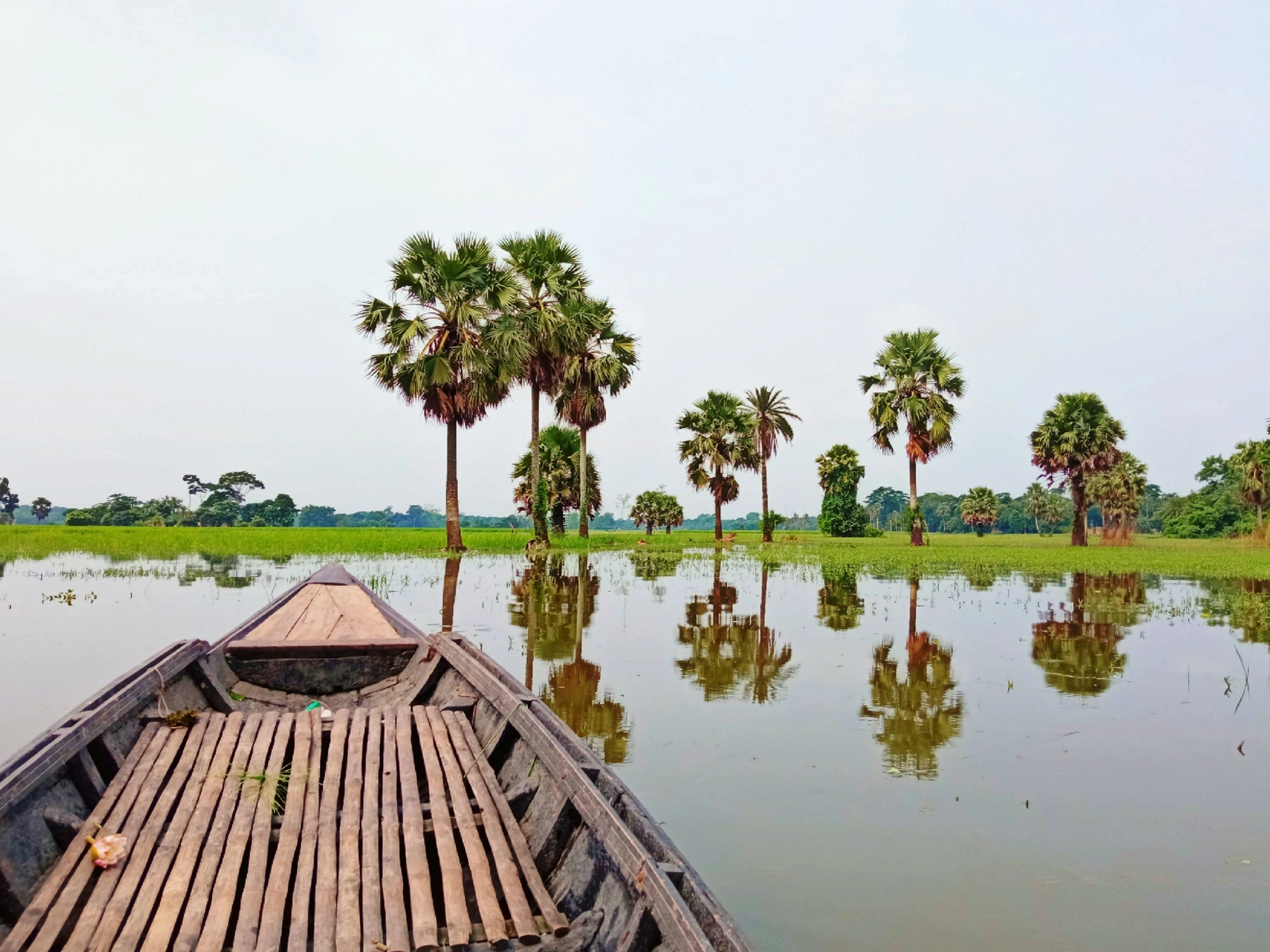
Days go by. Sometimes the sky turns dark. Sometimes rain falls. At other times the blue sky fills with patches of white clouds. The days of Bhadra continue at a slow pace. Yet if one remains still somewhere for a couple of moments the eye can notice small white cotton like objects floating randomly in the breeze. They carry the signs that the kash flowers are about to bloom.
Once Bhadra ends comes Ashwin. Kash flowers will bloom beside rivers and in some open spaces in cities. A slight touch of coolness will be felt in the morning breeze. At night a gentle dew may begin to fall. The festival of Durga Puja will bring a touch of celebration to this indifferent landscape. One can say with closed eyes that tal pitha will be prepared in many homes. People will rush together to take pictures amid the abundance of kash flowers.
Vidyapati wrote a poem about the month of Bhadra:
“This full month of Bhadra with rain, my temple remains empty.”
The feeling of his beloved’s absence echoed as anguish in his heart during this month of Bhadra.
In Bibhutibhushan Bandyopadhyay’s story Talanabami the picture of hardship in rural society during the Bhadra of that time has been portrayed. Bibhutibhushan wrote:
“It is a day in the month of Bhadra. It has been raining for fifteen days and there is neither a pause nor a rest. In this terrible rain the children of many households in the village are going without food. Only when the Aus paddy is harvested and brought into the farmers’ homes at the end of Bhadra will some rice come into the houses again and the children will be able to eat their fill twice a day.”
The picture of human suffering during Bhadra has been portrayed in Bengali literature in this way. That picture has still not disappeared from people’s lives.
In both cities and villages Bhadra still sways on the pages of the calendar in the disorderly wind. With the countless pressures of urban life and a certain indifference spread across rural life our days will continue moving forward with the slow month of Bhadra in the hope of good news.
