
Dhaka Delhi caught in a web of expectations, not conditions

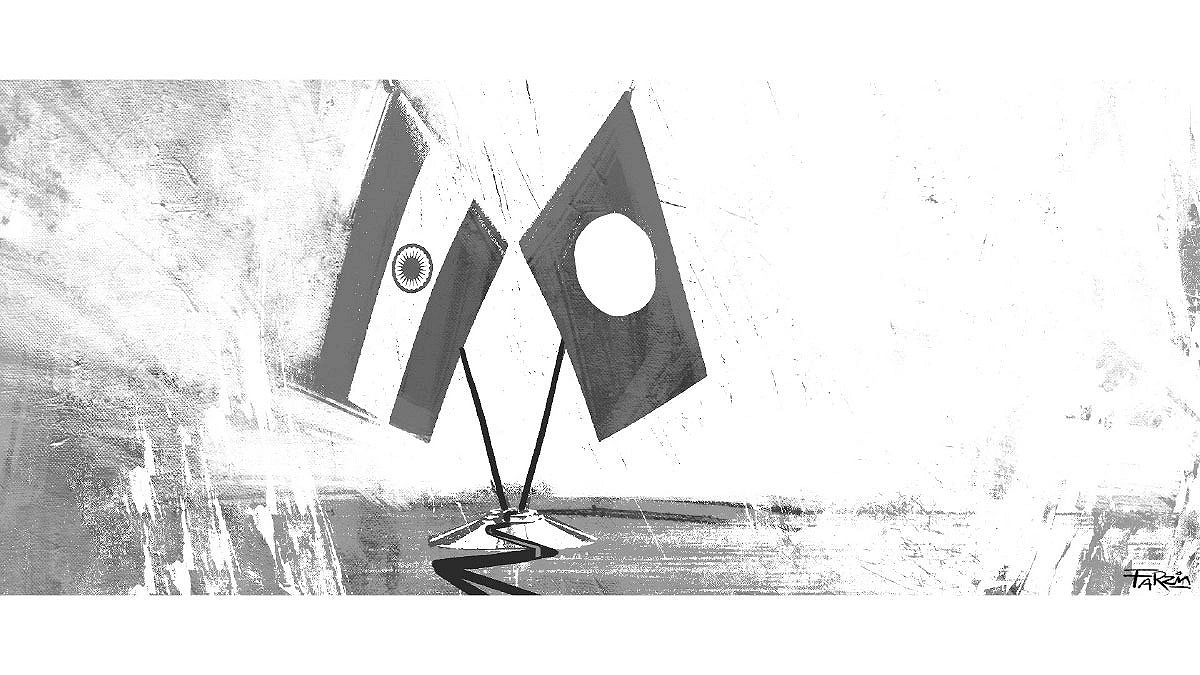
Graphics: Agamir Somoy
Recently, various calculations have been made at home and abroad over the psychological tension and uncertainty in diplomatic circles surrounding the possible visit of Bangladesh’s prime minister to India. In particular, there has been a degree of hesitation over the visit since the invitation to attend the BRICS summit as chair of the regional and multilateral forum BIMSTEC. From our side, there was a natural expectation from the outset that if the prime minister visited India, it should take the form of a full-fledged bilateral visit. However, the situation became somewhat complicated against the backdrop of the ousted prime minister of Bangladesh’s online based political activities from Indian soil and Dhaka’s subsequent strong reaction. Meetings held by the Indian high commissioner in Dhaka at various levels and his quick trip to Delhi to exchange messages with Prime Minister Narendra Modi led us to believe that Delhi was quite sincere about turning the visit into a bilateral one. However, the visit now appears to have been put on hold after Dhaka called for creating a ‘conducive environment’ and raised some specific issues. Even the message from Delhi regarding preparations for a guard ceremony at Rashtrapati Bhavan and its subsequent withdrawal indicates that the bilateral visit is currently facing a degree of uncertainty. However, in my view, this entire situation should not be seen as a severe deterioration in relations. Rather, it should be viewed as a preparatory phase for reassessing the relationship between the two countries in the changed political context.
These days, it is often said that Bangladesh wants a ‘reset’ or realignment of this relationship and has therefore put forward some tough conditions before the visit to India. However, as a student of diplomacy and a former diplomat, I believe that whether you want to reset a relationship or have differences over a specific issue, there is no alternative to dialogue at the international relations table. Rather than maintaining distance through conditions or rigid positions, the most complex diplomatic challenges have to be navigated through face-to-face discussions.
The issues raised by Dhaka should, in light of international diplomatic practices, be viewed as ‘national expectations’ rather than ‘conditions.’ If we consider these issues as conditions or obstacles, the two countries’ top leadership will also have to break down those barriers. Because at the diplomatic table, it is wiser to maintain flexibility and leave room for bilateral dialogue so that a realistic path remains open to achieving our core interests and expectations.
The issues raised by Dhaka should, in light of international diplomatic practices, be viewed as ‘national expectations’ rather than ‘conditions.’
The issue of extraditing former Prime Minister Sheikh Hasina and other fugitives that Bangladesh has repeatedly raised cannot be limited to a simple legal agreement or a unilateral demand. There are essentially three clear dimensions at work here. The first is undoubtedly the legal dimension. When a judicial process or a conviction comes from a court in the country, Bangladesh will certainly seek cooperation under the existing bilateral extradition treaty. This is a legal and constitutional obligation of our country. But the second aspect that many overlook is the political dimension. The former prime minister is not only an accused person in the eyes of the law. She is also the head of a major political party and a longtime politician. In the international context, when the extradition of a political figure is raised, the provisions within the treaty concerning political considerations or exceptions automatically become relevant. This political equation will certainly influence India’s decision-making process. The third and most important aspect is the strategic or geopolitical dimension. India is a major power in South Asia. Its foreign policy has a specific strategic approach toward asylum seekers. Looking at history, India has provided shelter to political leaders from different countries ranging from the Dalai Lama of Tibet to Afghanistan’s Najibullah. How much Delhi will be willing to compromise on this strategic tradition and image will also factor into its calculations. Therefore, when we expect a quick outcome on extradition, it would be objective to keep these political and geopolitical complexities in mind alongside the legal treaty.
However, the central question is whether the suspension of a meeting at the highest level or such complex political tensions will bring about long-term stagnation in the overall relationship between the two countries. Despite all the political and diplomatic tensions since the change of political landscape in August 2024, our daily and material exchanges have not stopped. Electricity imports from India through Nepal, direct electricity purchases, transportation of commercial goods and regular payment processes have continued. This proves that a form of inevitable ‘mutual interdependence’ exists between the two close neighboring countries. Although economic and commercial transactions continue at their own pace, direct dialogue between the top leaders is essential for building political trust and providing direction. When the heads of government of the two countries engage in open discussions, pending issues gain new momentum. It also creates a favorable environment for reaching agreements on long standing sensitive unresolved issues such as trade, water sharing and border security.
In conclusion, there is no reason to consider the current situation a permanent deadlock. In diplomatic terms, this is essentially a temporary phase of understanding. Neither Dhaka nor Delhi has said that it is completely closing the door to dialogue. Bangladesh has not officially announced the cancellation of the visit. India has also not closed the path to discussions. It is clear among policymakers in both countries that the current psychological distance must be overcome and a foundation of mutual trust must be established. If the multilateral forums such as BRICS and BIMSTEC can be used to begin melting the ice, a productive bilateral summit between the two countries could take place in the near future. Moving the talks forward on the basis of mutual respect, sovereign equality and reality while setting aside the trust deficit would be the true hallmark of far-sighted diplomacy for both Dhaka and Delhi.
Author: Former ambassador and diplomatic analyst
