
Government Contemplates to Produce 809 MW Solar Power by 2028

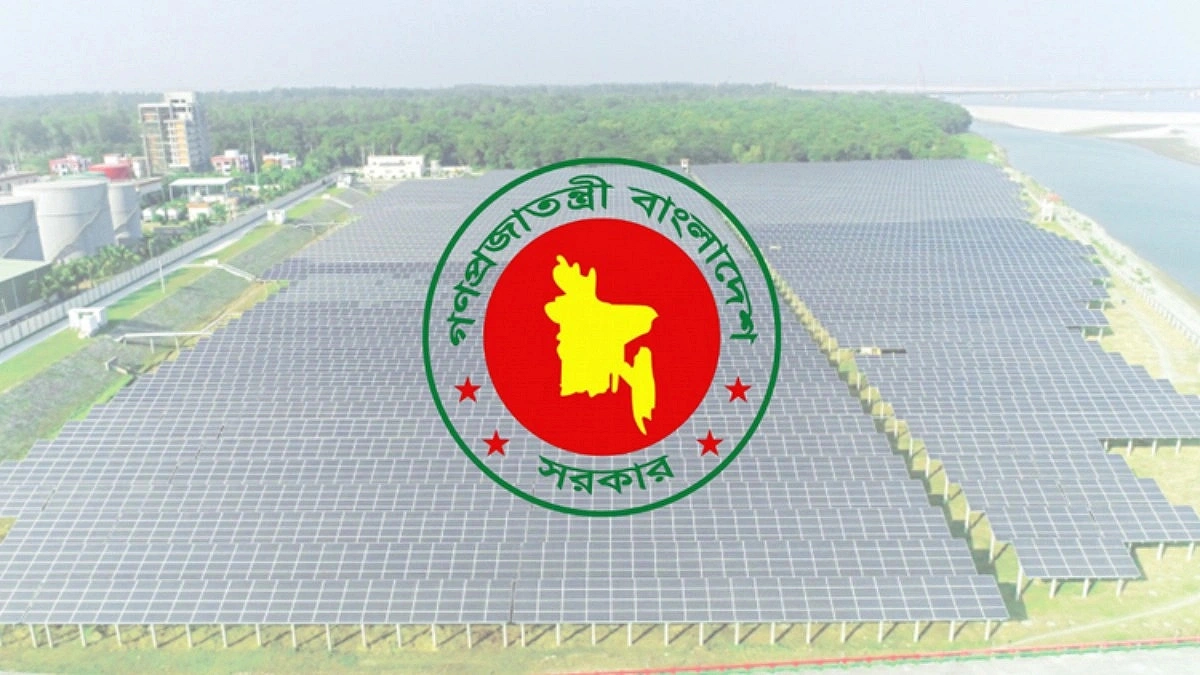
Collected Photo
The government contemplates to produce an additional 809.5 MW of solar power by 2028 to increase the use of renewable energy in the country. Currently, Bangladesh produces a total of 1,451 MW of solar power, which accounts for approximately 5.01% of the country's total power capacity.
Engineer Rezaul Karim, Chairman of the Bangladesh Power Development Board (BPDB), told BSS that this initiative has been taken as part of the government's integrated plan to increase renewable energy, reduce carbon emissions, and strengthen energy security.
He stated that a target has been set to add 809.5 MW of electricity to the national grid by 2028.
Energy analysts believe that rooftop solar and other renewable projects could significantly reduce the country's dependence on imported fuel.
BPDB officials informed that tenders have already been invited for 13 solar power projects to produce 572.6 MW of electricity. Additionally, approximately 5 MW of extra rooftop solar panels have been installed, which will be operational by September of this year.
They further added that 26 renewable energy plants with a capacity of 1,174 MW are currently under construction. Among these, six are government initiatives, and 20 projects with a capacity of 1,062 MW are being implemented in the private sector.
According to BPDB data, the country's total grid-based power generation capacity as of May 2026 is 28,919 MW. When captive power produced for industrial use and off-grid renewable energy are included, this capacity reaches 32,332 MW.
Last Saturday, actual power generation was 10,755 MW, compared to 16,477 MW in April 2024.
The maximum power demand for the current summer season is estimated to be between 18,000 and 18,500 MW.
Currently, a total of 1,450.67 MW of solar power is being produced in the country, of which 1,073.5 MW is connected to the national grid and 377.17 MW is off-grid.
Among other renewable energy sources, 230 MW is generated from hydropower, 62 MW from wind power, 0.69 MW from biogas, and 0.4 MW from biomass.
According to research by the Sustainable and Renewable Energy Development Authority (SREDA), the country has a total renewable energy capacity of 1,743.76 MW, sourced from solar parks, net-metering-based rooftop solar, and solar home systems.
The state-owned Rural Power Company Limited (RPCL) is setting up a 100 MW solar park in Madarganj, Jamalpur, which is scheduled to become operational by December 2026.
Additionally, private sector Independent Power Producers (IPPs) are expected to supply an additional 132 MW of electricity to the national grid.
Energy Adviser Iqbal Hasan Mahmud recently informed the Deputy Commissioner (DC) conference that the government has set a goal to produce 5,000 MW of solar power over the next five years.
He stated, "As a primary step toward achieving this goal, instructions have been issued to install solar panels in all Deputy Commissioner offices across the country within the next three months."
Energy analyst Shafiqul Alam noted that it is essential to formulate an integrated energy master plan to ensure policy consistency and restore investor confidence.
He remarked, "There has been a stagnation in the renewable energy sector due to a lack of initiatives during the tenure of the interim government."
According to current targets, there is a plan to generate 20% of total electricity from renewable sources by 2030 and 30% by 2041, aligning with the United Nations Sustainable Development Goal 7 (SDG-7).
Hasan Mehedi, Chief Executive of Coastal Livelihood and Environmental Action Network (CLEAN) and an energy expert, said, "Establishing a 1 MW solar plant can save approximately 29.4 to 30 million BDT in import costs."
He suggested that if people are encouraged to install rooftop solar panels, production can be increased without direct government investment.
He also mentioned that about 13,000 acres of land previously acquired for coal-fired power plants remain unused.
He added, "Instead of acquiring new land, if solar power plants are set up on this land, the price of electricity per unit could be reduced by 23% to 25%."
The latest report from the International Renewable Energy Agency (IRENA) states that China leads the world in solar power production with 1,202,178.8 MW, followed by the United States with 211,610.1 MW and India with 135,501.5 MW.
Furthermore, Germany, Japan, Brazil, Spain, Italy, Australia, and France are also among the top countries in solar energy production.
Within South and Southeast Asia, Vietnam currently supplies approximately 8,700 MW of solar power to its national grid. The Philippines supplies 2,600 MW, Sri Lanka 1,000 MW, and Pakistan supplies 800 MW.
Sri Lanka has set a target to generate 70% of its electricity from renewable sources by 2030. Through the "Surya Bala Sangramaya" (Battle for Solar Energy) program, rooftop solar power has increased rapidly, exceeding 1,700 MW as of May 2025.
In South Asia, Pakistan is also one of the fastest-growing solar energy producing countries. The country’s current installed solar capacity is approximately 32,000 MW, and it plans to generate 60% of its electricity from renewable sources by 2030.
An analysis by the UK-based media outlet The Guardian stated that following the 2022 Russian invasion of Ukraine, electricity crises emerged in Pakistan due to the rise in Liquefied Natural Gas (LNG) prices. Consequently, people turned toward solar energy as an alternative.
A CNN report on the same subject noted that despite struggling with poverty and economic instability, Pakistan—a country of over 240 million people—is experiencing "one of the world's fastest solar revolutions."
