Chattala Express Wastes 11,000 Working Hours of 1,200 Passengers

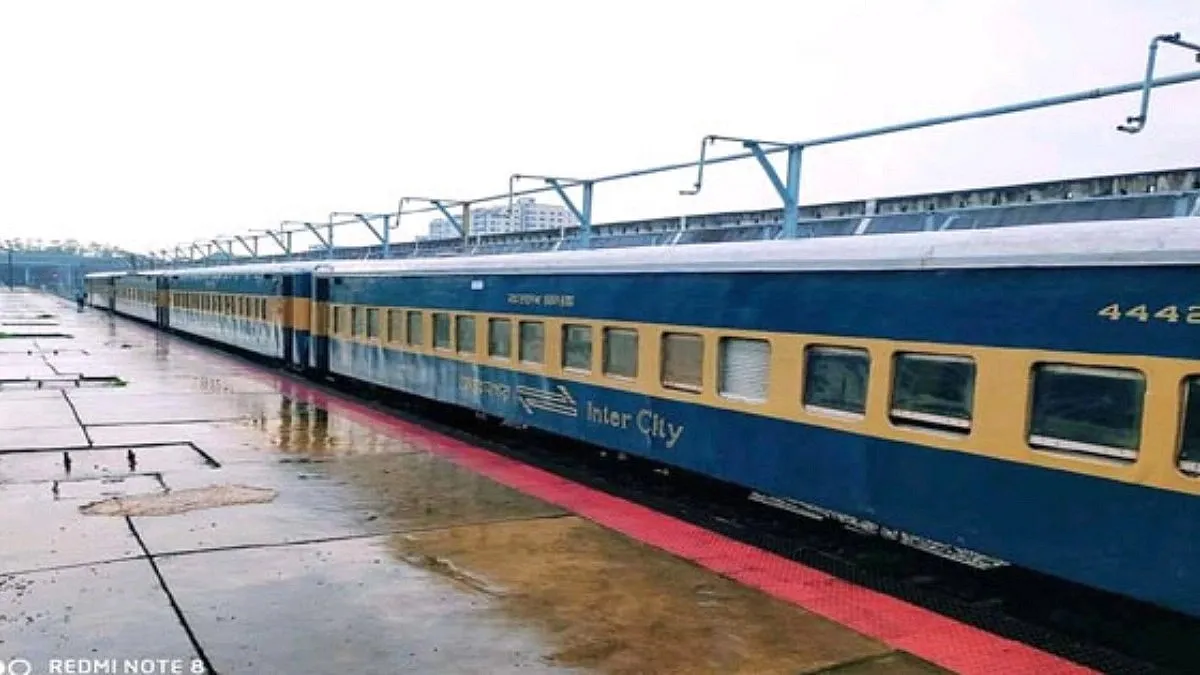
Collected Photo
The Chittagong-bound and Dhaka-bound intercity 'Chattala Express' train has experienced a severe schedule collapse. Over two days, Tuesday and Wednesday, the train ran a combined total of 9 hours late on its up-and-down journeys. This resulted in the loss of nearly 10,800 working hours for at least 1,200 passengers across both trains.
Stranded for hours at stations and inside the train amid scorching heat, general passengers suffered extreme hardships. However, experts say that this delay is due to the mismanagement of the railway, describing it as akin to trivializing the value of people's time.
Responsible railway officials could not provide any specific reason for this delay, with different officials offering various excuses. However, it has been learned that the schedule collapse was primarily caused by the failure of dilapidated engines, an acute shortage of locomotives, and being held up for excessive periods at various stations for train crossings. It is not just these two days; in the month of April, 28 engines broke down on the tracks in the Railway Eastern Zone, causing trains to be delayed by a total of 72 hours in reaching their destinations.
Railway sources stated that the Chattala Express train, which left Dhaka on Tuesday afternoon, arrived in Chittagong at 1:30 AM late at night. However, the train was scheduled to reach Chittagong Railway Station at 8:30 PM. The train was delayed by five and a half hours. The train has a seating capacity of 635. Even with an average of 600 passengers, a total of 3,300 hours of their time was wasted. Although the train's scheduled travel time is 6 hours and 15 minutes, it took nearly 11 and a half hours to reach its destination.
On Wednesday morning, around 6:00 AM, the Chattala Express started its journey towards Dhaka. It was scheduled to arrive in Dhaka at 12:40 PM, but it reached Dhaka at 3:15 PM. The train was delayed by about three and a half hours. This resulted in a total loss of 2,100 working hours for 600 passengers. Over the two days, 10,800 hours were wasted. The train also departed from Dhaka in the afternoon with a two-hour delay.
A passenger named Jobayer Hossain expressed his anger at not being able to reach Dhaka on time. He said, "I bought a ticket for the Chattala Express because I had work in Dhaka. I thought I would finish my work in the afternoon and return at night. But it reached Dhaka nearly three and a half hours late. Because of this, I have to stay in Dhaka for another day."
He also expressed frustration over mismanagement, including taking standing passengers in the AC coaches, as well as disturbances caused by transgender people, beggars, and hawkers.
Agamir Somoy spoke with three officials from the Railway Eastern Zone to learn the reasons behind the delays. None of them agreed to comment using their names.
One of them said, "Two engines broke down on the tracks on Tuesday, which caused the schedule of the Dhaka-Chittagong route to collapse. Moreover, there is an acute engine shortage. After a train is taken to Dhaka using a certain engine, a lot of time is spent reversing that same engine and coupling it to the return trip train. As a result, the train gets delayed right from the departure station."
Another official stated that the Chattala Express has more stoppages than other intercity trains. The train has to wait for a long time at various stations for crossings, which causes it to be late in reaching its designated destination.
The train makes 14 stoppages while traveling from Dhaka to Chittagong. When asked, Dr. Swapan Kumar Palit, a professor in the Department of Civil Engineering at Chittagong University of Engineering and Technology (CUET) and a transportation expert, said, "The biggest offense of the railway is that they have turned this extreme suffering and waste of passengers' time into a normal occurrence. While a one-minute train delay in the developed world leads to hands-folded apologies and compensation, the railway authorities in our country treat delays of hours with indifference and negligence."
"The human aspect—of passengers suffering from being stifled by the heat and bitten by mosquitoes at stations—simply does not touch the railway policymakers."