
World’s Most Dangerous Airport

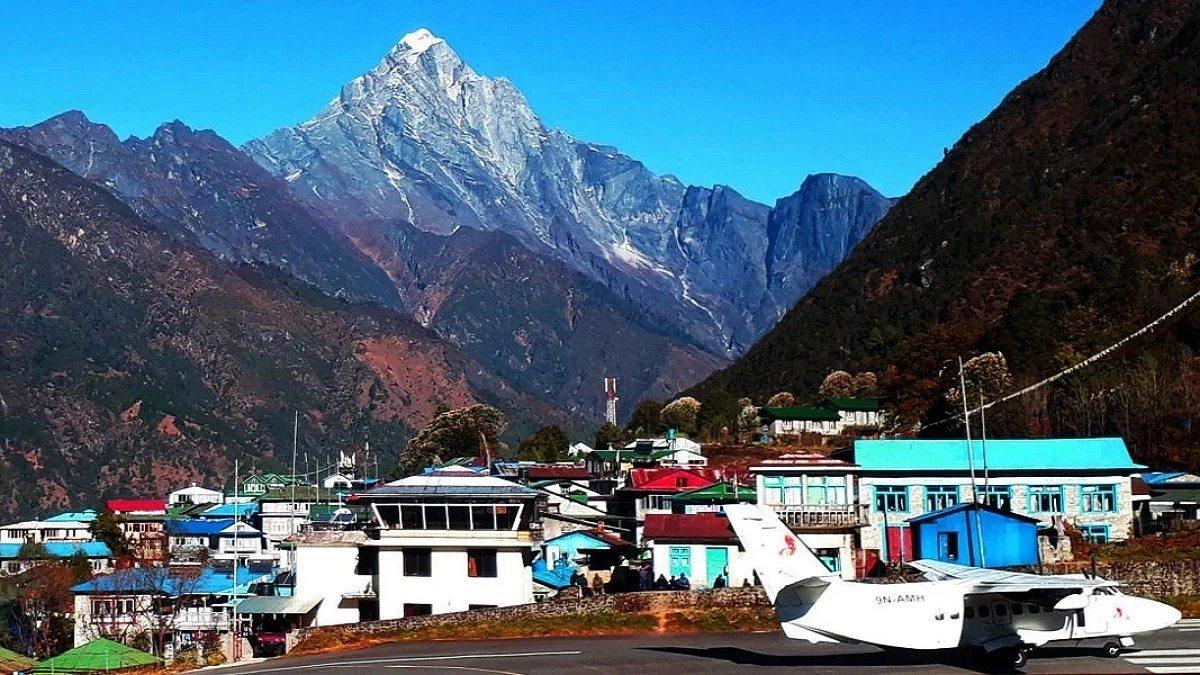
Located at an altitude of around 9,380 feet above sea level, the airport has a runway that is only 527 metres long.
A narrow runway carved into the heart of the Himalayas, with a sheer mountain wall on one side and a deep abyss stretching thousands of feet on the other. There is no room for error. A slight miscalculation by a pilot could lead to catastrophic consequences. This is the story of Lukla Airport in Nepal, officially known as Tenzing-Hillary Airport, which consistently ranks among the world’s most dangerous airports.
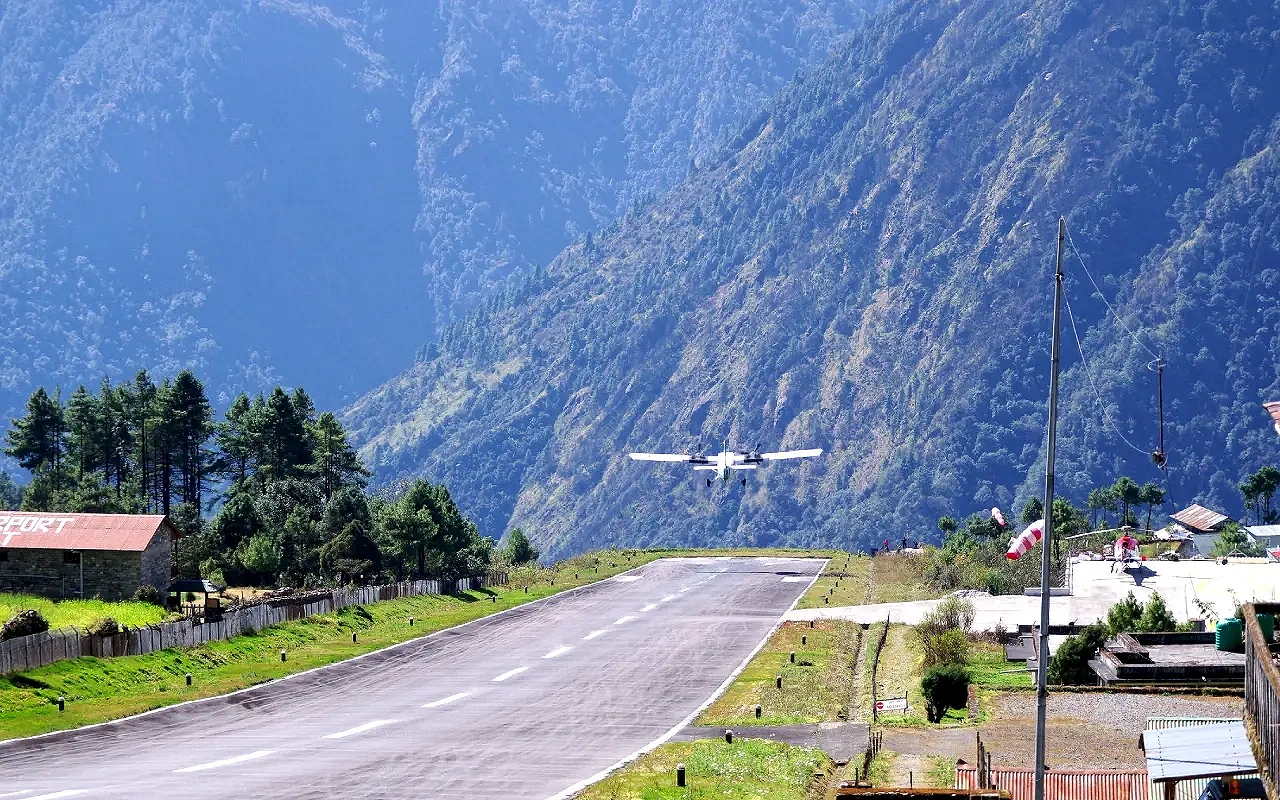
For thousands of climbers dreaming of reaching Mount Everest, this airport serves as the gateway. For many others, it is synonymous with fear. Located at an altitude of around 9,380 feet above sea level, the runway is only 527 meters long. Large passenger aircraft cannot land here; only small, specially designed aircraft operate flights. The runway is also sloped rather than flat, resembling a strip of concrete forced onto a mountainside. One end of it meets a mountain wall, while the other drops into a deep gorge. During landing, pilots face a looming mountain; during take-off, they confront a terrifying drop into open space.
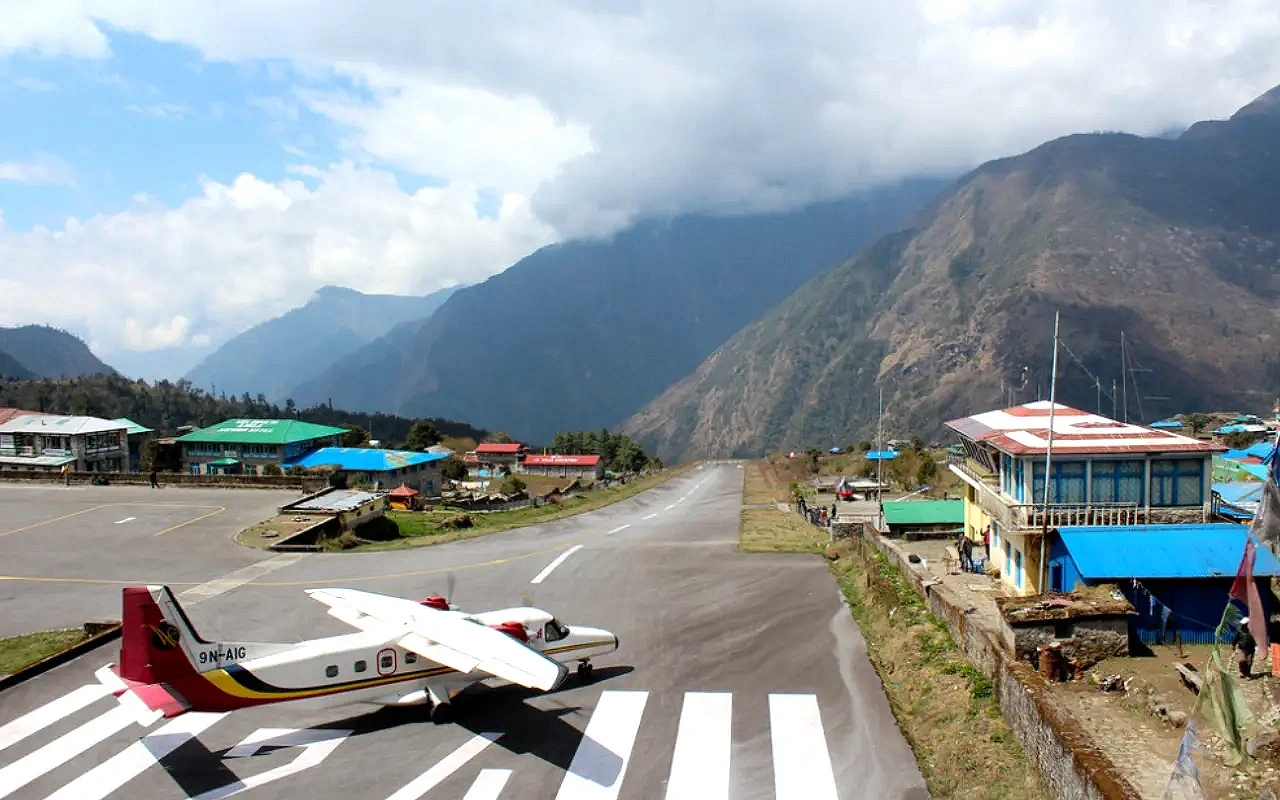
There is almost no chance for a second attempt. Once a landing approach begins, the margin for error is extremely limited. It is not only the runway that makes Lukla dangerous, but also its weather conditions. Clear skies can turn into dense fog within minutes. Clouds can engulf the entire valley, and strong winds often shake aircraft mid-air. Due to the region’s unpredictable weather, flight operations are frequently suspended. Tourists often wait for days for a single flight. Still, people continue to travel there, as every Everest expedition begins from Lukla.
Many passengers describe the flight to Lukla as an overwhelming experience where fear, excitement, and wonder blend together. Outside the window, they see snow-covered peaks, a sea of white clouds, and deep valleys below, making it feel like another world entirely.
Not every pilot is permitted to land at Lukla Airport. Special training and extensive experience are mandatory. According to Nepal’s civil aviation authority, pilots must have significant experience operating in short, mountainous runways. Flying into Lukla means confronting mountains, wind, and rapidly changing weather conditions. Many pilots consider landing there one of the most difficult tests of their careers. For a long time, the airport also lacked advanced radar-based navigation, forcing pilots to rely heavily on visual judgment, experience, and familiarity with mountain routes.
The airport is named after legendary mountaineer Sir Edmund Hillary, who, along with Sherpa Tenzing Norgay, first summited Mount Everest in 1953. Hillary later played a key role in building schools, hospitals, and bridges for Sherpa communities in the Himalayan region. He also contributed to the development of Lukla Airport, which was later renamed Tenzing-Hillary Airport in honor of both climbers. However, the mountains that brought him fame also brought him deep personal tragedy.
On March 31, 1975, a small aircraft departed from Kathmandu carrying Hillary’s wife, Louise, and their daughter, Belinda. They were traveling to join a hospital project initiated by Hillary. The aircraft crashed before reaching its destination, killing everyone on board. The tragedy deeply affected Hillary, who later wrote that it left the greatest void of his life.
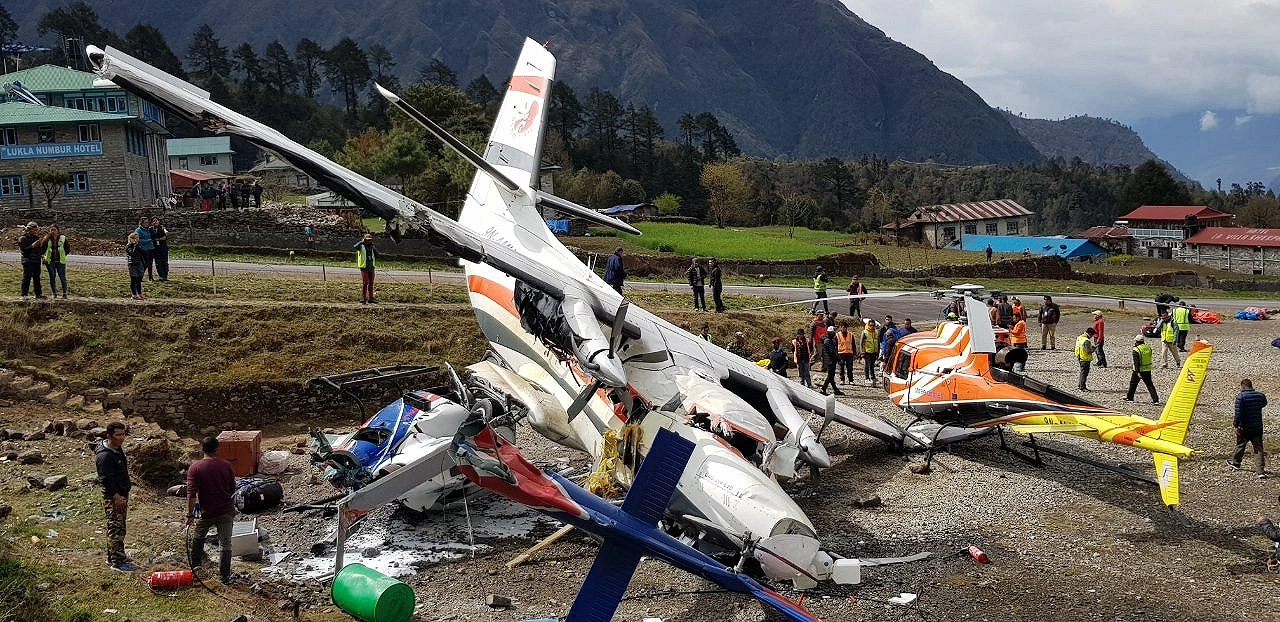
Lukla Airport has witnessed several other accidents over the years. In 2008, a plane crashed during landing in dense fog, killing multiple people. In 2017, another aircraft lost control near the runway and fell into a gorge. In 2019, a plane veered off the runway during take-off and collided with a helicopter parked nearby. Despite such incidents, activity at Lukla has never slowed, as fear and beauty continue to coexist here. Many travelers describe it as the most terrifying yet beautiful flight of their lives. Some passengers applaud in relief after landing, while others stand silently for a moment upon touching the ground, as if they have just returned from the edge of death.
