
An Average of 13 Road Deaths Daily in April

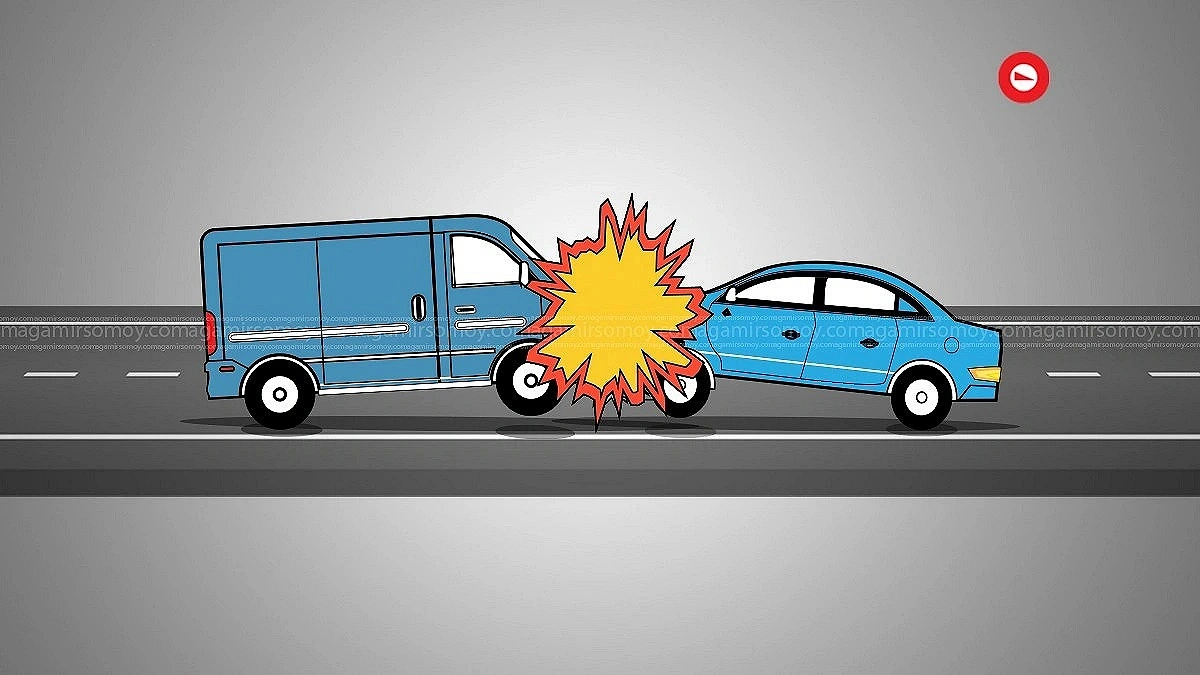
Graphics: Agamir Somoy
In April, some 463 road accidents across the country resulted in 404 deaths and at least 709 injuries. This reveals an average of at least 13 deaths per day.
The deceased include 53 women, 48 children, and 49 students. Furthermore, 142 motorcycle accidents claimed 113 lives, accounting for 27.97% of the total fatalities. Pedestrian deaths totaled 102, representing 25.24% of the total deceased. Additionally, 46 drivers and assistants were killed in these incidents.
These statistics were revealed in the monthly accident report published on Wednesday by the Road Safety Foundation. The report was compiled based on information from various national and regional media outlets as well as the organization's own data.
In addition to road incidents, seven waterway accidents during this period resulted in four deaths and 11 injuries. The report also noted that 26 people were killed and 17 injured in 34 railway accidents.
The Road Safety Foundation's observation and analysis show that 168 (36.28%) accidents occurred on national highways, 193 (41.68%) on regional roads, 45 (9.71%) on rural roads, and 57 (12.31%) on urban roads. Among these accidents, 97 (20.95%) were head-on collisions, 194 (41.90%) involved losing control of the vehicle, 106 (22.89%) involved running over or hitting pedestrians, 52 (11.23%) were rear-end collisions, and 14 (3.02%) were due to other causes.
Time-based analysis shows that 7.77% of accidents occurred at dawn, 28.50% in the morning, 20.08% at noon, 11.87% in the afternoon, 12.74% in the evening, and 19% at night. Dhaka Division witnessed the highest toll, with 102 deaths in 109 accidents. Sylhet Division recorded the lowest, with 12 deaths in 12 accidents. In the capital, 24 people were killed and 67 injured in 36 accidents.
The causes attributed to these accidents include faulty vehicles; defective roads; reckless speed; the reckless mindset, incompetence, and physical/mental illness of drivers; lack of fixed pay and working hours; the movement of low-speed vehicles on highways; reckless motorcycling by youth; a tendency among the public to be unaware of or ignore traffic laws; and weak traffic management.
The report provided 12 recommendations. Chief among them is the restructuring of the National Road Safety Council, placing the BRTA, BRTC, and DTCA under its authority. The council must have the power to formulate laws, rules, and policies. Other recommendations include making modern safety technology mandatory in motor vehicles, withdrawing expired vehicles from the roads, and introducing company-based modern bus services in the capital through route rationalization.
Furthermore, the report suggests increasing the number of BRTC buses and improving transport services to boost the government's transport capacity. It emphasizes increasing institutional initiatives to create skilled drivers while ensuring their wages, working hours, and healthcare. The report also calls for safe road designs, including service roads on all highways for low-speed small vehicles, the appointment of gatekeepers at all rail crossings, and a dedicated budget allocation to raise awareness and improve the skills of road users.
