


Ahsan Manzil: Dhaka’s Pink Palace through the ages

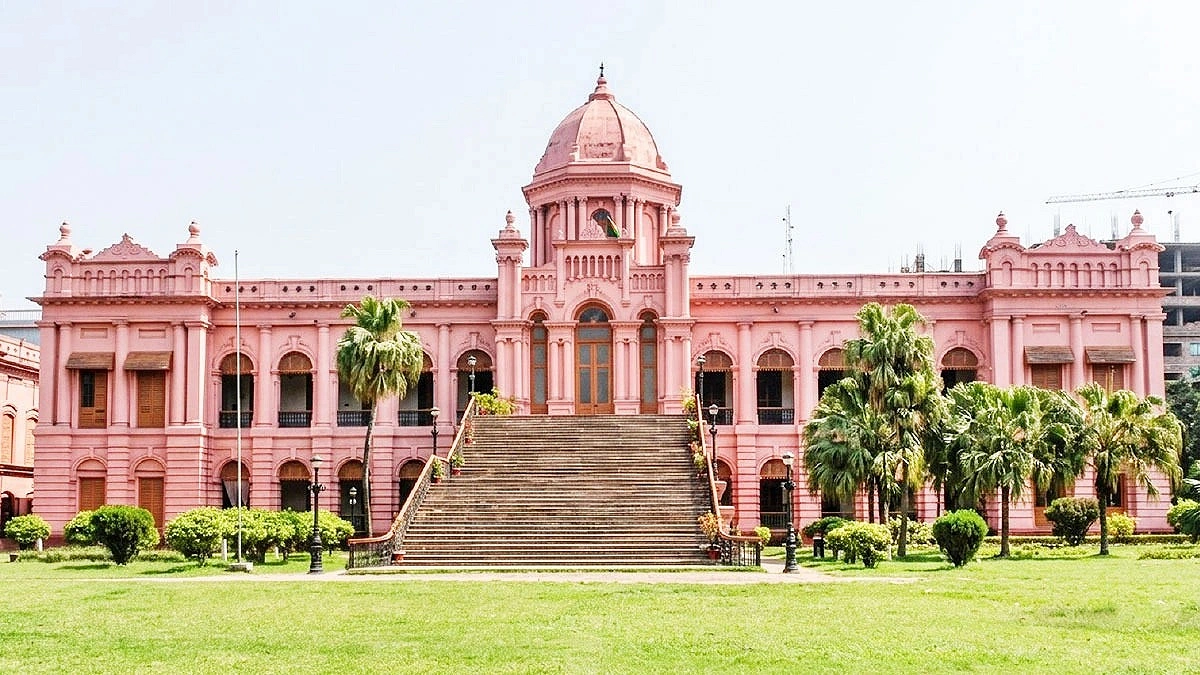
Photo: Agamir Somoy
Ahsan Manzil, standing in Kumartuli of Old Dhaka on the banks of the Buriganga River, is one of the most important historical landmarks in Bangladesh.
Because of its pink color, people also know it as the Pink Palace. In the 19th century, it served as the residential palace of the Dhaka Nawab family and the headquarters of their landowning administration.
Its history is even older; Khwaja Alimullah bought an old building in Kumartuli from the French in 1830 and renovated it to use as his residence. Later, his successor Nawab Khwaja Abdul Ghani expanded and reconstructed the palace.
The construction of the new palace began in 1859 and ended in 1872. He named the palace Ahsan Manzil after his son, Khwaja Ahsanullah.
Architecturally, the building is also unique. Built on an elevated platform, the two-story palace features a dome at its center and a spacious, river-facing staircase in front. Semicircular arches, verandas, decorated pillars, marble floors, and a blend of European and local architectural styles give the building its distinctive character.
Although the devastating cyclone of 1888 and the earthquake of 1897 damaged the palace, workers renovated the structure later. Ahsan Manzil was not just a royal residence; it also played a significant role in the political history of colonial Bengal. Many viceroys and high-ranking officials of British India visited the palace.
Lord Curzon also stayed here in 1904. The most remarkable event occurred on December 30, 1906, when the decision to establish the All-India Muslim League was adopted following a conference of Muslim leaders organized under the initiative of Nawab Khwaja Salimullah.
Following the partition and the abolition of the landowning system, the palace fell into disrepair due to neglect. In 1985, the government acquired the property and initiated its preservation and reconstruction.
After completing the renovations, authorities inaugurated Ahsan Manzil as a museum on 20 September 1992. Now its galleries display the lifestyle of the Nawab family, historical documents, furniture, photographs, and various artifacts.
Ahsan Manzil remains not just a building today, but a visible monument of Dhaka’s social, political, and cultural past.

