


The Stranger in The Mirror: AI and The Cognitive Drift

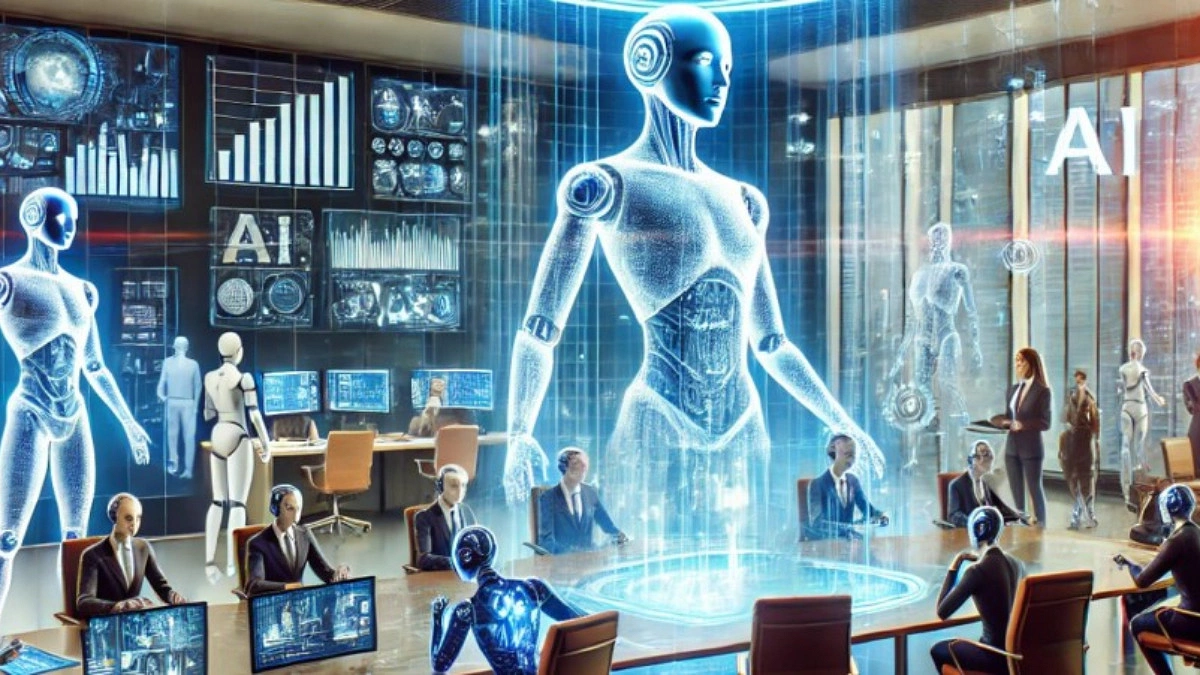
Image generated by AI.
Surrendering your internal voice to AI isn't a simple loss of skill; it is a deepening estrangement from the self that thinks.
We must examine this closely because the "thinking self" is not a static monument. As William James observed, consciousness is a fluid stream, shaped by language, culture, and the tools we wield. If the self is always in flux, what are we actually losing?
The answer is not a fixed identity, but a process. It is the specific texture of your uncertainty—the way your mind hesitates, pivots, and eventually commits. It is the friction that turns a half-formed thought into something uniquely yours. You recognize this process when you are in it; it is a direct collision between you and a problem. Increasingly, we are noticing when that collision fails to happen.
Beyond the Medical Metaphor
We often use medical terms—atrophy, addiction, or dependency—to describe our reliance on AI. These metaphors cast the human as a passive patient and the technology as a predatory agent. While this makes the issue feel treatable through regulation or "digital detoxes," it fundamentally miscalculates the mechanism at work.
AI does not attack our cognitive structures like a biological disease. Instead, it reshapes the cost structure of thinking. As rational actors, we optimize for efficiency. When a difficult paragraph becomes a hurdle, we no longer climb over it; we route around it.
The Optimization Trap
Reaching for AI is rarely an admission of inability. It is a response to the perceived inefficiency of human thought compared to the instantaneous output of a machine. This isn't just dependency—it is a shifting preference. Repeated preferences harden into habits, and eventually, those habits stop feeling like choices at all.
We aren't necessarily trading away our capacity to think, but rather our tolerance for cognitive toil. Friction is not a bug to be optimized away; it is the very environment required for intellectual growth. By removing the struggle, we inadvertently remove the development that comes with it.
The Paradox of the Proficient Thinker
This vulnerability is most acute for those who think well. Because AI can produce output that closely mimics their own high-level reasoning, the "gap" between the self and the machine becomes almost invisible.
The struggling writer knows the machine’s voice is not theirs.
The proficient thinker is the one most likely to mistake the machine’s echo for their own original voice.
This is why "estrangement" is the perfect term. It is a gradual, relational distancing. As your own internal voice begins to feel effortful and "expensive," the AI voice feels smoother—perhaps even more like the person you aspire to be.
The Difficulty of Return
Physical muscles can be rebuilt through exercise, but repairing a relationship with your own mind is a different challenge entirely. It requires:
Recognizing that you have drifted.
Willingly enduring the discomfort of returning to "slow" thinking.
In an era defined by instant gratification, the path of least resistance points in only one direction. The value of thinking is not found in the final output, but in the moment you find yourself within a thought you authored.
When we drift too far into the ease of AI, the ultimate loss isn't what we can do—it's what we can still find within ourselves. (source: www.psychologytoday.com)

