
Pakistan's highest honor for two Indian doctors for keeping Jinnah's terminal illness secret

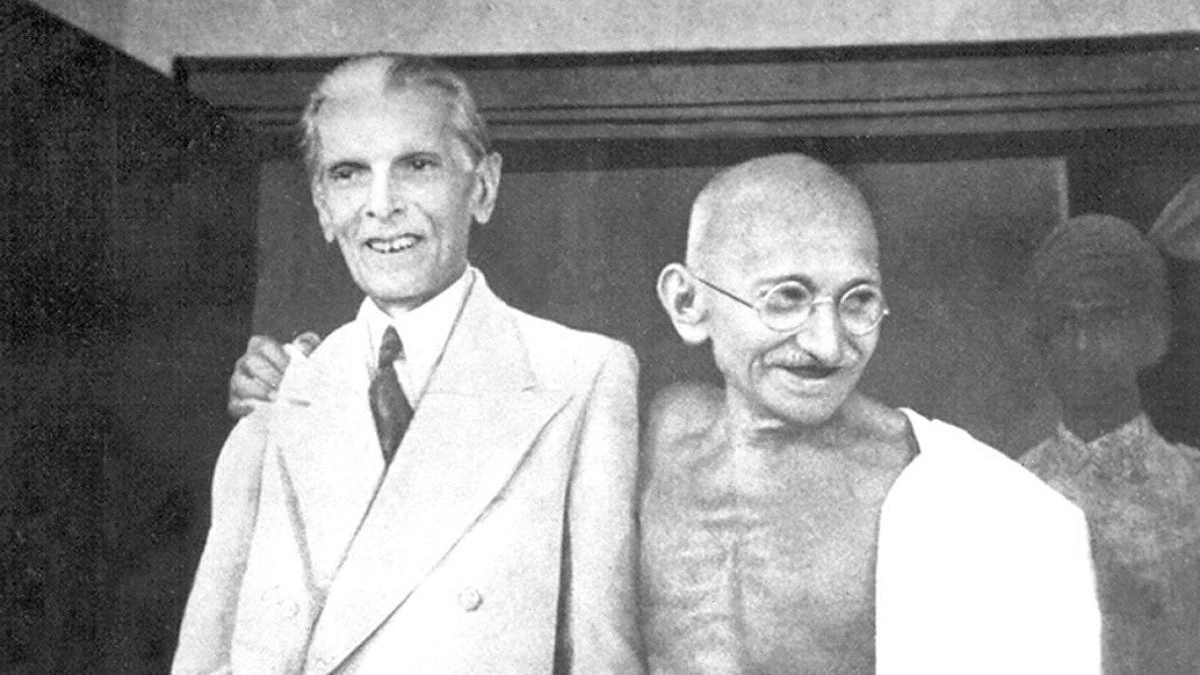
Muhammad Ali Jinnah and Mahatma Gandhi. Photo: Collected.
Just before the partition of India in 1947, Muhammad Ali Jinnah was afflicted with severe tuberculosis. The doctors knew he did not have much time left, but they did not disclose this news.
They were two Parsi doctors from Bombay (now Mumbai). Their assessment was that Jinnah would not survive more than one or two years. This confidential information--if disclosed-- about Jinnah's illness could perhaps have changed the very history of the partition of India. Now, 78 years later, Islamabad has decided to award these two doctors Pakistan's highest civilian honor, the 'Nishan-e-Imtiaz', for safeguarding that secrecy.
Pakistan has nominated Dr. Jal Ratanji Patel and
for the Nishan-e-Imtiaz for their role in keeping the details of Jinnah's terminal illness confined to only a few of his close associates. Federal Minister for Planning, Development, and Special Initiatives Ahsan Iqbal, who heads the award committee, made this announcement.
In a post on X, Ahsan Iqbal stated that in 1946, Dr. Patel and Dr. Dhayvo-ku examined Jinnah's X-rays and determined that his tuberculosis had reached a critical stage and that he had only one to two years left. However, they maintained professional confidentiality regarding the severity of his illness. According to many historians, if this information had been made public, the timeline of the partition and the very establishment of Pakistan could have changed.
Ahsan Iqbal wrote, "As Chairman of the Award Committee, I feel honored to nominate two extraordinary doctors for the Nishan-e-Imtiaz. One is a doctor and the other a radiologist, both belonging to the Parsi community of Bombay. They faithfully kept confidential the fatal illness of Quaid-e-Azam Muhammad Ali Jinnah."
He further wrote, "At such a critical time, by maintaining absolute professional secrecy, these doctors rendered silent but extraordinary service. Their loyalty to their professional oath unintentionally played a crucial role in creating circumstances that made the establishment of Pakistan possible."
Dr. Patel and Dr. Dhayvo-ku are being honored 78 years after Jinnah's death. They will be awarded this honor posthumously at a ceremony in March 2027.
According to the Pakistani minister, Lord Mountbatten, the last Viceroy of British India, later admitted that if he had known just how seriously ill Jinnah was, he might have delayed the partition. This could have altered the course of history.
At that time, tuberculosis was an extremely fatal disease, and effective antibiotic treatments did not exist. It is known that Jinnah kept the critical state of his health hidden from the public, fearing that disclosure would weaken his political image and leadership.
Jinnah's physical condition deteriorated further during the 1947 partition. Just a little over a year after the partition, he died of pulmonary tuberculosis on September 11, 1948.
Source: NDTV
