
Who Will Repay the Chinese Loan?

Collected Photo
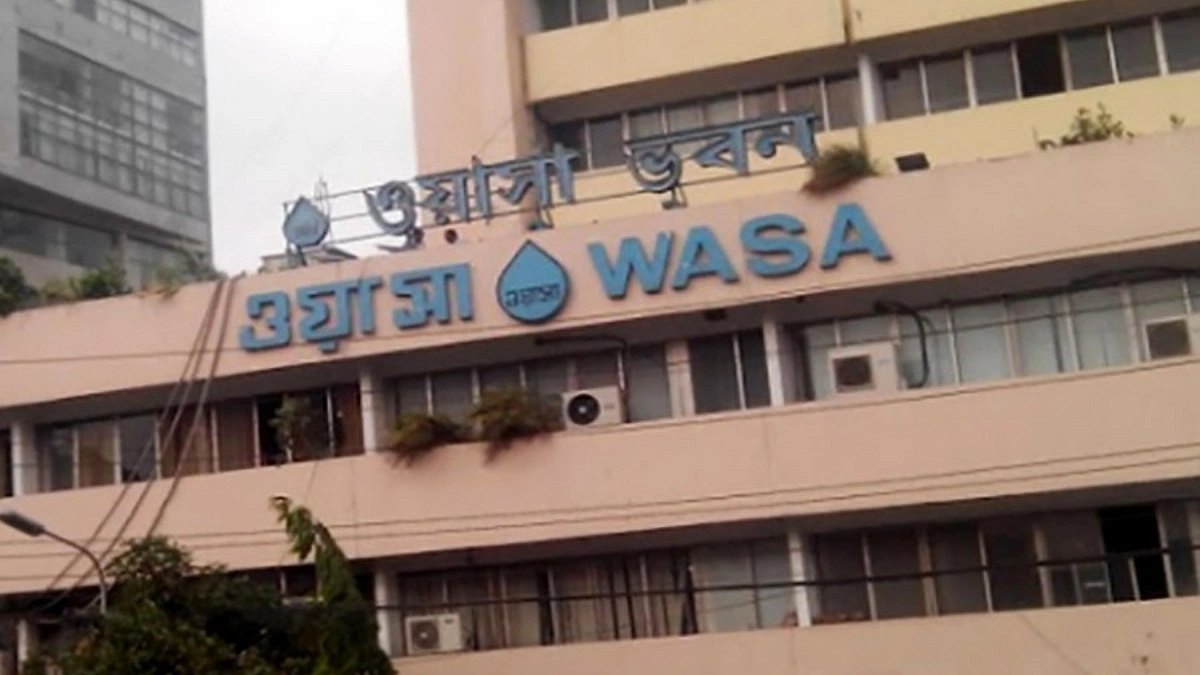
The Dasherkandi Sewage Treatment Plant is a crucial facility for treating wastewater from 17 areas of the capital. The project cost Tk 33.7065 billion in total, of which Tk 23.66 billion was taken as a loan from China Exim Bank. Repayment of the loan is scheduled to begin next year. Concern has now mounted within Dhaka WASA over how this Chinese loan will be repaid.
Including a 2 percent interest rate, a 0.2 percent commitment fee, and a 0.2 percent maintenance fee, the total repayment amount will be Tk 27.6049 billion.
A senior Dhaka WASA official told Agamir Somoy that the original objectives for launching the Dasherkandi Sewage Treatment Plant have not yet been achieved. Despite being the largest and most modern treatment plant in South Asia, it has suffered from a lack of connection lines since the beginning. As a result, only about one-quarter of the wastewater from its designated service area is currently being treated. About 75 percent of the target area remains outside its coverage, meaning the expected revenue is not being generated. At the same time, operating costs are very high, making it difficult to run the plant using internal income alone. Under these circumstances, repaying the loan will be extremely challenging.
On the issue of loan repayment, a China Desk official of the Economic Relations Division (ERD) said on Wednesday that loans taken from China require installment payments twice a year. If Dhaka WASA fails to pay the installments, it will have to seek assistance from the Ministry of Finance. In fact, the Ministry of Finance has previously paid installments on several Dhaka WASA loans.
Former Dhaka WASA official Mamtazur Rahman, who was involved with the project, told Agamir Somoy that the loan from China was taken at a very low interest rate. “While many other loans carry interest rates of around five percent, this one was taken at two percent. This is known as a concessional loan,” he said. He added that government support would be necessary for repayment because sewage treatment costs are significantly higher than those of conventional water treatment plants. “Over time, WASA’s revenue will increase, but the government will also need to provide subsidies. This involves the environment, ecosystems, and human life. In Japan, the government provides a 60 percent subsidy for sewage treatment. Many countries around the world provide subsidies of more than 50 percent. The government needs to do the same here.”
Meanwhile, the Implementation Monitoring and Evaluation Division (IMED) has identified excessive dependence on foreign expertise, sludge management, high operating costs, and foreign loan repayment as major risks in operating the plant. IMED has also highlighted key weaknesses of the project, including the absence of a connection pipeline network and a lack of coordination in operations.
After reviewing the second draft impact evaluation report of the Implementation Monitoring and Evaluation Division (IMED), it was found that the project’s original approved timeline was from July 2015 to December 2019. However, actual implementation continued until December 2023.
As a result of the project’s implementation, wastewater from the surrounding areas of Gulshan, Banani, Baridhara, Baridhara DOHS, Bashundhara, Badda, Bhatara, Banasree, Kuril, the Jatiya Sangsad (Parliament) area, Shukrabad, Farmgate, Tejgaon, Aftabnagar, Niketan, Satarkul, and Hatirjheel is now being treated and discharged into the Balu River. This has contributed to reducing water and air pollution. In addition, pollution levels in the Shitalakkhya River at the intake points of the Sayedabad Water Treatment Plant Phase-1 and Phase-2 have also decreased.
According to the IMED report, implementation of the Dasherkandi Sewage Treatment Plant project has led to notable improvements in sewerage services, environmental quality, and public health in the affected areas. Environmental pollution has decreased by 54.8 percent, foul odors by 72.5 percent, and sewerage conditions have improved by 45.9 percent. The report also notes improvements in canal and river environments as well as aquatic biodiversity. However, limitations in the drainage system, waterlogging during heavy rainfall, partial health risks, gaps in sewer connections, and a lack of public awareness are hindering the project from achieving its full potential.
The report further states that during project implementation, 74 audit objections were raised across different fiscal years, involving a financial value of approximately Tk 671.9 million. Of these, 20 objections have been resolved, while 28 have been recommended for settlement by the Local Government Division. The remaining objections are yet to be resolved.
Among its recommendations, the report says that to ensure greater transparency in the sale of fly ash, focus group discussions should be held with all buyers, followed by open tendering. It also notes that for any issues related to the plant’s operating software or mechanical faults in machinery, reliance on Chinese experts remains high. To address this, an adequate number of engineers and operators from Dhaka WASA should be trained and developed to handle such technical matters independently.
The report further recommends conducting research on whether liquefied petroleum gas (LPG) can be used instead of diesel to reduce maintenance costs. It also suggests installing solar panels within the plant to save electricity. Occasional foul odors from smoke emitted by the plant have been observed, and measures should be taken to mitigate this. Additionally, meetings of the Project Implementation Committee (PIC) and the Project Steering Committee (PSC) were not held on time during project execution. The report recommends that such meetings be held regularly in future projects.
