
The man who dreamed in stories


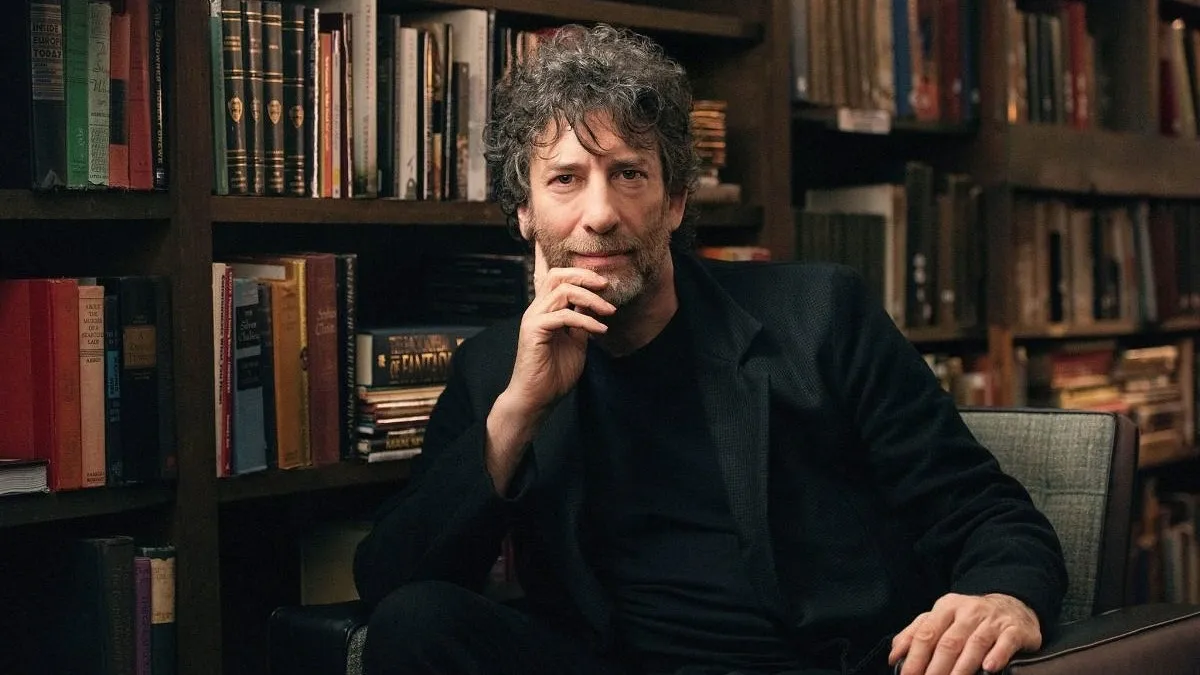
Photo: Neil Gaiman
Few living writers have moved between so many worlds with such ease. Neil Gaiman has written comic books that changed how a whole medium saw itself, and novels that sit comfortably on children’s shelves and adult bestseller lists alike. He has also written screenplays, audio plays and a Doctor Who episode that won a Hugo Award. He was born on 10 November 1960 in Portchester, Hampshire, which makes today his sixty sixth birthday. Yet his story can no longer be told as a simple celebration. Since 2024, accusations of sexual assault have reshaped his public life, and an honest portrait has to hold the achievement and the allegations in the same frame.
A boy who read everything
Gaiman’s family came from Polish Jewish and wider Ashkenazi roots. His grandfather settled in Portsmouth and built a small chain of grocery stores, changing the family name from Chaiman to Gaiman. His father worked in the business and his mother was a pharmacist. When Neil was five, the family moved to East Grinstead in West Sussex, a town that also housed a Scientology centre. His father became a public voice for the church, and at seven Neil was turned away from one school because of that connection. Gaiman says he is not a Scientologist and describes the faith as his family’s religion, much as Judaism was.
Reading was his refuge. He could read at four, and he has joked that he did well at school mostly because he read the textbooks on the first day. At about ten he devoured the occult thrillers of Dennis Wheatley. In his school library he borrowed the first two volumes of The Lord of the Rings again and again, because the third was missing, until an English prize let him buy it. For his seventh birthday he received The Chronicles of Narnia. What he loved most was C. S. Lewis’s habit of speaking to the reader in asides. Decades later, when he won the Carnegie Medal himself, he said that writing for your seven year old self is a fine way to succeed. Alice in Wonderland, Batman comics and Monty Python filled the rest of the shelf.
Learning the trade
In the early 1980s Gaiman turned to journalism, writing interviews and reviews as a way to learn about the world and make useful contacts. His first professional short story appeared in 1984. That year he also wrote a biography of Duran Duran and co edited a book of quotations with Kim Newman called Ghastly Beyond Belief. The first edition sold out quickly, though Gaiman thought he had done a poor job, and the publisher soon went bankrupt. It was an early lesson in how the business worked. He wrote under several pseudonyms and left journalism in 1987, saying that British newspapers too often print untruths as fact.
The turning point came at London’s Victoria Station in 1984, when he noticed a copy of Alan Moore’s Swamp Thing and read it while waiting for a train. Moore’s approach to comics won him over, and the two became friends. Moore taught him how to write comic scripts. Gaiman took over the series Miracleman after Moore, and he teamed up with the artist Dave McKean on graphic novels such as Violent Cases and Signal to Noise. DC Comics hired him in 1987, and his limited series Black Orchid caught the eye of the editor Karen Berger. She asked him to reinvent an old DC character called the Sandman, with his own spin on it.
