
The man who made silence funny


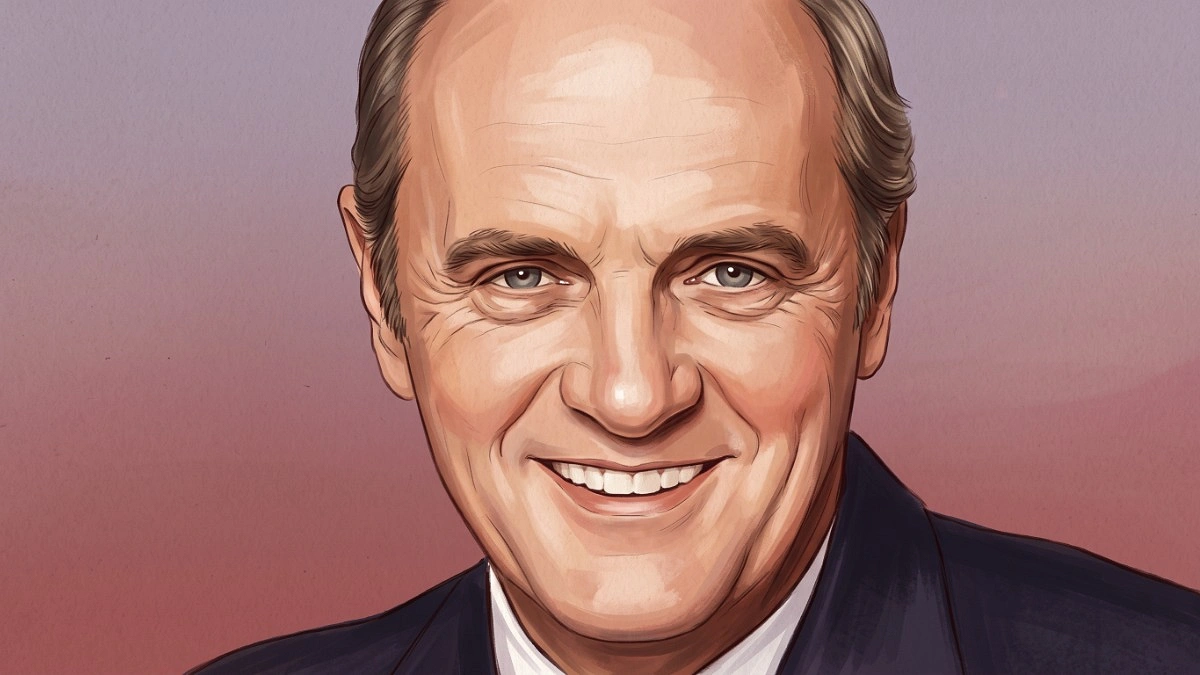
Picture: Bob Newhart
Today marks the birthday of George Robert Newhart, born September 5, 1929, in Oak Park, Illinois, and known to the world simply as Bob Newhart. Had he lived, he would have turned ninety-seven. Newhart died on July 18, 2024, at his home in Los Angeles at the age of ninety-four, following a series of short illnesses. Yet on this day each year, his admirers pause to remember a performer who built an entire career on the art of restraint, proving that comedy did not need to shout to be heard.
An unlikely beginning
Newhart's path to comedy was anything but direct. After graduating with a business degree from Loyola University of Chicago, he served in the United States Army during the Korean War from 1952 to 1954, working with the Armed Forces Radio Service and reaching the rank of staff sergeant. Once back in civilian life, he took a job as an accountant for US Gypsum and later worked as an advertising copywriter in Chicago. It was during this period, while exchanging invented phone conversations with a coworker to pass the time, that the seed of his comedic style was planted. When his coworker eventually left the job, Newhart kept going alone, recording one side of imaginary telephone calls and playing the straight man to a silent, absent partner. That simple trick, talking to someone who was never there, would become the foundation of his signature act.
The Button-Down Mind
Newhart's unconventional style, delivered in a mild, hesitant voice with a carefully placed stammer, caught the attention of a record label, and in 1960 he released his debut album, “The Button-Down Mind of Bob Newhart.” The record was a sensation. It shot to number one on the Billboard pop albums chart and earned him Grammy Awards for Album of the Year and Best New Artist, a rare feat that made him the only comedian ever to win the Best New Artist category. He followed it with “The Button-Down Mind Strikes Back,” another Grammy winning success. At a time when comedy albums rarely broke into the mainstream charts, Newhart's quiet, conversational routines about ordinary anxieties and absurd situations became the bestselling comedy record of that year.
Television success
Newhart's gift for playing the calm center of chaotic situations translated naturally to television. From 1972 to 1978, he starred in “The Bob Newhart Show,” playing Chicago psychologist Robert Hartley, a role that let him respond with dry disbelief to the eccentric patients and neighbors around him. The show became a defining sitcom of the decade and remains a touchstone of television comedy.
He returned to television leading roles in “Newhart,” which ran from 1982 to 1990, this time playing a Vermont innkeeper surrounded by an equally odd cast of townspeople. The series is still remembered for one of the most celebrated finales in television history, a twist ending that tied his two sitcom characters together and is regularly cited among the best closing episodes ever produced.
Later recognition
Though Newhart had long been a beloved figure, formal industry recognition came somewhat late in his career. In 2013, he won his first Emmy Award for playing Professor Proton in a recurring role on “The Big Bang Theory,” a part that introduced his deadpan style to a new generation of viewers decades after his television debut. He was also honored with the Mark Twain Prize for American Humor, one of the highest tributes American comedies can offer, along with a Golden Globe Award earlier in his career.
A style built on what he did not say
What made Newhart distinctive was not volume or exaggeration but timing and restraint. His comedy relied on pauses, understatement, and the audience's imagination filling in the other half of a conversation. He rarely raised his voice or leaned on physical comedy, choosing instead to let bewilderment, mild irritation, or quiet confusion do the work. This approach influenced generations of comedians who followed, many of whom have pointed to his phone call routines as an early lesson in comedic economy, showing that less could indeed be more.
Family and later years
Newhart married Virginia Quinn in 1963, and the couple remained together until her death in 2023, just a year before his own passing. They had four children together. He continued performing well into his later decades, remaining active in comedy and television appearances until close to the end of his life, a career that spanned more than six decades from his first recordings in the late 1950s to his final on-screen work around 2020.
Why his birthday still matters
Bob Newhart's birthday offers a moment to revisit not just a body of work but a philosophy of comedy. In an era often dominated by loud punchlines and rapid delivery, his legacy is a reminder that a well-placed silence, a raised eyebrow, or a hesitant word can be just as powerful as any joke told at full volume. From his accountant's desk in Chicago to some of the most watched living rooms in America, Newhart's journey shows how an ordinary voice, used with extraordinary precision, can leave a permanent mark on popular culture.
As fans mark what would have been his ninety seventh birthday, the phone call still rings, one sided as ever, and Bob Newhart is still, in his own quiet way, making the world listen.
