
The boy from Pukerua Bay who taught cinema to dream bigger


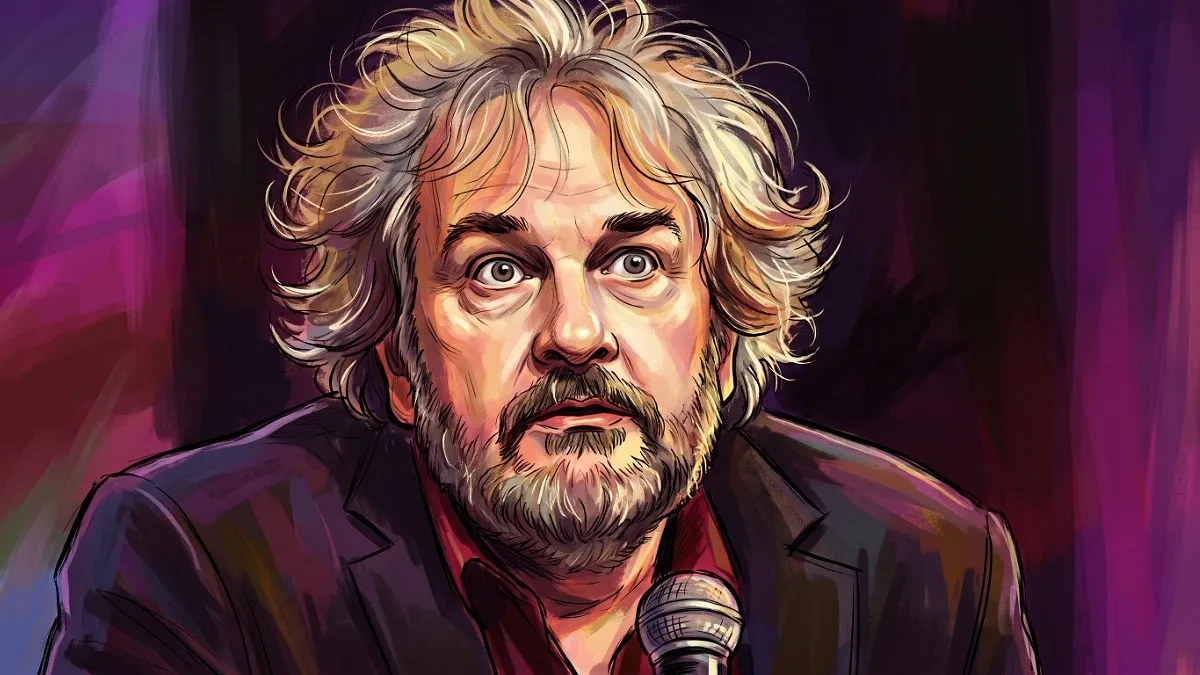
Photo: Peter Jackson
On the Wellington coast, in a small suburb called Pukerua Bay, a boy of about nine set out to remake King Kong. He had no studio and no budget, only stop motion models and a stubborn imagination. More than half a century later, that boy, Sir Peter Jackson, stood on the stage of the 79th Cannes Film Festival and received an Honorary Palme d’Or for a lifetime’s contribution to cinema. Between the models and the medal lies one of the most unlikely careers in film history.
A newspaper job and a borrowed dream
Jackson was born on 31 October 1961 to English immigrant parents. His father was a wages clerk and his mother worked in a factory. Nothing in that household pointed toward Hollywood. A family friend gave the Jacksons a Super 8 camera, and young Peter began filming his friends. Ray Harryhausen’s creature films, Thunderbirds and Monty Python fed his appetite for the fantastic.
At sixteen he left school and became a photo engraver at a Wellington newspaper, The Evening Post. For seven years he lived with his parents and saved nearly everything he earned for film equipment. He had no film school and no mentor. He learned editing, effects and makeup by trial and error, and after two years of saving he bought a 16mm camera.
Splatter, puppets and zombies
That camera produced Bad Taste, a gleeful comedy about aliens who want to turn humans into food. Jackson shot it mostly on weekends over several years, with friends working for free. He even played two roles and fought himself on a clifftop. A late injection of money from the New Zealand Film Commission got it finished, and it debuted at Cannes in May 1987.
Meet the Feebles followed in 1989, a savage black comedy with puppets, and then the zombie comedy Braindead in 1992. Audiences who found these films shocking were in fact watching a filmmaker sharpen his craft. Together they showed an appetite for invention and a macabre sense of humour that never left him.
The turn
The change came with Heavenly Creatures in 1994, inspired by the real 1950s Parker and Hulme murder case. It was a serious and haunting drama, and it earned Jackson and his partner Fran Walsh an Oscar nomination for Best Original Screenplay. Jackson has said the film only got made because of Walsh’s enthusiasm. Walsh has contributed to every Jackson film since 1989, and their partnership remains the quiet engine of his work.
He also had a mischievous streak. His 1995 mockumentary Forgotten Silver told the story of a forgotten New Zealand film pioneer who never existed. Many viewers believed it, and some were furious to learn the truth.
His first big budget Hollywood attempt, The Frighteners in 1996, was shot entirely in New Zealand and was regarded as a box office failure. Yet it mattered for another reason. Around this time Wētā, the effects operation he had founded with key collaborators, grew rapidly into a force that combined physical and digital craft. His planned King Kong remake was shelved. By ordinary measures, the Hollywood dream looked uncertain.
Middle Earth, made in New Zealand
In 1997 Jackson won the rights to Tolkien’s epic after meeting producer Saul Zaentz. A deal with Miramax for two films collapsed into pressure to make just one, until New Line stepped in with an appetite for a full trilogy. Cameras rolled on 11 October 1999, and shooting stretched past a year across New Zealand’s landscapes.
The reward was extraordinary. The Return of the King won all eleven Academy Awards it was nominated for, including Best Picture and Best Director for Jackson, and it became the first fantasy film to take the top prize. The personal cost was real too. His mother Joan died three days before the first film opened, and a special screening was held after her funeral.
King Kong finally arrived in 2005, a lifelong promise kept, and grossed about 562 million US dollars. The Hobbit trilogy followed between 2012 and 2014, after a long and tangled path that included a legal dispute with New Line and the departure of Guillermo del Toro as director. His films have earned more than 6.5 billion dollars worldwide, placing him among the highest grossing directors of all time.
The restorer
Then Jackson surprised everyone again. For They Shall Not Grow Old in 2018 he took archival First World War footage and colourised it, converted it to 3D and used lip readers to recover what the soldiers were actually saying. The Guardian’s critic called the effect electrifying, as if ghosts had been summoned back. He then turned the same techniques on 55 hours of film and 140 hours of audio from the Beatles’ final sessions. The result, The Beatles: Get Back, won five Emmys, including one for Jackson’s direction.
The audio technology he developed went further. It helped isolate voices from old recordings, which led to the 2023 release of “Now and Then,” a song built from a 1977 John Lennon demo and billed as the last Beatles song. It won a Grammy.
Planes, theatres and bare feet
Away from the camera, Jackson is a devoted aviation enthusiast. He keeps more than 40 airworthy First World War era aircraft near Masterton and runs a company that restores vintage planes. He has bought a Wellington church to save it from demolition, and he secured the future of the BATS Theatre by buying its building. He was knighted in 2010, and he became a billionaire in 2021 after selling Wētā to Unity Technologies.
On set he is famous for coverage, shooting scenes from as many angles as possible, and for asking for “one more for luck.” He likes to turn up in cameos in his own films, and he is often seen in public without shoes, because as he put it, they are uncomfortable.
What comes next
The story is not finished. Jackson is producing The Lord of the Rings: The Hunt for Gollum, with Andy Serkis directing and Wellington serving as a production hub, with a release planned for 2027.
It is a fitting loop. A boy who built a gorilla from models in a quiet seaside suburb became the man who showed the world what New Zealand’s imagination could look like on screen. The lesson of his career is that a camera, patience and an unreasonable amount of nerve can take you almost anywhere.
