

Friendship beyond borders


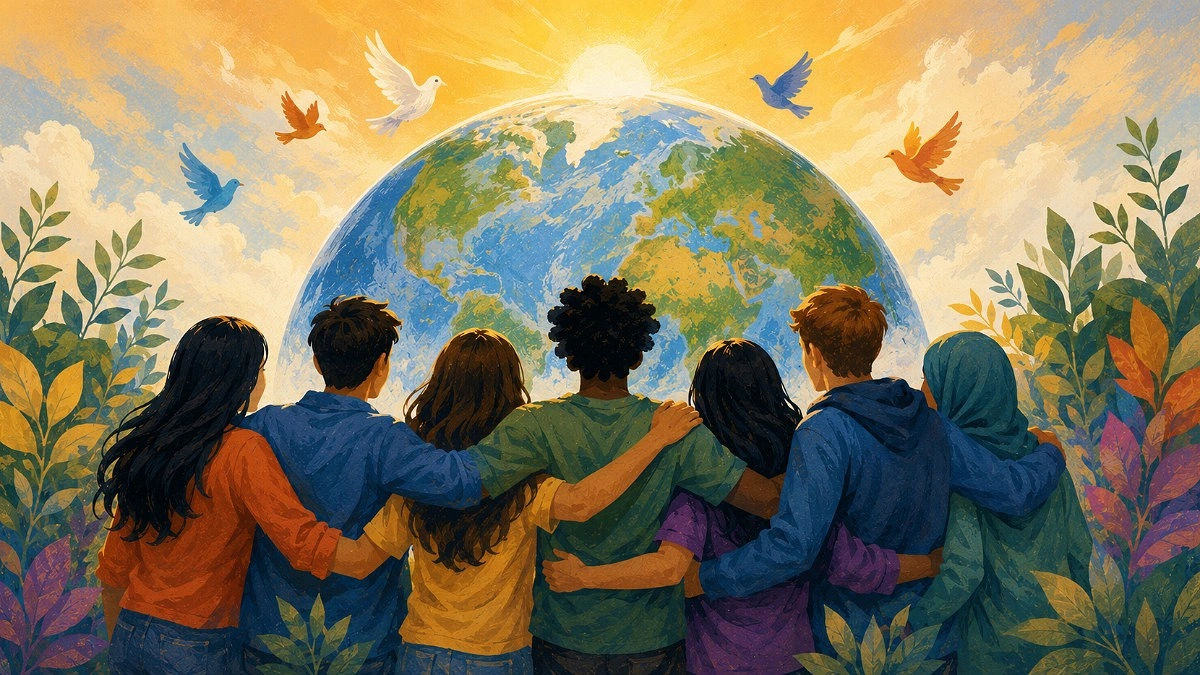
Picture: Graphics generated by AI
Every year on the thirtieth of July, the world pauses, if only for a moment, to consider one of the simplest yet most transformative forces in human life: friendship. International Friendship Day, recognized officially by the United Nations since 2011, is not marked by fireworks or parades. It does not demand grand ceremony or elaborate ritual. Instead, it asks something far more modest and, in many ways, far more difficult: that people take a moment to appreciate the bonds that connect them to one another across streets, cities, borders, and cultures.
In a world often defined by conflict, competition, and division, the idea of dedicating an entire day to friendship might seem almost naive. Yet that apparent simplicity is precisely the point. Friendship, unlike so many other forces that shape international affairs, requires no treaty, no negotiation, no formal agreement. It begins with something as small as a shared laugh, a returned favor, or a quiet act of loyalty, and from those small beginnings, it can grow into something capable of bridging the widest of divides.
Origins Rooted in a Vision of Peace
The story of International Friendship Day begins not in the halls of the United Nations but in a small town in Paraguay. In 1958, Dr. Ramón Artemio Bracho founded an organization called the World Friendship Crusade in Puerto Pinasco. Bracho and his companions believed that friendship, cultivated deliberately and celebrated openly, could serve as an antidote to the animosities that so often lead nations and communities into conflict. Their vision was not merely sentimental. It was, in its own quiet way, political: a belief that peace could be built not only through diplomacy between governments but through genuine connection between ordinary people.
That first year, the Crusade organized a Friendship Week in Puerto Pinasco and other towns across Paraguay. The following year, they repeated the observance and concluded it on the thirtieth of July, a date they then declared as Friendship Day. From that modest beginning in a small South American nation, the idea slowly spread across the Americas and eventually around the globe.
It would take more than five decades for the idea to receive full international recognition. In 2011, the United Nations General Assembly formally proclaimed July 30 as the International Day of Friendship. The resolution rested on a conviction that friendship between peoples, countries, cultures, and individuals could inspire peace efforts and help build bridges between communities that might otherwise remain strangers to one another. The Assembly placed particular emphasis on the role of young people, recognizing them as the future stewards of international relations and inviting them to take part in activities that cross cultural lines and promote mutual respect and understanding.
The proclamation also drew on an older foundation. It followed from a proposal made earlier by UNESCO, which had defined a Culture of Peace as a set of values, attitudes, and behaviors that reject violence and instead work to prevent conflict by addressing its root causes. That vision, adopted by the General Assembly in 1997, laid much of the philosophical groundwork upon which the later Day of Friendship would be built.
Why the Thirtieth of July
There is something fitting about the fact that Friendship Day does not fall on a single, universally agreed date across the entire world. While the United Nations recognizes July 30 as the official day, many nations continue to observe friendship on dates rooted in their own traditions. India, along with several other countries, marks Friendship Day on the first Sunday of August, a custom with roots in the greeting card industry of the early twentieth century. Argentina, Brazil, and Spain celebrate their own Friend’s Day on July 20. In Finland and Estonia, the observance coincides with Valentine’s Day on February 14, blending the celebration of romantic love with that of platonic bonds.
This patchwork of dates might seem like a minor inconsistency, but it actually reveals something meaningful about the nature of friendship itself. Friendship does not belong to any single calendar or culture. It takes different shapes and rhythms depending on where it is practiced, yet its essence, the trust, loyalty, and mutual care that define it, remains recognizable everywhere. Whether celebrated in July, August, or February, the sentiment underlying the day is universal.
Friendship as an Instrument of Peace
At its heart, the United Nations’ framing of International Friendship Day rests on a deceptively simple idea: that friendships crossing borders can help prevent war. Nations, like individuals, are more likely to fall into conflict with those they view as strangers or adversaries than with those they have come to know and understand. When people from different backgrounds form genuine connections, whether through education exchanges, cultural collaboration, sport, or simple travel, they build a kind of informal diplomacy that operates outside the reach of formal treaties and state visits.
This is not a naive notion. History offers numerous examples of how personal relationships between individuals from different nations have quietly influenced larger political outcomes, softening tensions or opening channels of communication that might otherwise have remained closed. Scholarly and diplomatic institutions have long recognized what is sometimes called people to people diplomacy, the idea that ordinary human connections, formed through shared experience rather than official negotiation, can lay the groundwork for broader cooperation and reconciliation.
The United Nations has consistently encouraged governments, community organizations, and civil society groups to use the day as an opportunity to host events that promote reconciliation, solidarity, and cross cultural exchange. Schools often organize activities highlighting diversity and cooperation among students. Community centers arrange gatherings meant to connect neighbors who might not otherwise interact. Nonprofit groups sometimes use the occasion to launch initiatives supporting vulnerable populations, using the spirit of friendship as a foundation for practical acts of solidarity.
The Meaning of Friendship in Everyday Life
Beyond its role in international relations, International Friendship Day also invites a more personal kind of reflection. Friendship, after all, is one of the most fundamental relationships a person experiences across a lifetime. Unlike family ties, which are inherited, or romantic partnerships, which are often defined by specific social and legal structures, friendship is chosen freely and sustained voluntarily. It asks for nothing but continued mutual care.
Friends offer companionship during ordinary days and comfort during difficult ones. They celebrate achievements without the complications that sometimes accompany family relationships, and they offer honest perspective in ways that can be harder to receive from those bound to us by blood or contract. Whether friendships begin in childhood classrooms, university dormitories, workplaces, or through shared hobbies and interests, they play a significant role in shaping a person’s sense of identity, resilience, and belonging.
In many cultures, the value placed on friendship is woven into daily language and custom. Proverbs about the worth of a true friend appear across nearly every linguistic tradition, often emphasizing that a friend’s value becomes most apparent not in times of comfort but in times of hardship. This idea, that adversity reveals the truest friendships, recurs so consistently across unrelated cultures that it seems to reflect something close to a universal human intuition.
Friendship in the Bangladeshi Context
In Bangladesh, as in much of South Asia, friendship carries a weight that often extends beyond the personal into the communal. Friends are frequently treated as an extension of family, invited into households, included in celebrations, and relied upon during times of need. The concept of a bondhu, a close and trusted friend, occupies a cherished place in Bengali social life, distinct from more formal or distant acquaintances.
Bengali literature and film have long drawn upon the theme of friendship as a source of both joy and tragedy, portraying bonds that survive economic hardship, political upheaval, and personal loss. These portrayals reflect a broader cultural understanding that friendship, in this part of the world, is rarely treated as a casual or incidental relationship. It is instead viewed as a serious commitment, carrying expectations of loyalty and support that can rival those of family ties.
Given this cultural backdrop, International Friendship Day resonates in Bangladesh not as an imported novelty but as an occasion that aligns naturally with existing social values. Universities, schools, and youth organizations across the country often mark the day with informal gatherings, cultural programs, and social media campaigns encouraging people to reconnect with old friends or express appreciation for present ones.
Friendship in a Digitally Connected World
The nature of friendship has changed considerably over the past two decades, shaped profoundly by the rise of digital communication. Social media platforms and messaging applications have made it possible to maintain contact with friends across vast distances, sustaining relationships that might once have faded due to migration, career changes, or simple geography. A friend who has moved to another country can now share daily updates, photographs, and conversations in real time, preserving intimacy that previous generations could only maintain through occasional letters or costly long distance phone calls.
At the same time, this digital transformation has introduced new complexities. The ease of maintaining large networks of online connections has, for some, blurred the distinction between genuine friendship and mere acquaintance. Scholars and commentators have debated whether the sheer quantity of digital connections available to individuals today has come at the expense of the depth and intimacy that traditionally characterized close friendship. Concerns about social isolation, even amid constant digital connectivity, have become a recurring theme in public discussion, particularly among younger generations who have grown up with these technologies as a constant presence.
International Friendship Day, observed against this backdrop, takes on an additional layer of meaning. It serves as an invitation to distinguish between the passive accumulation of online contacts and the active cultivation of meaningful, reciprocal relationships. Reaching out to an old friend, whether through a message, a phone call, or an in person visit, becomes a small but deliberate act of resistance against the erosion of genuine connection that some fear accompanies modern life.
Symbols and Traditions of the Day
Over the decades, various customs and symbols have become associated with Friendship Day, even as its observance varies from place to place. The yellow rose has come to be recognized in some traditions as a symbol of the day, representing joy, warmth, and the particular kind of affection shared between friends, distinct from the red rose more commonly associated with romantic love. Friendship bands and bracelets, exchanged as tokens of loyalty, have also become common in various regional celebrations, particularly among younger people.
Interestingly, the observance has occasionally intersected with popular culture in unexpected ways. In 1998, the United Nations recognized the beloved children’s character Winnie the Pooh as the world’s Ambassador of Friendship, a gesture reflecting the day’s broader appeal beyond formal diplomatic or governmental circles. Such moments, while lighthearted, underscore how deeply the concept of friendship resonates across generations and how naturally it lends itself to inclusive, universal symbolism.
Communities around the world mark the day in ways shaped by local custom. In some places, friends gather for shared meals, treating the day much like a smaller, less formal version of a holiday feast. In others, organizations host workshops or community service events designed to forge new connections among strangers who share a common cause. Businesses, too, have found ways to participate, often through modest campaigns encouraging customers to share moments with friends, though the day has largely retained its focus on genuine connection rather than commercial promotion.
Friendship Across the Stages of Life
The character of friendship shifts considerably as people move through different stages of life, yet its underlying value remains constant. Childhood friendships often form through pure proximity, shared classrooms, neighborhoods, or playgrounds, and carry a kind of uncomplicated openness that becomes harder to replicate in adulthood. These early bonds, even when they eventually fade, often leave a lasting imprint, shaping a person’s early understanding of trust, loyalty, and shared experience.
Adolescence brings a different quality of friendship, often more intense and identity forming, as young people begin to define themselves partly through the company they keep. Friendships during this period frequently become a testing ground for values, opinions, and personal growth, offering both support and, at times, difficult lessons about disagreement and reconciliation.
Adulthood introduces new obstacles to sustaining friendship. Career demands, family responsibilities, relocation, and the simple erosion of free time make maintaining old friendships considerably more difficult, while also making the formation of new ones less frequent than it once was. Many adults report that the ease of forming close friendships, so natural in school or university, becomes noticeably harder once the structured social environments of youth are left behind. This is one reason observances like International Friendship Day carry particular relevance for adults, offering a deliberate reminder to invest in relationships that might otherwise be left to chance.
In later life, friendship often takes on renewed importance, particularly as individuals navigate retirement, the loss of long held professional identities, or the passing of family members and lifelong companions. Longstanding friendships, those that have survived decades of change, frequently become a source of continuity and comfort during a period of life marked by considerable transition. Communities and organizations that support older populations have increasingly recognized the value of fostering social connection among elderly individuals, understanding that isolation in later years carries consequences that extend well beyond simple loneliness.
Friendship and Community Resilience
Beyond its role in individual wellbeing, friendship also serves as a quiet but essential thread in the resilience of entire communities. Neighborhoods bound together by strong informal networks of friendship tend to recover more effectively from hardship, whether that hardship takes the form of natural disaster, economic downturn, or social upheaval. When people know and trust their neighbors, they are more likely to share resources, offer assistance, and coordinate support during difficult periods.
This community dimension of friendship has particular relevance in a country like Bangladesh, where informal networks of mutual support have long served as a buffer against the disruptions caused by floods, cyclones, and other recurring challenges. Neighbors who consider one another friends rather than mere acquaintances are more inclined to check on one another during crises, share scarce resources, and rebuild collectively rather than in isolation. In this sense, the friendships celebrated on an individual level each July also contribute, in aggregate, to a broader social fabric capable of withstanding shocks that might otherwise prove far more destructive.
The Broader Purpose Behind the Observance
It would be easy to dismiss International Friendship Day as a symbolic gesture with little practical consequence, a pleasant sentiment without real weight in a world confronting far graver challenges. Yet this view underestimates the cumulative power of small, repeated acts of connection. Peace between nations is rarely built solely through grand summits and formal agreements. It is also built, gradually and often invisibly, through the countless personal relationships that form across borders through education, travel, sport, and shared cultural experience.
The United Nations has consistently framed the day not as an end in itself but as a starting point, an occasion to reaffirm commitments to tolerance, solidarity, and mutual respect that extend well beyond the calendar date itself. The hope embedded in the observance is that the reflection it encourages, however brief, might ripple outward into more lasting habits of empathy and cooperation.
This is particularly relevant in an era marked by rising polarization, both within nations and between them. Political division, economic inequality, and cultural misunderstanding continue to strain relationships at every level, from local communities to international diplomacy. Against this backdrop, the deliberate cultivation of friendship, whether between individuals, communities, or nations, offers a modest but meaningful counterweight. It suggests that even amid significant disagreement, human beings retain the capacity to see one another as partners rather than adversaries, provided they are willing to invest the time and openness that genuine connection requires.
A Day for Reflection, Not Just Celebration
Perhaps the most valuable aspect of International Friendship Day lies not in any particular ritual or tradition but in the space it creates for reflection. It offers an opportunity to consider the friendships that have shaped a person’s life, the ones sustained across years of distance, the ones formed unexpectedly through shared circumstance, and the ones that quietly ended, whether through neglect or simple drift.
It also offers an opportunity to consider absence, the friendships that were never maintained, the connections allowed to fade amid the demands of work, family, and daily obligation. In this sense, the day carries a gentle reminder that friendship, unlike many other relationships in life, requires active maintenance. It does not sustain itself automatically, bound by legal contract or biological tie. It survives only through continued attention, effort, and care.
For many, the day becomes an occasion to reach out to someone long overdue for a conversation, to express appreciation that might otherwise go unspoken, or simply to acknowledge, if only to oneself, the quiet role that certain people have played in shaping one’s life. These are small gestures, easily overlooked amid the busyness of daily routine, yet they carry a significance that belies their simplicity.
International Friendship Day, observed each year on July 30, carries within it a modest but persistent hope: that the bonds formed between individuals, however ordinary they may seem, hold the power to shape something larger than themselves. From its origins in a small Paraguayan town in 1958 to its formal recognition by the United Nations in 2011, the observance has grown without losing the simplicity of its founding vision. It does not ask for elaborate ceremony. It asks only that people pause, however briefly, to recognize the friendships that sustain them and to consider how those same bonds, multiplied across cultures and borders, might contribute to a more understanding and peaceful world.
In Bangladesh, as elsewhere, this recognition finds fertile ground in existing cultural values that already hold friendship in high regard. Whether marked through a shared meal, a long overdue phone call, a message sent to an old classmate, or simply a quiet moment of gratitude, the day offers each person an invitation to strengthen the ties that, in the end, often prove as enduring and meaningful as any other relationship in life. Friendship asks for no treaty and demands no formal agreement, yet it remains, as the founders of this observance believed more than six decades ago, one of the most powerful forces available for building a more peaceful and connected world.