Tuesday। 3 November। 2026
আগামীর সময়
Tuesday। 3 November। 2026
Agamir Somoy
  • Latest
  • Bangladesh
  • Business
  • Chattogram
  • District
  • World
  • Environment
  • Entertainment
  • Sports
  • Feature
  • OP-ED
  • Misc
  • Success Story
  • Religion
BN
  • Latest
  • Bangladesh
  • Business
  • Chattogram
  • District
  • World
  • Environment
  • Entertainment
  • Sports
  • Feature
  • OP-ED
  • Misc
  • BN
লোড হচ্ছে…

Chief Editor & Publisher: Abdus Sattar Miazi

Editor: Mustafa Mamun

Agamir Somoy English Logo
About UsContactTerms of ServicePrivacy PolicyTeam

EDB Trade Centre (Level-6 &7) 93 Kazi Nazrul Islam Avenue Karwanbazar, Dhaka-1215.

Contact: +880 9666 771010

Advertise: +880 1755 651164

[email protected]

© 2026 | Dainik Agamir Somoy. All rights reserved.

আগামীর সময় Feature

Sammi Meri Waar: A folk song woven with love, loss and sacrifice

Al Eakram Mahmud Shoumik
agamir somoy
Published: 03 November 2026, 11:07
শেয়ার করুন:
Sammi Meri Waar: A folk song woven with love, loss and sacrifice
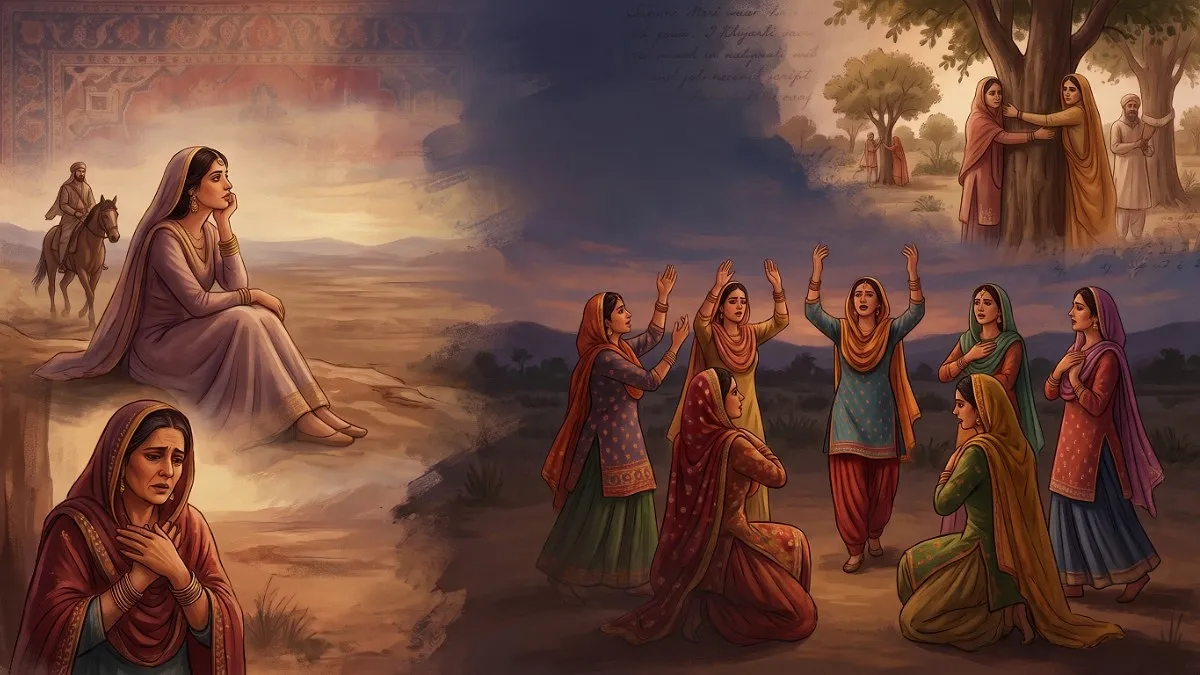
Generated by AI

For centuries, the Punjabi and Saraiki folk song has carried stories of romance, separation and sorrow. But who was Sammi, and why have so many legends become associated with her name?

“Sammi Meri Waar, Main Waari.” The haunting refrain of this traditional Punjabi and Saraiki folk song has travelled across generations, carrying emotions that transcend language and geography.

Often interpreted as an expression of unconditional love and devotion, the song is deeply rooted in the folk traditions of the Punjab region. Yet its appeal goes beyond its melody. Behind the song lies a collection of stories involving a princess separated from her lover, a mother mourning her abducted daughter and, more recently, a tale of extraordinary sacrifice that has gained popularity on social media.

Although its exact origin and authorship remain uncertain, Sammi Meri Waar is believed to be centuries old. Its traditional roots are associated with the Sandal Bar and Pothohar regions of present-day Pakistan.

Over time, the song became closely associated with Sammi, a traditional folk dance performed by women from several nomadic and indigenous communities, including the Bazigars, Rais, Sansis and Lobanas.

A dance of longing and sorrow

Unlike the energetic movements of Bhangra and Giddha, Sammi is often characterised by more restrained movements and expressions of longing.

Traditionally performed by women in a circle, the dance features rhythmic hand movements and gestures that convey emotions such as separation, grief and devotion. In some performances, women strike their chests as part of the choreography, expressing a sense of sorrow and emotional distress.

The dance is therefore more than an artistic performance. It represents a form of cultural expression through which women have historically conveyed their emotions and experiences.

The legends behind Sammi

The identity of Sammi remains a subject of different interpretations. Several folk narratives have emerged over generations, each offering a different explanation of the song’s origins.

A princess and a tale of forbidden love

Sammi Meri WaarPunjabi folk songCoke Studio renditionSammi dancefolk traditionsAmrita DeviKhejarli sacrificecultural expressionDhola Marufolk legends
    আগামীর সময় ইপেপার
    শেয়ার করুন:

    One popular interpretation connects Sammi with the romantic folk tradition of Dhola and Maru. In this version, Sammi is portrayed as a princess whose story is associated with Prince Dhola.

    The broader Dhola and Maru tradition is one of South Asia’s well known romantic folk narratives, often depicting love, separation and the pain of being apart from a beloved.

    The association has helped establish Sammi as a symbol of romantic longing in regional folklore. However, different versions of the narrative exist, and there is no conclusive historical evidence establishing this account as the definitive origin of the song.

    An abducted daughter and a grieving mother

    Another widely circulated folk narrative offers a more tragic explanation.

    According to this version, a young woman from the Cholistan region was abducted by a man named Sammi. Unable to find her daughter, the girl’s mother was overwhelmed by grief and began singing about her loss.

    The song, according to the legend, emerged from the mother’s sorrow and her longing to see her daughter again.

    Although the historical authenticity of this account remains unverified, it offers a powerful interpretation of the song. Rather than romantic devotion, the central emotion here is a mother’s anguish over losing her child.

    The Amrita Devi connection and the sacrifice of Khejarli

    In recent years, another story linking Sammi Meri Waar to an episode of historical sacrifice has gained attention on social media.

    The narrative connects the song with the Khejarli incident of 1730 in Rajasthan, India, when Amrita Devi and members of the Bishnoi community resisted the cutting of trees ordered by the royal authorities.

    According to historical accounts, Amrita Devi and many others embraced the trees in an attempt to protect them, sacrificing their lives in the process.

    Some social media posts claim that Sammi Meri Waar originated from or is directly connected to this incident. However, while the Khejarli sacrifice is a recognised historical event, there is no established historical evidence linking it to the origins of the Punjabi folk song.

    The association is better understood as a modern interpretation that has gained traction online rather than an established part of the song’s traditional history.

    Coke Studio brings Sammi to a new generation

    For generations, Sammi Meri Waar survived through oral traditions and regional performances. Its popularity, however, reached a much wider audience in 2015 when Pakistani music platform Coke Studio featured a contemporary rendition of the song.

    Performed by Quratulain Balouch and Umair Jaswal during the show’s eighth season, the rendition combined traditional folk elements with modern musical arrangements.

    Their powerful vocals and emotionally charged performance introduced the song to a new generation of listeners, helping it reach audiences far beyond the Punjab region.

    The song subsequently gained further popularity through digital platforms, including YouTube, Facebook, Instagram and TikTok. Short video clips and social media trends introduced its distinctive melody to international audiences, many of whom became curious about the stories behind it.

    A song with many stories

    Perhaps the most fascinating aspect of Sammi Meri Waar is that it does not belong to a single narrative.

    For some, it is a love song shaped by separation. For others, it is the lament of a mother searching for her lost daughter. Its association with the Sammi dance also makes it an important expression of women’s cultural traditions in Punjab.

    The different stories surrounding the song reflect how folk traditions evolve over time. Narratives change as they pass from one generation to another, acquiring new meanings while retaining their emotional essence.

    The true identity of Sammi may remain uncertain, and the historical origins of the song may never be fully established. Yet its enduring appeal lies in something more universal than any single legend.

    Through its haunting melody, Sammi Meri Waar continues to tell stories of love, longing, loss and devotion, reminding listeners that some emotions survive long after the people and events that inspired them have faded from memory.