


How a college dropout became the world’s most translated novelist

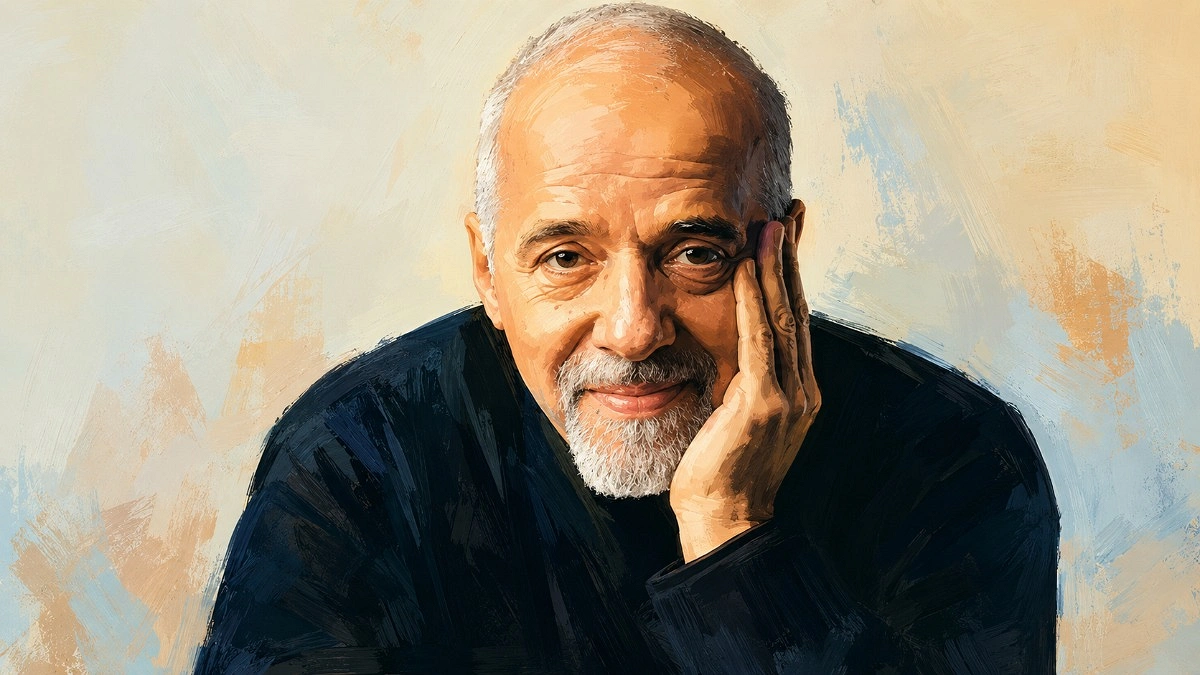
Picture: Paulo Coelho
Today, August 24, marks the birthday of one of the most translated authors alive, a man whose single slim parable about a shepherd boy has outsold entire genres and turned personal reinvention into a literary industry.
Paulo Coelho de Souza was born on August 24, 1947, in Rio de Janeiro, Brazil. He is a Brazilian lyricist and novelist, and since 2002 he has held a seat in the Brazilian Academy of Letters. His best-known novel, The Alchemist, published in 1988, remains an international bestseller decades after its release, and it has been translated into more than 80 languages.
A Rebellious Beginning
Coelho’s path to literary stardom was anything but linear. Raised in a Catholic household and educated at a Jesuit school, he told his mother as a teenager that he wanted to be a writer. Her reply, preserved in his own retellings, was blunt: his father was an engineer, a logical and reasonable man with a clear vision of the world, and writing was not a respectable ambition.
That friction between family expectation and creative restlessness defined his youth. He rebelled against his religious upbringing so forcefully that his parents had him temporarily committed to a psychiatric institution as a teenager, an episode he escaped from within a few years. He later enrolled in law school to satisfy his parents’ wishes, but the curriculum failed to hold him. He dropped out in 1970 and set off traveling through South America, Mexico, North Africa, and Europe, gathering the experiences and philosophies that would eventually surface in his fiction.
The Songwriter Years
Long before he was a novelist, Coelho was a lyricist. Returning to Brazil in 1972, he began writing pop and rock lyrics with Raul Seixas, one of the most influential figures in Brazilian rock music. The pair wrote more than sixty songs together, and Coelho also contributed lyrics for other major Brazilian artists including Rita Lee and Elis Regina. He worked for record labels Polygram and CBS Records until 1980.
This musical chapter of his career was not without political risk. In 1974, during Brazil’s military dictatorship, Coelho was briefly imprisoned over alleged subversive activity against the government, a period linked to his association with countercultural circles at the time.
From Pilgrim to Published Author
In 1986, Coelho walked the Road to Santiago de Compostela in Spain, a pilgrimage that became the spiritual and narrative seed of his writing career. The journey inspired his book variously published as The Pilgrimage, an autobiographical account guided by a mentor figure named Petrus, built around trials meant to teach him simplicity and self-discovery.
His actual literary debut came in 1982 with a book sometimes referred to as Hell Archives, which found little success and left him, in his own description, an author without context. It was his next book that changed everything.
The Alchemist and the Making of a Phenomenon
Published in 1988, The Alchemist tells the story of Santiago, an Andalusian shepherd boy who travels from Spain to the Egyptian desert in search of treasure buried near the Pyramids. Stripped of ornamentation, the novel is built on a simple premise: that following one’s personal calling, what Coelho termed a Personal Legend, is the truest form of a meaningful life.
The book was slow to catch fire but eventually became one of the best selling novels in history, with more than 320 million copies sold across 170 countries according to figures compiled by his publishers. Its success transformed Coelho from a little known Brazilian writer into one of the most widely read authors on the planet, a status he has held for more than three decades.
A Prolific and Restless Body of Work
Coelho has published roughly three dozen books since his debut, ranging far beyond the shepherd’s parable that made him famous. His catalog includes Brida, The Valkyries, By the River Piedra I Sat Down and Wept, The Fifth Mountain, Manual of the Warrior of Light, Veronika Decides to Die, The Devil and Miss Prym, Eleven Minutes, The Zahir, Like the Flowing River, The Witch of Portobello, The Winner Stands Alone, Aleph, Manuscript Found in Accra, Adultery, The Spy, and Hippie, among others.
Several of his books draw directly from his own turbulent biography. Veronika Decides to Die follows a young woman who wakes in a psychiatric institution after a suicide attempt and is told she has only days left to live, a narrative many readers and critics have connected to his own teenage hospitalization. Eleven Minutes traces the story of a sex worker’s search for meaning through desire and self-exploration, continuing his recurring theme of spiritual awakening arriving through unconventional paths.
Recognition Beyond the Bestseller List
Coelho’s honors extend well past sales figures. He has received more than 115 awards and honors across his career, including the Hans Christian Andersen Award, the Grinzane Cavour Book Award, and France’s Chevalier de l’Ordre National de la Légion d’Honneur. Since 2007, he has served as a United Nations Messenger of Peace, a role that has allowed him to promote intercultural dialogue and advocate for children’s welfare on an international stage.
In 2014, he took an unusual step for an author of his stature, uploading his personal papers and archives online to create what he called a virtual Paulo Coelho Foundation, opening a window into his creative process for readers and researchers alike.
A Personal Life Rooted in Rio
Coelho has been married to visual artist Christina Oiticica since 1980. The couple’s decades long partnership has run parallel to his rise from a struggling lyricist jailed under a military government to a global literary brand associated above all with a single image: a boy, a desert, and the idea that the universe conspires to help those who pursue what they truly want.
Nearly forty years after The Alchemist first reached bookshelves, and on the occasion of his birthday, Coelho’s central message continues to resonate with new generations of readers: failure, exile, and even imprisonment are not endpoints, but chapters on the way to a Personal Legend.

