
Ayub Bachchu: the life of Bangladesh’s rock icon
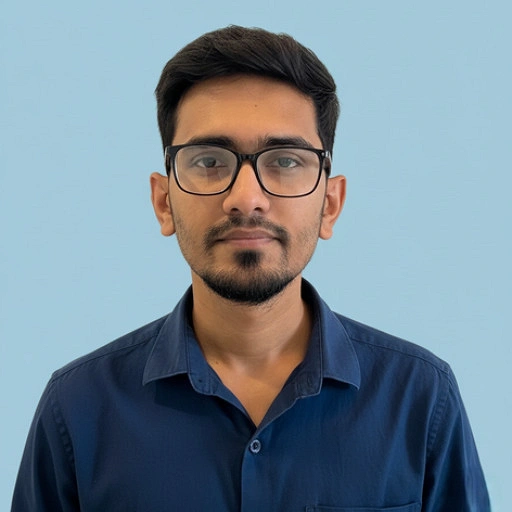

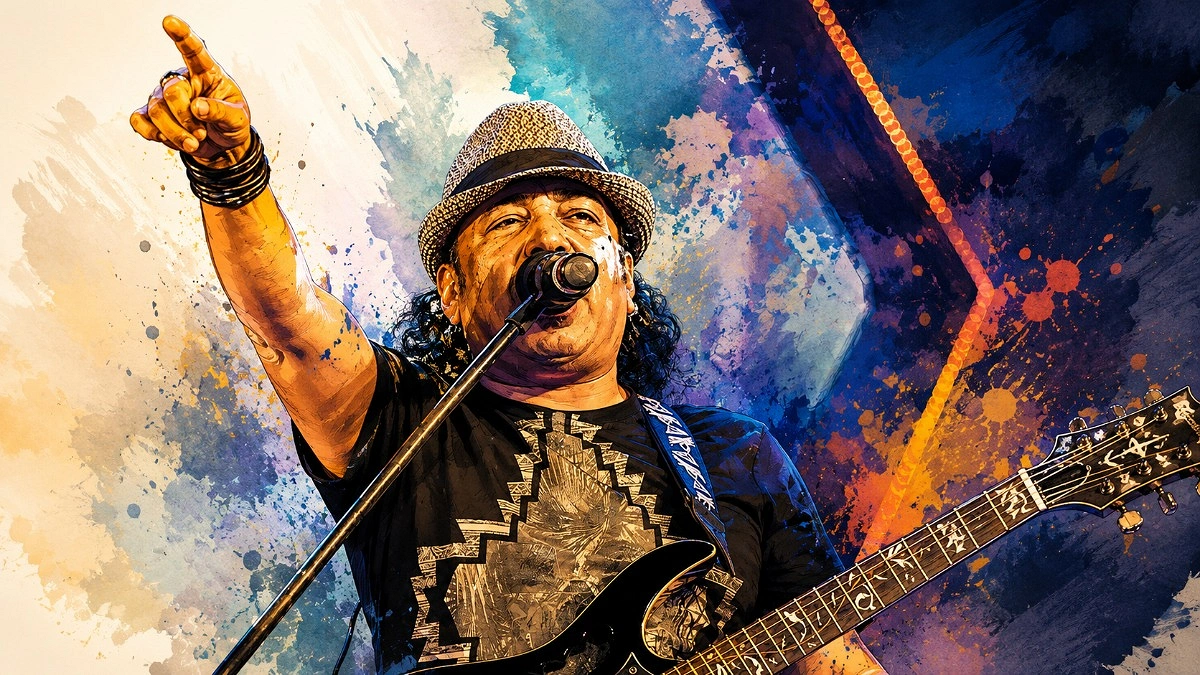
Picture: Generated by AI
Mohammad Ayub, who the world would come to know as Ayub Bachchu, was born on August 16, 1962, in the Khorna union of Patiya upazila in Chittagong district, in what was then East Pakistan and is now Bangladesh.
He was the eldest son of Mohammad Ishaque Chowdhury and Nurjahan Begum. Following the Liberation War of 1971, which reshaped the country his family called home, the Chowdhurys moved from the rural surroundings of Patiya into the city of Chittagong itself, a port city with a restless, cosmopolitan energy that would leave a permanent mark on the boy who would one day become one of the most recognized musicians the country has produced.
Chittagong in the early 1970s was a city finding its feet after war, and like many port cities, it carried an unusual openness to outside influences. Radio signals, imported records, and the presence of sailors and traders passing through gave young people in the city an early, if patchy, exposure to Western rock and roll, blues, and pop music. It was in this atmosphere that Ayub’s fascination with the guitar took hold.
According to accounts preserved by those who have documented his life, Ayub received his first acoustic guitar in 1973, while he was in the sixth grade. For a boy his age in Chittagong at that time, owning a guitar was already unusual; wanting to master it was rarer still. That first guitar is often described as the pivotal object of his childhood, the item that quietly set the direction of the rest of his life even before he understood it himself.
He attended Government Muslim High School in Chittagong, from which he graduated in 1979. School, for Ayub, seems to have run on a parallel track alongside his growing obsession with music rather than in competition with it. Even as a student, he was already playing in bands, chasing sounds he heard on records and radio, and slowly building the technical facility that would later define him as a guitarist.
The Formative Bands: Spider, Golden Boys, and Ugly Boys
Long before the name Ayub Bachchu meant anything to the wider public, he was cutting his teeth in a series of amateur and semi-professional bands around Chittagong. From around 1974 to 1977, while still a schoolboy, he played as the main lead guitarist for a band called Spider. It was here that he began absorbing the playing styles of guitarists who would remain lifelong influences, most notably Jimi Hendrix, whose innovative and expressive approach to the electric guitar left a visible imprint on Ayub’s own style, and later Joe Satriani, whose technical precision offered a different kind of inspiration.
Around the same period, while still in high school, Ayub formed a band of his own called Golden Boys, which was later renamed Ugly Boys, formed in 1977. These early bands were the proving ground where a Chittagong schoolboy’s private obsession with the guitar turned into a public, performable skill. They were not vehicles for lasting fame, but they mattered enormously as training: this is where technique, stage presence, and a working knowledge of how a band functions were all quietly assembled.
Joining Feelings
In 1977, the same year he formed Ugly Boys, Ayub also joined the rock band Feelings as a guitarist. Feelings would later be renamed Nagar Baul and would go on to have its own significant place in the history of Bangladeshi rock music, associated with the singer and guitarist known as James, who would himself become one of the most important figures in the country’s rock scene. Ayub played with Feelings from 1977 to 1980, a three-year stretch that further sharpened his abilities as a lead guitarist working within a full band context rather than as a solo hobbyist.
This period placed him directly inside the small, tightly connected world of Chittagong’s early rock scene, a scene that would go on to produce several of the musicians later remembered as pioneers of Bangladeshi band music. It was a scene built on scarce resources, borrowed amplifiers, imported cassette tapes passed from hand to hand, and an appetite for a kind of music that had very little institutional support in the country at the time.
The Souls Years: 1980 to 1990
In 1980, Ayub Bachchu joined Souls, a band that would occupy an entire decade of his musical life and give him his first sustained taste of national recognition. He remained with Souls for ten years, until 1990, and during that time he appeared on four studio albums with the band: Super Souls in 1982, College Er Corridore in 1985, Manush Matir Kachakachi in 1987, and East and West in 1988.
The decade with Souls was formative in ways that went beyond guitar technique. It was here that Ayub developed as a songwriter and as a bandleader in waiting, absorbing the discipline of studio recording, the pressures of touring, and the particular chemistry required to keep a band together across ten years and four albums. Souls itself remains remembered as one of the important bands in the emergence of Bangladeshi rock as a distinct and recognizable genre, distinct from the folk and film music that had dominated the country’s popular music until then.
By the end of the 1980s, Ayub Bachchu had spent well over a decade as a working musician, moving through Spider, Golden Boys, Ugly Boys, Feelings, and Souls. He had built a reputation as an exceptional guitarist and had absorbed nearly every lesson the local scene had to teach him. What he had not yet done was lead a band that was entirely his own.
The First Solo Steps: Rakto Golap
Even while still a member of Souls, Ayub Bachchu began stepping into a solo career. In 1986, he released his first solo album, Rakto Golap. Solo work was, at the time, a comparatively unusual move for a band musician in Bangladesh, and Rakto Golap represented Ayub testing his own voice, quite literally, outside the context of a group he did not fully control. This early solo release would prove to be the first of many, as Ayub Bachchu went on to become one of the most prolific solo recording artists of his generation, alongside his work fronting a band.
Founding LRB: Love Runs Blind
In 1991, after ten years with Souls, Ayub Bachchu left the band to form a group of his own. The new band’s naming history is one of the more colorful footnotes in Bangladeshi rock history. Various accounts describe the band picking up the name Little River Band, apparently somewhat by accident during an early club performance, before Ayub Bachchu discovered that an Australian band already carried that name. The Bangladeshi band was subsequently renamed Love Runs Blind, abbreviated as LRB, a change that had settled into place by 1997.
LRB’s very first concert took place at the University of Dhaka in April 1991, a performance arranged by the Bangladesh Musical Bands Association, BAMBA, and staged in a moment charged with political significance: it celebrated the downfall of the autocratic leader Hussain Muhammad Ershad. From its opening night, then, LRB was tied not just to a musical movement but to a broader mood of change and assertion taking hold among Bangladesh’s youth in the early 1990s.
LRB’s studio debut came in 1992 with a double album, commonly referred to as LRB I and LRB II, believed to be the first double album released in the history of Bangladeshi music. It was an ambitious, even audacious statement for a debut, and it announced Ayub Bachchu’s new band as a serious creative force rather than a side project.
The band followed with Sukh in 1993 and Tobuo in 1994, albums that carried the hard rock, blues, and rock songs that would define LRB’s signature sound, including tracks such as Sukh, Gotokal Rate, Khoniker Jonno, Cholo Bodle Jai, Sei Tumi, Haste Dekho Gaite Dekho, and Rupali Guitar. Cholo Bodle Jai, from the Sukh album, is often singled out as one of the greatest rock songs in Bangladeshi music history, a song that captured a restless, generational energy and turned it into an anthem.
A Prolific Solo Career Alongside LRB
Throughout the 1990s and beyond, Ayub Bachchu maintained a parallel solo career even as he led LRB. Following Rakto Golap in 1986, he released his third solo album, Koshto, in 1995, deepening a catalogue of solo work that ran alongside his output with the band. Across his career, he became known for an extraordinary volume of recorded music, both as a bandleader and as an individual artist, a body of work that few of his contemporaries matched in scale.
Building a Career of Scale: Performances and Reach
LRB, under Ayub Bachchu’s leadership, became known not just for its recordings but for the sheer scale of its live performances. Over the years, Ayub Bachchu and LRB are estimated to have performed more than a thousand shows within Bangladesh, including several hundred open-air concerts and well over two thousand indoor performances, alongside international appearances.
In 1996, LRB performed in Bengaluru, India, marking the band’s first concert outside Bangladesh. Their international profile continued to grow over the following decades, and LRB became known as the only Bangladeshi artist to have performed at Madison Square Garden in New York City, a landmark achievement that spoke to the reach the band had built among the Bangladeshi diaspora and beyond.
Mentorship and Industry Leadership
Ayub Bachchu was not only a performer but also an active builder of the industry around him. He was one of the leading figures within the Bangladesh Musical Bands Association, BAMBA, an organization central to organizing and legitimizing the band music scene in the country. He also collaborated with Radio Foorti to give new and emerging musical talent a platform, actively working to bring fresh voices into the spotlight rather than treating the industry as something to be guarded solely for established names.
This side of his career, less visible than his guitar solos or his chart-topping songs, speaks to a broader role he played in Bangladeshi music: not simply as a star performer, but as someone invested in the health and continuity of the scene itself, a scene he had, in many ways, helped build from its earlier, more fragile years in the 1970s and 1980s.
Personal Life
Ayub Bachchu married Ferdous Ayub Chandana on January 31, 1991, the same pivotal year in which he left Souls and founded LRB. The couple had two children, a daughter named Fairuz Saffra Ayub and a son named Ahnaf Tazwar Ayub. His family life ran alongside a punishing professional schedule of recording, touring, and mentoring, a dual existence common among musicians of his stature but no less demanding for its familiarity.
Recognition and Awards
Over the course of his career, Ayub Bachchu received substantial recognition within Bangladesh’s entertainment industry. He won six Meril Prothom Alo Awards, among the most prestigious entertainment honors in the country, along with a Citycell-Channel I Music Award with LRB. In 2004, he won the Bachsas Award in the Best Male Vocal category. Later in his career, in 2017, he received the Tele Cine Lifetime Achievement Award, a recognition of a body of work that by then spanned four decades.
He is widely regarded as the greatest and most influential guitarist in Bangladesh’s history, and he is commonly named as one of the big three rock stars of Bangladesh, alongside Azam Khan and James. He is also credited as the first electric guitarist in Bangladesh to make use of distortion effects in his playing, a technical innovation that helped shape the sound of Bangladeshi rock music as a genre. On various rankings of Bangladesh’s greatest guitarists compiled after his death, he has been placed at or near the very top, with at least one list’s top-ranked entrant publicly stating that Ayub Bachchu deserved the top spot instead.
Illness and Final Years
Ayub Bachchu’s health became a matter of public concern in November 2012, when he was admitted to the coronary care unit of a hospital in Dhaka after fluid accumulated in his lungs. This health crisis marked the beginning of years during which he continued to perform and record despite an underlying condition that never fully resolved.
Even in his final years, Ayub Bachchu did not step back from live performance. He continued touring and playing shows around the country, maintaining the same intensive performance schedule that had defined his entire career. Two days before his death, he gave what would be his final performance, in Rangpur city, still playing for audiences up until the very end of his life.
Death and National Mourning
Ayub Bachchu died on October 18, 2018, of cardiac failure, at his own residence in Dhaka, six years after his lung ailment had first become public knowledge. His death was met with an outpouring of grief across Bangladesh and among Bangladeshi communities abroad, a reflection of just how deeply his music had embedded itself into the country’s cultural life across nearly four decades of performing.
He was buried in Chaitanya Goli in Chittagong, beside his mother’s grave, returning in death to the city where his musical life had begun with a schoolboy’s acoustic guitar in 1973.
In the aftermath of his death, tributes multiplied both inside Bangladesh and abroad. In December 2018, ten Bangladeshi bands based in Canada came together to hold a tribute concert in Toronto, one of many such gatherings that took place across the diaspora in the months following his passing, evidence of how far his reputation and his music had traveled beyond Bangladesh’s borders.
The Question of LRB’s Legacy
Ayub Bachchu’s death raised a difficult and public question about the future of the band he had founded and led for twenty-seven years. In the aftermath, the surviving members of LRB announced a new lead singer to carry the band forward under its existing name. This decision was not accepted by Ayub Bachchu’s wife and daughter, who objected to other members performing under the LRB name with a new frontman.
The dispute led to a temporary disbandment, and the members involved, together with the newly announced singer, went on to form a separate band under a different name. Bangladesh’s Copyright Office weighed in on the matter, determining that Ayub Bachchu was the sole owner of the LRB name and that only his heirs held the right to continue running a band under that name. The dispute was eventually resolved in April 2019, when Ayub Bachchu’s son publicly stated that he was comfortable with the other musicians continuing to use the name, a position his mother and sister subsequently came to share as well.
This episode, painful as it was for those involved, underscored just how completely LRB was identified with Ayub Bachchu personally. The band was not simply a group he had once led; in the eyes of the copyright authorities, his family, and much of the public, LRB and Ayub Bachchu were, for legal and cultural purposes, effectively inseparable.
Musical Style and Influence
Ayub Bachchu’s guitar playing drew heavily on the blues rock and hard rock traditions associated with Western guitarists such as Jimi Hendrix, whose emotive, boundary-pushing style left an early and lasting mark, and later Joe Satriani, whose technical command offered a different model of guitar mastery. Ayub Bachchu absorbed these influences without simply imitating them, developing over decades a playing style and a body of original compositions that became distinctly his own, and distinctly associated with the sound of Bangladeshi rock in the 1990s and beyond.
As a songwriter, he moved between hard rock, blues, and more melodic, emotionally direct rock ballads, a range that allowed LRB and his solo work to reach both audiences drawn to guitar-driven intensity and audiences drawn to more introspective, lyrically centered songs. Songs like Cholo Bodle Jai captured a sense of restlessness and desire for change that resonated strongly with a generation of young Bangladeshis coming of age in the post-Ershad, post-authoritarian 1990s.
His introduction of distortion effects into Bangladeshi electric guitar playing marked a genuine technical turning point for the country’s rock music, opening up a sonic palette that had not previously been part of the local guitar vocabulary. In this sense, his influence operated on two levels simultaneously: as a songwriter whose melodies and lyrics reached mass audiences, and as a technician whose approach to the instrument itself changed what other guitarists in the country understood to be possible.
Legacy
More than four decades after he first picked up an acoustic guitar as a sixth grader in Chittagong, and several years after his death, Ayub Bachchu remains one of the central reference points in any discussion of Bangladeshi rock music. He is remembered simultaneously as a guitarist of exceptional technical skill, a songwriter capable of producing enduring, widely loved rock anthems, a bandleader who sustained one of the country’s most significant rock bands for twenty-seven years, and an industry figure who actively worked to expand opportunities for younger musicians through his involvement with BAMBA and his collaboration with Radio Foorti.
His body of recorded work, spanning solo albums beginning with Rakto Golap in 1986 through Koshto in 1995 and beyond, together with LRB’s catalogue beginning with the landmark double album of 1992, represents one of the most extensive discographies in Bangladeshi popular music. The Ayub Bachchu Foundation, established in the years following his death, continues to document and preserve his legacy, and tribute performances by musicians across Bangladesh and its diaspora communities continue to keep his songs in active circulation among audiences who never saw him perform live.
The dispute over LRB’s name after his death, resolved only through the involvement of Bangladesh’s Copyright Office and the eventual agreement of his family, stands as an unusual but telling coda to his career: even in death, the question of who could carry his musical legacy forward required legal and familial resolution, a testament to how tightly his identity had fused with the band and the sound he had spent a lifetime building.
Ayub Bachchu is buried in Chittagong, the city where his story as a musician began, close to his mother, having traveled across nearly forty-five years from a boy with his first acoustic guitar to a figure remembered as one of the three defining rock stars in the history of Bangladeshi music.
