Thursday। 12 November। 2026
আগামীর সময়
Thursday। 12 November। 2026
Agamir Somoy
  • Latest
  • Bangladesh
  • Business
  • Chattogram
  • District
  • World
  • Environment
  • Entertainment
  • Sports
  • Feature
  • OP-ED
  • Misc
  • Success Story
  • Religion
BN
  • Latest
  • Bangladesh
  • Business
  • Chattogram
  • District
  • World
  • Environment
  • Entertainment
  • Sports
  • Feature
  • OP-ED
  • Misc
  • BN
লোড হচ্ছে…

Chief Editor & Publisher: Abdus Sattar Miazi

Editor: Mustafa Mamun

Agamir Somoy English Logo
About UsContactTerms of ServicePrivacy PolicyTeam

EDB Trade Centre (Level-6 &7) 93 Kazi Nazrul Islam Avenue Karwanbazar, Dhaka-1215.

Contact: +880 9666 771010

Advertise: +880 1755 651164

[email protected]

© 2026 | Dainik Agamir Somoy. All rights reserved.

আগামীর সময় Feature

The deadly cyclone that devastated the coast and killed hundreds of thousands

Al Eakram Mahmud Shoumik
agamir somoy
Published: 12 November 2026, 13:25
শেয়ার করুন:
The deadly cyclone that devastated the coast and killed hundreds of thousands
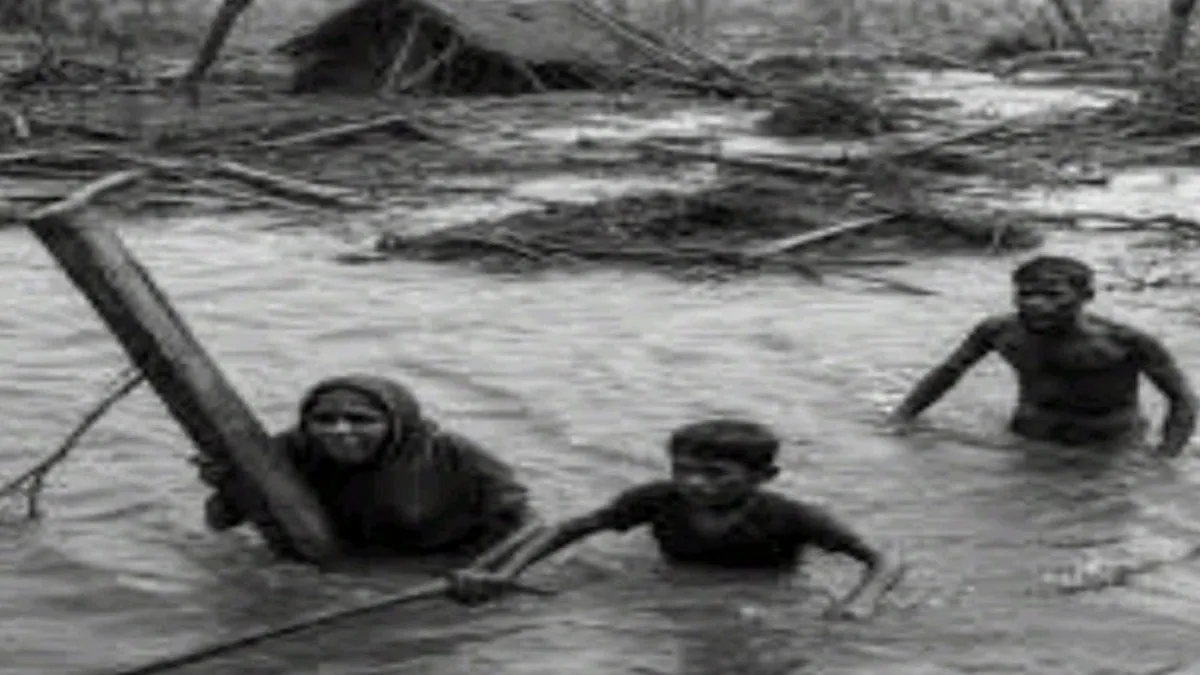
Collected Photo

November 12, 1970, remains one of the darkest and most tragic days in the history of coastal Bangladesh. A devastating cyclone and tidal surge ravaged the southern region of what was then East Pakistan in a single night. The present-day Bhola district and surrounding coastal communities were among the worst affected. The disaster is known in history as the Bhola Cyclone. In terms of casualties, it remains one of the deadliest tropical cyclones in the world.

The horror of that fateful night

In early November 1970, a deep depression formed over the Bay of Bengal. It gradually intensified into a powerful cyclone. The storm struck coastal areas on the night of November 12 and during the early hours of November 13.

Powerful winds triggered a devastating tidal surge. According to various sources, the cyclone’s maximum wind speed reached approximately 224 kilometers per hour. The tidal surge reached an estimated height of 6 to 10 meters.

The situation became even more catastrophic as the cyclone-driven surge coincided with a full moon tide. Vast stretches of inhabited land were submerged within moments. Homes, livestock, farmland and the livelihoods and dreams of countless families were swept away.

Death toll estimated at 300,000 to 500,000

According to the World Meteorological Organization (WMO), the US National Oceanic and Atmospheric Administration (NOAA) and various international studies, the 1970 cyclone claimed an estimated 300,000 to 500,000 lives. Data from the Department of Disaster Management of Bangladesh also puts the death toll at around 300,000.

According to various local accounts and media reports, more than 100,000 people are believed to have died in Bhola district alone. However, determining the exact death toll remains difficult due to limited communication facilities in remote islands and coastal areas, as well as inadequate record-keeping.

Communities in Bhola among the worst affected

Vast stretches of islands and coastal settlements in Bhola, Monpura, Char Fasson, Lalmohan, Tazumuddin and Daulatkhan were severely affected. Coastal areas of Noakhali, Hatiya, Sandwip, Ramgati and various localities in Patuakhali also suffered massive loss of life and property.

People living in low-lying islands surrounded by rivers and the sea faced the greatest danger. Due to inadequate early warnings, a shortage of safe shelters and limited communication facilities, countless people lost their lives in the cyclone.

Disaster managementDeath tollNovember 12Cyclone PreparednessEast PakistanEarly warningsCyclone sheltersCoastal BangladeshTidal surgeBhola Cyclone
    আগামীর সময় ইপেপার
    শেয়ার করুন:

    Bodies scattered across the coast as families mourned

    Following the cyclone, the bodies of countless people and livestock were scattered across coastal rivers, including the Meghna and Tetulia, and vast stretches of islands and coastal areas. Entire families were wiped out in a single night. Some lost their parents, others their children, while many lost every member of their families.

    Survivors faced severe shortages of food, safe drinking water, medical care and shelter. The destruction of communication networks also made it difficult to conduct rescue operations and deliver relief supplies to affected areas. The region was filled with the cries of bereaved families, the desperation of hungry people and the struggle to survive.

    Disaster had political consequences

    The 1970 cyclone was not merely a natural disaster. It also exposed the political and administrative discrimination that existed in Pakistan at the time.

    The central government’s slow response to rescue and relief operations and the lack of adequate assistance following the disaster triggered widespread criticism. Long-standing grievances and resentment among the people of East Pakistan grew even stronger.

    The disaster and public dissatisfaction over relief efforts are subsequently considered among the important factors that intensified resentment among East Pakistanis toward the central Pakistani government. Its impact has also been discussed in the context of the 1970 general election and subsequent political developments.

    Disaster management transformed after the catastrophe

    The devastating 1970 cyclone marked a major turning point in the history of disaster management in Bangladesh. In the following years, greater emphasis was placed on constructing cyclone shelters in coastal areas, disseminating early warnings, developing volunteer networks and improving rescue and relief operations.

    Today, initiatives are being taken to reduce disaster risks through the Cyclone Preparedness Programme (CPP), weather forecasts, public announcements through loudspeakers, mobile phone alerts and coastal shelters.

    However, river erosion, weak embankments, inadequate cyclone shelters and the safety of people living in remote coastal areas remain major challenges in Bhola and other coastal regions.

    The memory of November 12 remains etched in history

    More than half a century has passed since the disaster. Yet the memory of that horrifying night in 1970 remains a deep wound in the hearts of people in Bhola. For those who lost loved ones, November 12 is more than just a date. It represents grief, tears and a devastating chapter in history.

    Every year on November 12, people in Bhola and other coastal regions pay their respects to the hundreds of thousands who lost their lives in the cyclone.

    The devastating history of the Bhola Cyclone reminds us that although natural disasters cannot be prevented, countless lives can be saved through accurate forecasts, rapid rescue operations, adequate shelters and effective preparedness.

    The Bhola Cyclone is therefore not merely the name of a disaster from the past. It remains an enduring warning about the need to ensure the safety and security of coastal communities.