
More than 220,000 evacuated in France and Spain due to wildfires
EU rallies to France’s aid as blaze menaces bordeaux, coastal holiday havens

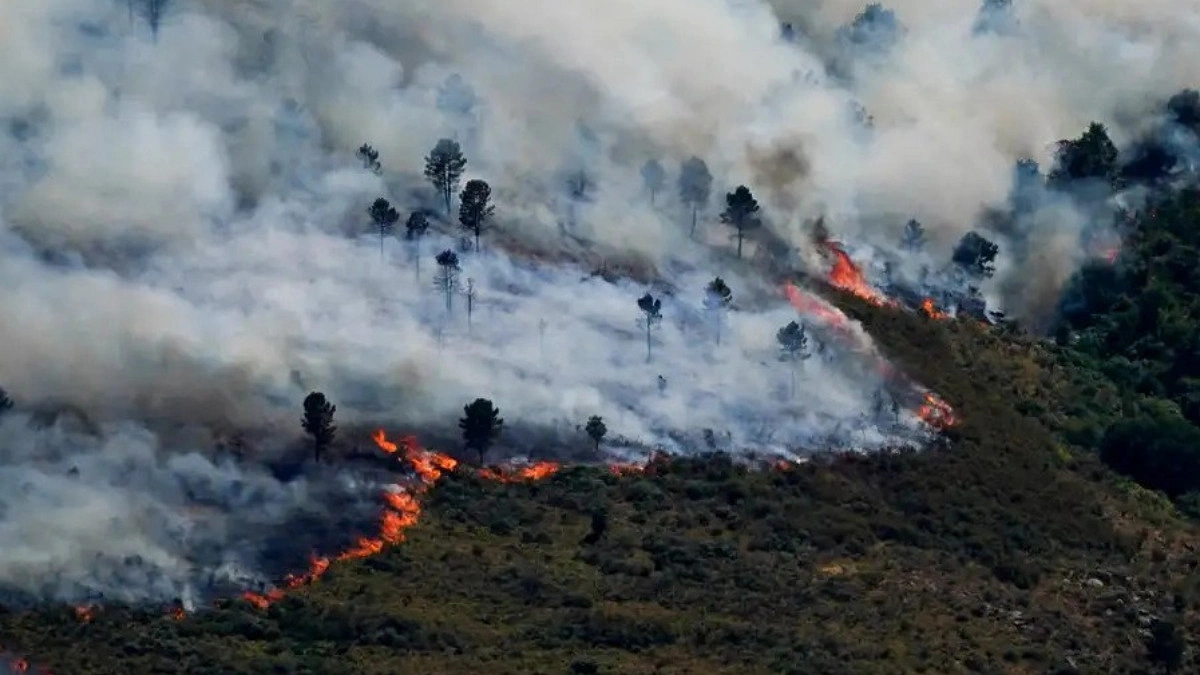
Reuters photo.
French President Emmanuel Macron has activated Europe’s emergency solidarity network, as relentless wildfires push the country’s firefighting and medical services to their limits—particularly in the parched southwest, where flames are now creeping toward the historic city of Bordeaux.
In a late-night social media update, Macron confirmed that Paris had formally requested support through the EU’s civil protection framework. “The situation remains extremely tense as fires ravage the country, especially in Gironde,” he wrote on X. “Thanks to our partners, we will soon be reinforced by two Croatian Canadair water-bombers, two Portuguese Air Tractor planes, and two heavy Black Hawk helicopters from Czechia and Slovakia.”
The president praised what he called “concrete, swift, and operational solidarity” from fellow member states, while issuing a stark appeal to citizens: “I call on our fellow nationals to exercise the utmost caution. Every gesture counts in safeguarding our lives, our homes, our woodlands, and our heritage.”
On the ground, authorities moved decisively over the weekend. Officials ordered precautionary evacuations in towns near Bordeaux on Saturday, urging residents not to wait until the fire’s advance forced their hand. Meanwhile, the national traffic information service, Bison Futé, pleaded with motorists to steer clear of roads in the Gironde department to keep routes clear for emergency convoys.
Interior Minister Laurent Nuñez framed the crisis as a full-scale confrontation, saying: “Our emergency crews are waging a genuine battle against these wildfires. The entire nation stands with you.”
The EU’s Civil Protection Mechanism—designed to pool resources when a disaster outstrips one country’s capacity—has been triggered as southern Europe endures its third consecutive heatwave. The punishing conditions have parched soils, drained reservoirs, and turned vast stretches of forest and grassland into tinderboxes.
Peninsula Under Siege: Evacuations by Sea and Road
Even before Bordeaux’s outskirts came under threat, the picturesque Cap Ferret peninsula—a magnet for summer tourists with its sandy beaches, oyster shacks, and upscale vacation homes—faced its own dramatic exodus. On Friday, authorities ordered a total evacuation of the entire spit of land, as a fierce blaze that had already scorched 8,700 hectares to the north showed no signs of abating.
Residents and holidaymakers were given a narrow window—between 7 a.m. and 10 a.m.—to depart by boat from jetties in four coastal villages. Anyone missing that maritime deadline was compelled to flee via the sole road link to the mainland, according to Sophie Brocas, prefect of the Nouvelle-Aquitaine region.
The full-scale evacuation order underscored the gravity of the threat. With summer at its peak, Cap Ferret’s campsites and rental properties were packed, making the operation all the more urgent and complex. As night fell, the flames continued their advance, leaving firefighters bracing for another critical day in what has become one of France’s most punishing fire seasons in recent memory.
A Fragile Front Line
On the ground, a combined force of some 800 firefighters, bolstered by army troops and police units, has been thrown into the breach to keep the inferno from crossing onto the peninsula itself. The fire, which first sparked near the town of Lège on Wednesday in what authorities suspect was an accidental ignition, has since rampaged through the sprawling Landes de Gascogne forest—a vast pine woodland that still bears the scars of devastating fires in the summer of 2022.
A Second Front, a Race Against Wind
Further south, near the lakeside resort of Biscarrosse—roughly 40 kilometres from Cap Ferret—a second major blaze had consumed 2,500 hectares by Friday and continued to defy containment efforts. The human toll there was staggering: more than 23,000 people were ordered out of their homes, holiday parks, and camping grounds, including entire busloads of children evacuated from a summer camp and vulnerable residents from a nearby nursing home. Gilles Clavreul, prefect of the Landes, warned that persistent strong winds were keeping the situation “highly dynamic and deeply unfavourable,” while local farmers were urgently tapped to supply water tankers in support of the stretched firefighting crews.
Scorched Earth in the Southeast
To the east, a separate fire that broke out near Pontevès on Tuesday had blackened roughly 2,700 hectares in the Var department by week's end, leaving 50 homes damaged and 25 completely destroyed. Over 300 people were evacuated from surrounding hamlets and villages as the flames advanced with terrifying speed. Throughout Thursday, dozens of fresh flare-ups—whipped into life by the notorious mistral wind—posed a direct threat to the medieval hilltop village of Cotignac. Prefect Simon Babre acknowledged that firefighters had managed to “regain some ground,” but cautioned that peril still hung heavy over the area.
Faith Amid the Ashes
In a poignant scene outside Cotignac, a small group of nuns could be seen kneeling in prayer by the roadside, their habits stark against the smoky haze, as fire crews battled tirelessly to shield the ancient stone houses and winding streets from the encroaching flames—a quiet testament to the fear and hope gripping communities across southern France.
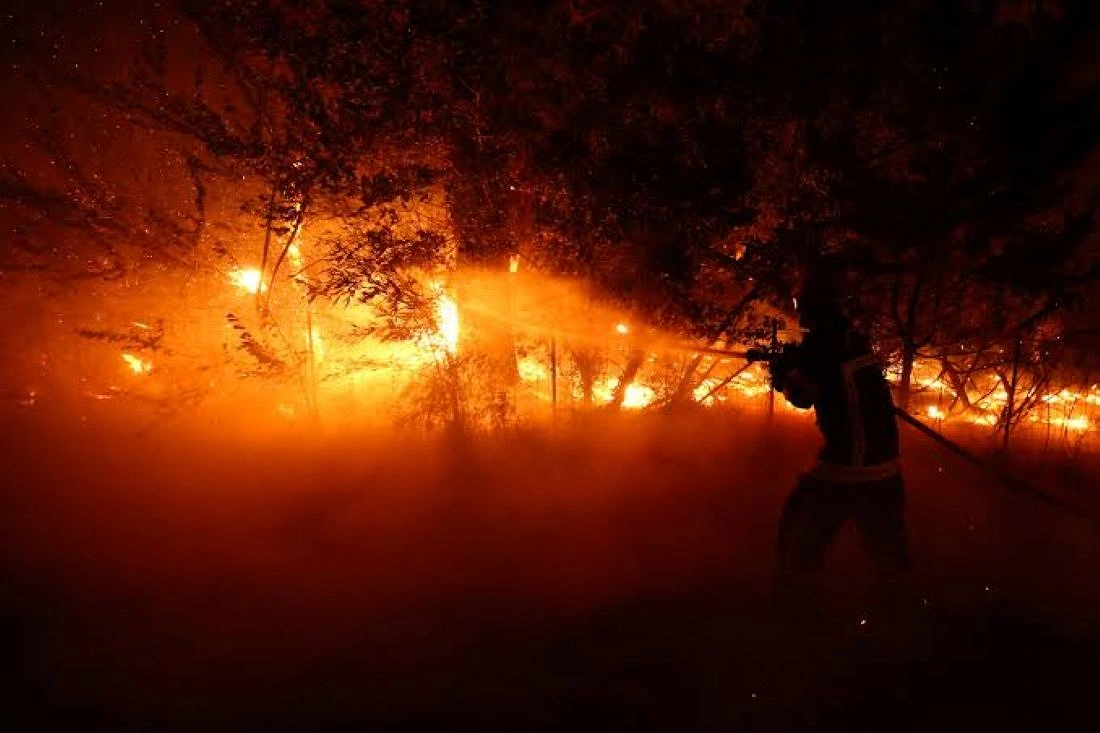
BBC adds: French authorities have ordered the evacuation of almost 60,000 people near Bordeaux, taking the total number of people told to flee wildfires in France and Spain to more than 220,000. Around
200,000 people have been evacuated in south-west France in the Gironde and Landes regions.
French President Emmanuel Macron has mobilised the military to assist the response. Meanwhile, a fire near Madrid is "beyond the capacity" of firefighters to contain, Spanish officials have warned, after three fires west of the capital merged into a single blaze. Spain's
government has declared a national emergency, with 25,000 people told to evacuate and almost 40,000 told to stay indoors. Madrid's
regional president Isabel Díaz Ayuso described it as the "worst fire in
the history of the region", with the area facing a "perfect storm" of
high temperatures, relentless wind and merging fire fronts.
(Source: Radio France Internationa and BBC)
