
Rampal Power Plant Finance: UK's Barclays accused of violating international guidelines

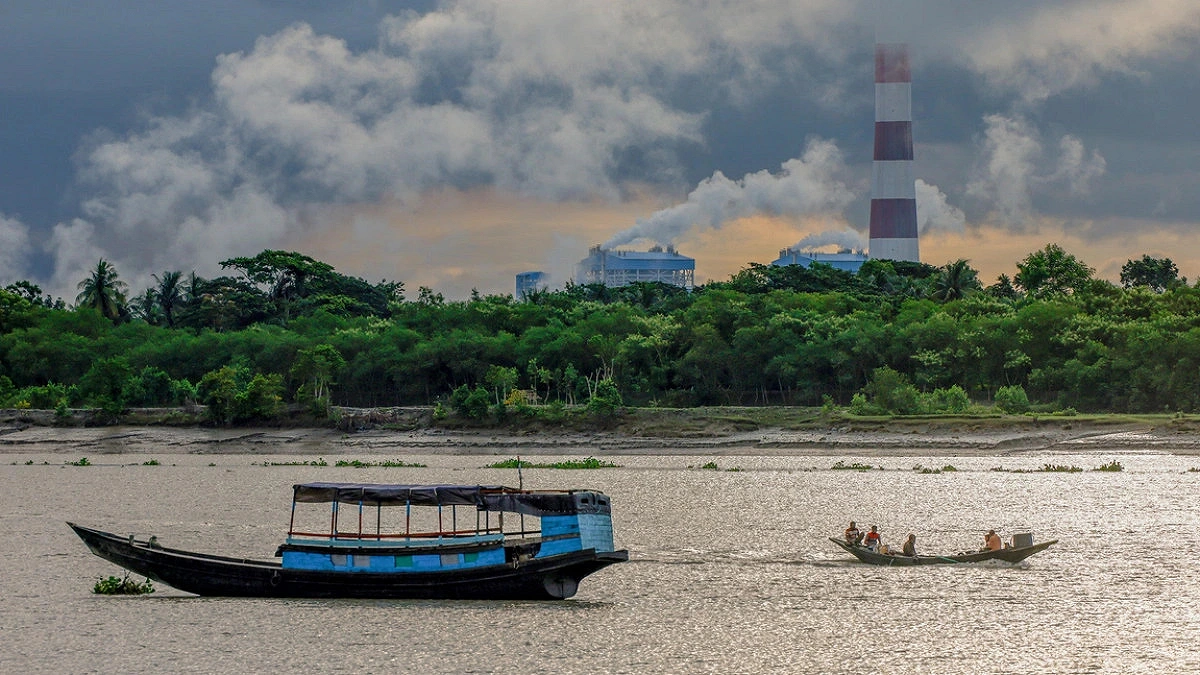
A formal complaint has been lodged against the UK's Barclays Bank for violating international guidelines. Photo: Collected.
An official complaint has been filed against the UK-based Barclays Bank over its alleged financial involvement with a coal‑fired power plant built near the Sundarbans, the world's largest mangrove forest. The complainants claim that the bank violated international guidelines by financing entities associated with the Maitree Super Thermal Power Project, constructed at Rampal in Bangladesh—also known as the Rampal Power Plant.
Three individuals and organizations from the Sundarbans region of Bangladesh and India submitted the complaint to the UK government's Office for Responsible Business Conduct. They allege that Barclays did not conduct adequate environmental and human rights due diligence before arranging loans and bonds for the project‑related entities.
The coal‑fired power plant is located close to the Sundarbans, a UNESCO World Heritage site. This forest, spread across hundreds of small islands in the riverine delta, is home to hundreds of plant and animal species—including the Royal Bengal Tiger. Millions of people in Bangladesh and India depend on the Sundarbans for their livelihoods. Many rely on the rivers and the forest for food and other essential resources.
One of the complainants is Sharif Jamil, an environmental activist hailing from Dhaka. He said that heavy metal pollution from the power plant and surrounding industries is entering the Sundarbans through interconnected rivers and canals. He said, "The Rampal power plant is right on the banks of the Pasur River, the lifeline of the Sundarbans. The health of the forest is now in crisis."
A study published last November found high levels of mercury and arsenic in water samples collected from the Sundarbans. The highest concentrations were detected in the Pasur River. The researchers identified industrial waste and port‑related activities as sources of heavy metal pollution. According to them, due to emissions from coal burning and increased vessel traffic, the Rampal power plant poses a "significant environmental threat" to the Sundarbans.
The complaint mentions that the power plant's emissions will contribute to global warming, sea‑level rise, and the risk of extreme weather events. The region is already highly vulnerable to climate change. The mangrove forest serves as a natural barrier against cyclones and other natural disasters.
There was widespread opposition to the power plant from the time of its planning and construction. In 2016, UNESCO also expressed concern over the project. A report by the organization stated that due to air and water pollution, there was a "high risk" of the World Heritage site being "irreversibly damaged." The complaint notes that several financial institutions, including some French banks, had refused to finance the project due to environmental and social impact concerns.
Sharif Jamil further said that given Barclays' standing on the international stage, the institution also bears the responsibility to consider the consequences of its financing. He said, "The greater your reputation, the greater your duty to behave responsibly towards the planet and its people. Barclays is a reputable global institution—and that is why it too has a responsibility."
He said, "Other banks and financial institutions have withdrawn investment from this project or have refused to finance it. Barclays and other financial institutions should change their policies and review how their operations can play a role in protecting the planet from climate catastrophe."
Sharif Jamil also called on banks to increase financing for renewable energy. He said, "Bangladesh has sunlight all year round. Despite the vast potential for generating electricity from renewable energy, why should we increase our use of fossil fuels?"
Among the other complainants are Animesh Mandal, a farmer and politician from West Bengal, and the South Bengal Matsyajibi Forum, a labour organization of fishermen. They are receiving legal assistance from students and lawyers at the Human Rights and Environment Clinic of the Law Department at King's College London.
Sue Willman, a lawyer from the King's College clinic, said, "Rural communities in the Sundarbans are on the front line of the climate and nature crisis. We want banks and financial institutions to think again before financing any oil- and coal-based projects in this crisis."
The UK's Office for Responsible Business Conduct will examine whether to accept the complaint and initiate an investigation. It is an agency under the country's Department for Business and Trade.
However, Barclays Bank and the main entity behind the Maitree Super Thermal Power Project—the Bangladesh-India Maitree Power Company—declined to comment on the allegations.
(The Guardian)
