Remembering on His Birthday: Immortal Melody-Maker Sachin Dev Burman

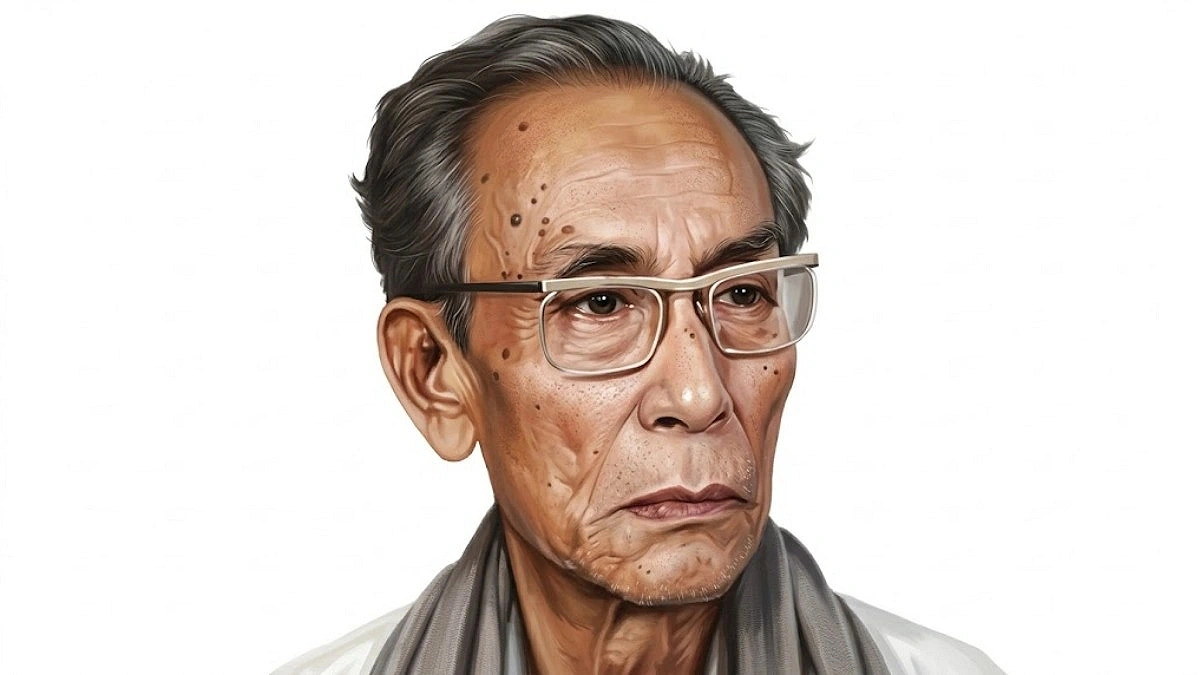
The great melody-maker Sachin Dev Burman.
The first of October. There is no trace of a dirty black quilt in the Ashwin sky. Rafts of white autumn clouds across the skies of Bengal. Below, waves of kash flowers stretching to the horizon. Was it on just such a day that an immortal legend of Bengali music, Sachin Dev Burman, was born? One whose magic of melody enchanted everyone from Lata Mangeshkar to Kishore Kumar, Hemanta Mukhopadhyay to Manna Dey, and singers and listeners of nearly every generation. One whose voice held a wondrous nasal sweetness, whose creations of melody were mingled with the soil of Bengal and the spirit rising from the depths of folk music.
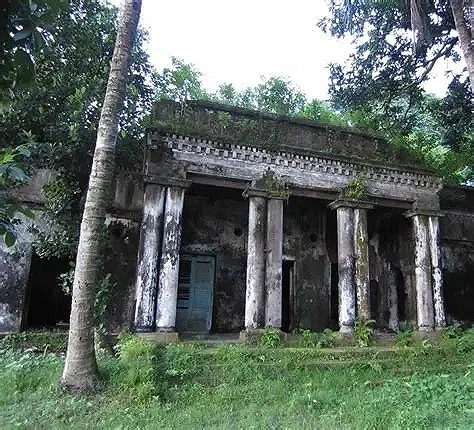
Ancestral home of SD Burman in Cumilla.
Today, on his birthday, as we stand here, while that historic ancestral homestead in Chartha of Cumilla still stands in a nearly ruined condition, the question arises: are we doing justice to our history? Sachin Dev Burman was not merely a music director; he was a bearer and carrier of Bengal's folk music, a bridge between Eastern and Western music, and that rare talent who, despite being a child of a royal family, sang the songs of ordinary people and created for ordinary people melodies that flow through their every pore. Perhaps that is why he is Sachinkarta.
In Color, Scent, Rhythm, and Song
October 1, 1906. In the now-abandoned but then-resplendent palace in the Chartha area of Cumilla, a child was born, on whose forehead was written the great destiny of rewriting the music history of the subcontinent. He was a child of the Chandravanshi Manikya royal family of Tripura. His father, Nabadvipchandra Dev Burman, was a half-brother of Maharaja Birchandra Manikya Bahadur of the Tripura kingdom and was a sitar player and classical musician. His mother, Nirupama Devi, was a daughter of the Manipur royal family.
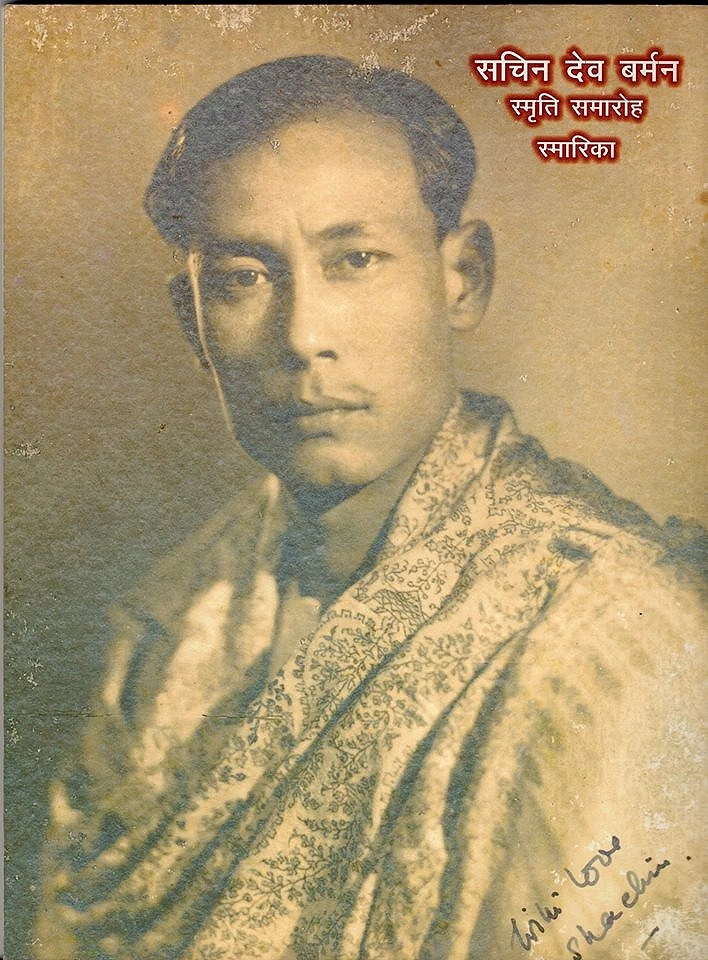
S.D Burman's autograph on his own photo.
With financial support from Birchandra Manikya, Kumar Bahadur Nabadvipchandra built a palace on 60 acres of land in Chartha, Cumilla. In this palace, on the first of October 1906, his youngest child, Sachin Dev Burman, was born. Despite being a claimant to the throne, due to Birchandra's cruelty, on the advice of Kailashchandra Singh, Nabadvipchandra moved with his family to Cumilla and began living there permanently. That luxurious life of kings and princes seemed not to be in their destiny. So he grew up in an atmosphere of music, as if the Creator had sent him to this world as a child of melody.
Sachin Dev Burman completed his primary education at Kumar Boarding School in Agartala, Tripura. This school had been specially established for the education of children of the Tripura royal family and children of so-called wealthy households. Later, his father, Nabadvipchandra, enrolled him at Yusuf School in Cumilla. After spending some time at this school, Sachin Dev Burman was admitted to the fifth grade at Cumilla District School. In 1920, after passing matriculation from Cumilla Zilla School, Sachin enrolled at Victoria College. In 1922, the talented Sachin passed IA from that college. In 1924, he enrolled in an MA at Calcutta University.
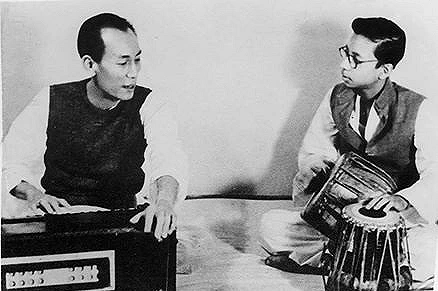
Rahul Dev Burman with his father S.D Burman.
While living in Cumilla, he developed a family friendship with the rebel poet Kazi Nazrul Islam. From 1910 to 1920, Cumilla's cultural environment took shape around Surlok of Thakurpara, Sabuj Sangha theater group of Kandirpara, The Great Journal Theatre Party, Youngmen's Club, and others. The maharajas of Tripura built the Town Hall, theater halls, libraries, and various cultural centers in Cumilla.
Around 1920, Sachin Dev's friends included later-famous figures in their respective fields such as Surasagar Himangshu Dutta, Ajay Bhattacharya, Mohini Chowdhury, Samarendra Pal, Kazi Nazrul Islam, Shailabala Dam, Dhrupadiya Sauren Das, and Sudhin Das. Film directors Sushil Majumdar, Nani Majumdar, Brajen Banerjee, Jitu Dutta, and Arun Mahalanobis would come there regularly. The types of songs were bhorakirtan, nagarkirtan, kabigan, and dhapyatra. Writers, composers, lyricists, poets, and musicologists would gather at the Youngmen's Club. Nazrul and Sachin Dev Burman's songs would drift out from the adda.
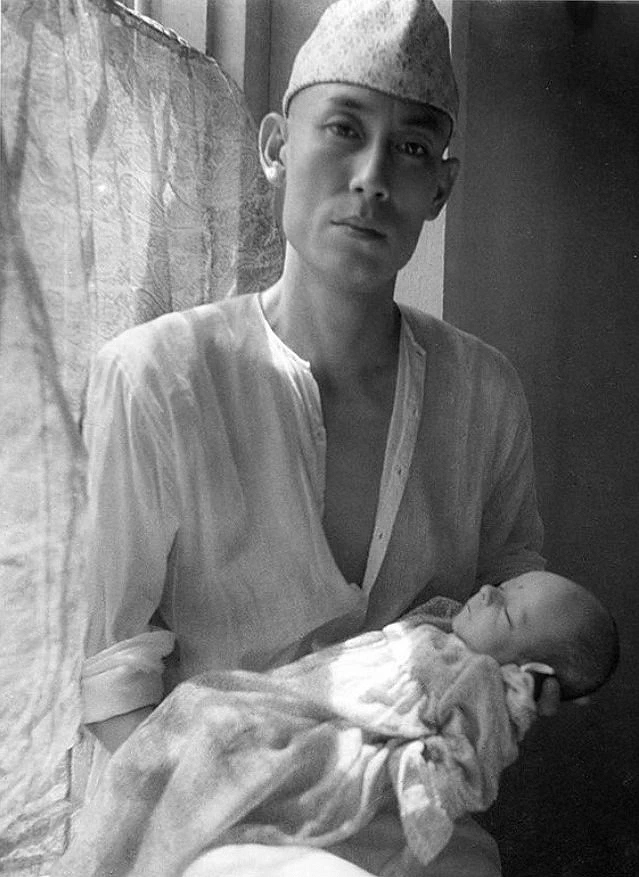
Rahul in the lap of father S.D Burman.
Behind Sachin Dev Burman's musical life lies a remarkable story. In Chartha, Cumilla, opposite his house was Munshibari. Sachin had a childhood friendship with Martuj Mia, a son of that house. One night, the two were strolling on the road, and Sachin was humming a song. Moved by hearing that song, the house's zamindar, Nabalak Mia, sent his servant Safar Ali to call him over. When Sachin appeared before the zamindar trembling with fear, Nabalak Mia asked, "Your voice is very good. Do you have any musical instrument?" When Sachin answered in the negative, that zamindar bought him various musical instruments including a harmonium, tabla, and piano, and arranged for a tabla player named Kanakestha to stay for his musical practice. From that night, a new chapter seemed to begin.
In the Lap of Mother Bengal
Sachin Dev Burman's music education began with his father. His father, Nabadvipchandra Dev Burman, was a sitar player and classical musician. He was Sachin Dev Burman's first teacher. From 1925 to 1930, he practiced music under music scholar Krishnachandra De. After that, his music education continued under the supervision of Ustad Badal Khan and Bishwadeb Chattopadhyay. This education in classical music played a deep role in instilling in him a fundamental knowledge of music. This education influenced the pursuit of melody in his later life.
Later, he became a disciple of Ustad Aftabuddin Khan. Besides, he received training in music and musical instruments from Bhishmadeb Chattopadhyay, sarangi player Badal Khan, sarod player Ustad Allauddin Khan, Ustad Faiyaz Khan, Abdul Karim Khan, and others. The knowledge gained from these diverse teachers laid the foundation for his musical creations. The depth of classical music and the tenderness of Bengal's folk music—an exquisite blend of these two occurred in his melodies. That is why his creations became timeless.
He first sang at the Akashvani Kolkata center in 1923. In 1931, Sachin Dev Burman's father, Nabadvipchandra, passed away in Kolkata. At the time of his death, he was the Prime Minister of Tripura. Sachin Dev Burman was then living at Tripura Palace in Kolkata. In his autobiography titled "Sargamer Nikhad," Sachin Dev Burman himself wrote, "After my father's death, I felt as if I had fallen into a bottomless sea. In this situation, if I had gone to Agartala or Cumilla, I could have lived in royal comfort and without worry in our own home and could have established myself in some high position in the state government. My elder brothers told me to do that. But this arrangement did not please me. I will struggle alone, earn on my own, and spend my life in the pursuit of music. With only this desire in my mind, I left the Tripura Palace in Kolkata and set up my shelter in a small rented room."
Where Did That Village's Soil Go, Where Is That Mother's Lap
In 1932, he failed an audition at HMV, India's top record-producing company. However, in the same year, his first gramophone record was released by Hindustan Musical Products. Sachin Dev Burman's first two recorded songs were "Dakile Kokil Roz Bihane," sung in the style of a folk song, whose lyricist was Hemendra Kumar Roy, and "E Pathe Aaj Esho Priyo," a raga-predominant piece in the Khamaj thumri style, whose lyricist was Shailen Roy.
In the 1930s, he gained popularity by singing folk songs on the radio. He had a special inclination toward the folk songs of East Bengal and Northeast Bengal. From 1944, he began living permanently in Mumbai. From 1945 until his death, for nearly three decades, Sachin "Karta" composed music and directed music for more than a hundred films. Lata Mangeshkar, Muhammad Rafi, Kishore Kumar, Hemanta Mukherjee, Manna Dey, Geeta Dutt, Asha Bhosle, and many others considered themselves blessed if they could sing to the melodies of their most revered "Dada Burman." In continuation of this, we have received some extraordinary melodies and some immortal songs, whose favorite list is a very difficult task to make. It is impossible to decide which to leave out and which to take.