
Kurigram potters struggle as plastic erodes an age-old craft

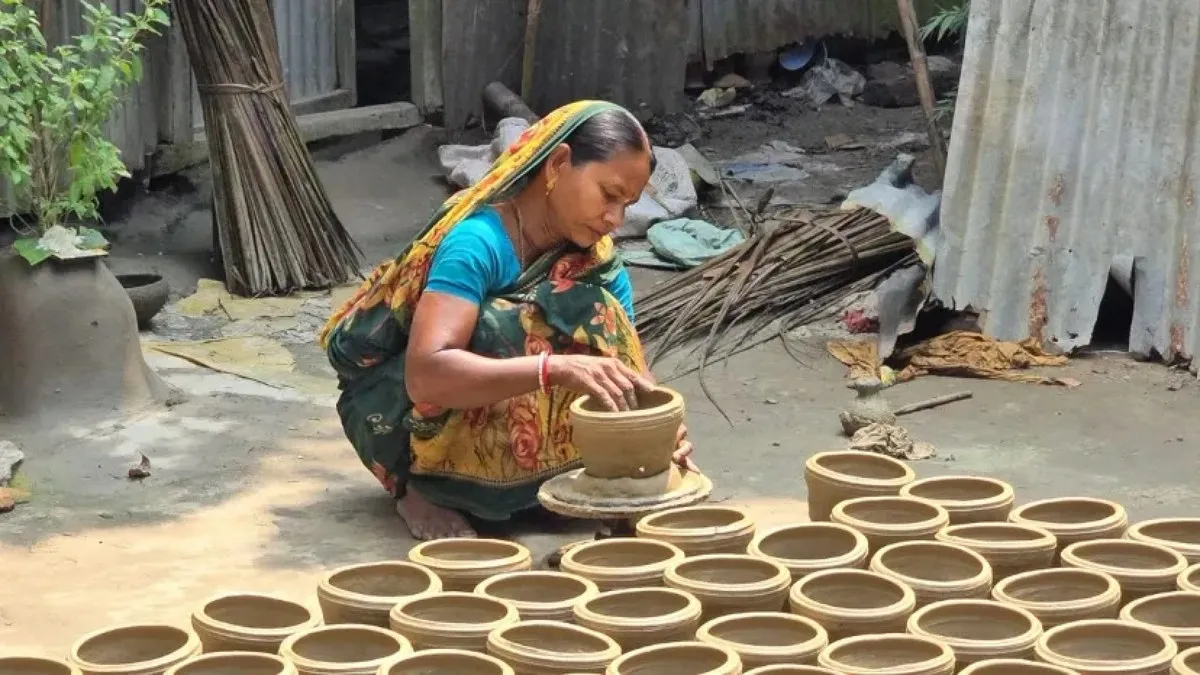
Photo: Agamir Somoy
Once upon a time, as morning arrived, the bustle of crafting pottery items would begin across Somnarayan Palpara in Rajarhat, Kurigram. Both male and female family members together crafted pots, pans, pitchers, utensils, and various household products, sustaining their families through sales.
However, time has reshaped that reality. The overwhelming dominance of plastic, aluminum, and iron products has driven down demand for traditional earthenware. Driven by livelihood needs, members of the new generation are leaving their ancestral trade for alternative occupations.
Where 30 families in the village once depended on this profession, today only 13 members across six families work regularly, placing this multi-generational pottery craft in an existential crisis.
Nearly 25 years ago, pottery enjoyed significant prosperity in Somnarayan Palpara. Between 60-70 members from 30 village families directly engaged in the trade. Some gathered clay from various locations, others sorted and prepared the raw material, while others carried finished goods to markets for sale.
Sons learned pottery techniques from their fathers, grandfathers passed skills down to sons, and elders instructed the younger generation, preserving the trade across generations.
Potters in Rajarhat employ a distinct crafting technique. Instead of using traditional potter’s wheels, artisans shape various items through delicate hand skill, specialized molds, and stone strikes.
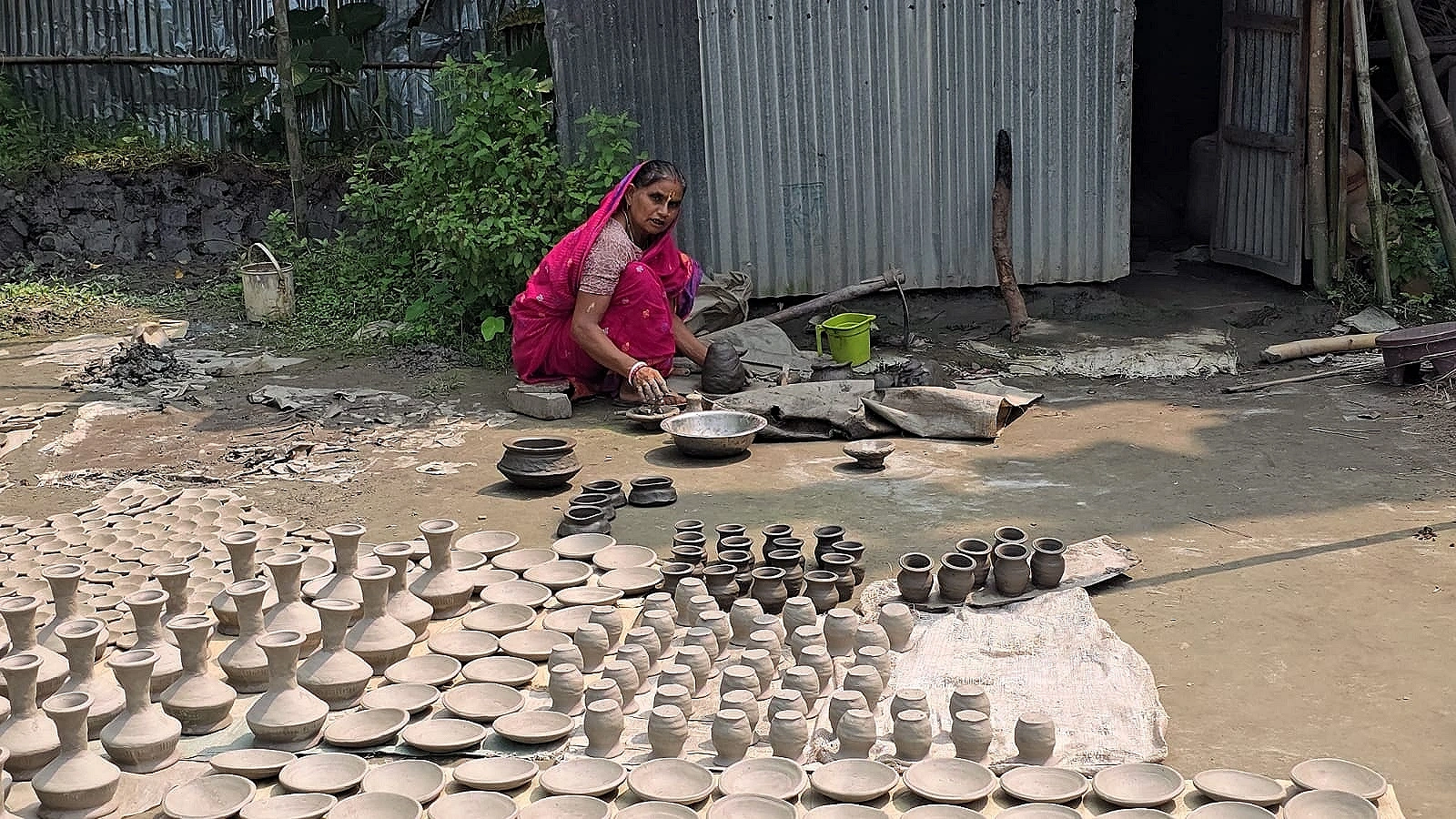
Artisans first dig up and sort clay, blending sand into it to create a “dough”. They then shape the desired forms across several stages using hands and molds. Producing a single item requires three to four days.
Afterwards, workers dry the items in the sun and fire them in kilns using firewood and sawdust before painting the final products for market. Several family members contribute labor throughout this lengthy process.
Earthenware pots, pans, pitchers, and utensils once commanded widespread demand for cooking, water storage, and general household tasks. Gradually, consumers turned to plastic, aluminum, and iron goods due to their availability and convenience. Consequently, pottery lost its market presence, forcing potters to stop manufacturing 10 to 15 types of items as demand plummeted.
Reflecting on this transformation, 60-year-old potter Subal Chandra Pal said, “Plastic has finished our business. They make everything with plastic now, so how can clay items run? Pitchers used to sell, now they do not. Previously mosques had earthenware utensils, now they do not. We no longer make 10-15 types of items.”
As the market contracted, the number of practicing families shrank dramatically. The families of Subal Chandra Pal, Adhir Chandra, Swapan Chandra Pal, Sujan Chandra Pal, Makhan Pal, and Brajen Pal regularly manufacture pottery.
A total of 13 men and women across six families remain involved in the craft, while many others switched professions out of economic necessity, taking up jobs or selecting other work.
For those remaining in the trade, pottery represents family heritage rather than a simple livelihood. Despite shrinking earnings, they refuse to abandon their ancestors’ legacy. Potter Makhan Pal added, “We have been doing this business for fourteen generations; we cannot do anything except this. My father did this work, and now I am doing it.”
However, making pottery no longer provides year-round family sustenance. Fairs, religious pujas, and special festivals create limited work opportunities, prompting about 15 additional potters to join the trade on a seasonal basis alongside the six regular families.
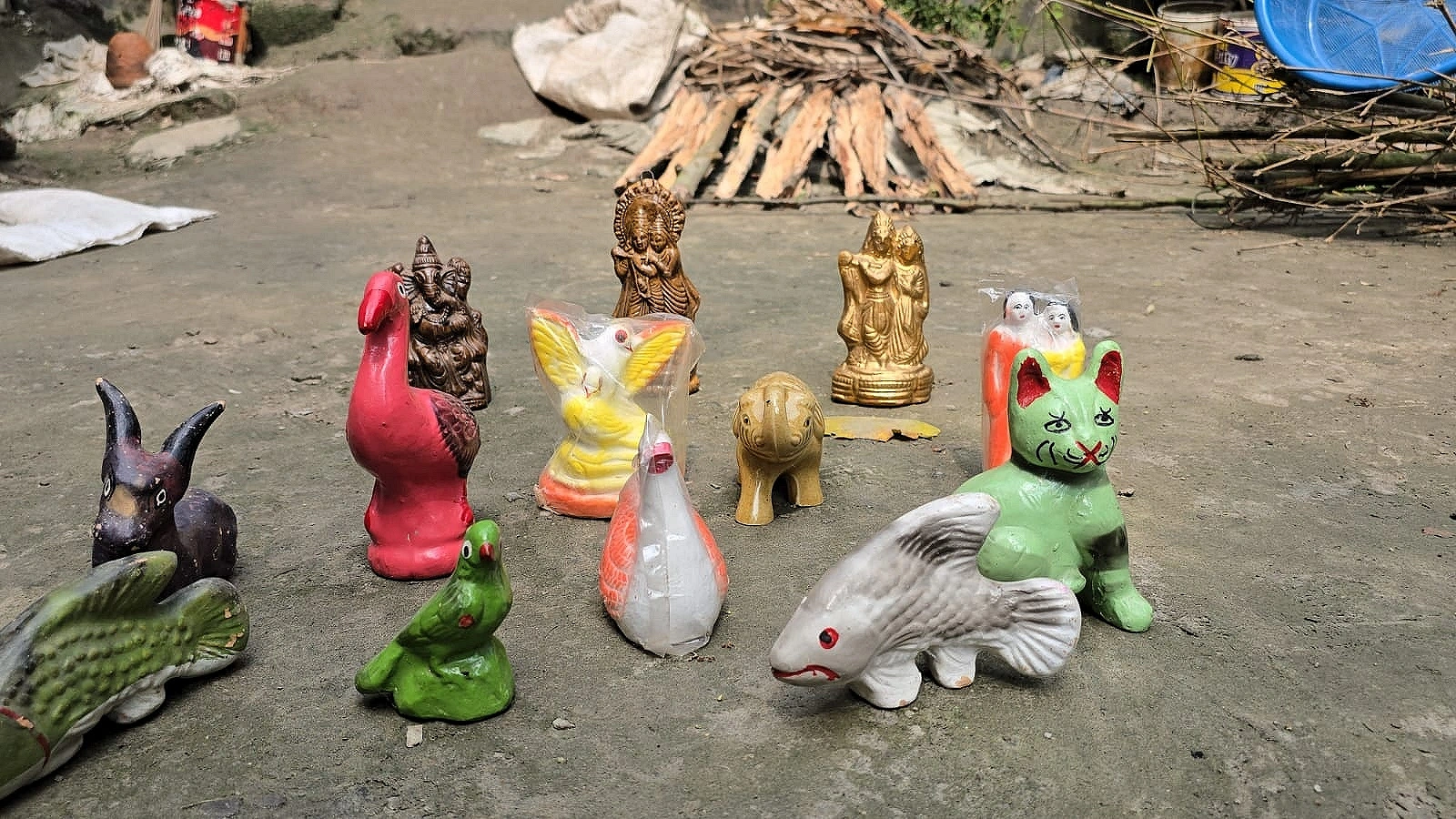
These seasonal artisans craft toys, puja items, fishing net sticks for the rainy season, dolls, earthen stoves, flower pots, clay piggy banks, and cattle drinking troughs (chari). Selling these seasonal goods generates temporary income, though potter Ratan Pal noted that sustaining a family year-round on these earnings remains extremely difficult.
Basanti Pal, wife of potter Madan Pal, shared that cattle drinking troughs sell for Tk 100-200 depending on size. Moreover, artisans sell elephant-shaped clay piggy banks for Tk 100-120, pumpkin-shaped banks for Tk 80, and horse-shaped banks for Tk 50. However, demand for these goods fluctuates seasonally, leaving both work opportunities and earnings strictly limited.
The shift among the younger generation poses the greatest threat to the future of pottery. Where children once learned the trade alongside their fathers, most now decline to participate.
Brajen Pal’s two sons, Jayanta Kumar Pal and Narayan Chandra Pal, both pursued alternative careers. After completing his education, Jayanta became a livestock veterinarian, while Narayan works for a corporate firm in Dhaka. Children across most Palpara families similarly decline to return to the ancestral trade.
Explaining their decision, Narayan Chandra Pal noted, “Our ancestors did this work. At that time, there was evaluation for this profession and there was money in this work as well. But now, the money in this work is very low compared to the labor. It is very difficult to run a household with the money that comes from this work. That is why we do not want to push our children toward an uncertain future by entering this profession. Therefore, we have stepped away from this profession.”
Having observed every stage of his parents’ labor, Jayanta Kumar Pal said, “My father collects clay from different places. He sorts that clay and prepares it for my mother. My mother crafts a pot or other items from the clay in three to four stages. This takes about three to four days. In the end, after crafting a pot or any other item, they get from a minimum of Tk 2 to a maximum of Tk 60.
“After so much hard labor, my father takes these items to market on a bicycle to sell them. Then they earn a small amount of money. Given the hardship and labor required in this profession now, earning more money is possible by putting the same amount of labor into any other profession.”
Bangladesh Small and Cottage Industries Corporation (BSCIC) Kurigram District Branch Deputy Manager Shah Mohammad Jonaed added that BSCIC organizes various fairs to display and sell potters’ products, allocating stalls free of charge. Officials will initiate steps to list professional potters in Rajarhat to bring them under government assistance initiatives.
