


Khulna WASA
Daily water deficit reaches 60 million liters
- Daily demand is 140 million liters, supply 80 million
- Earlier, 84 tube wells used to pump 40 million liters of water per day
- Currently, 38 tube wells in operation, pumping out 20 million liters of water

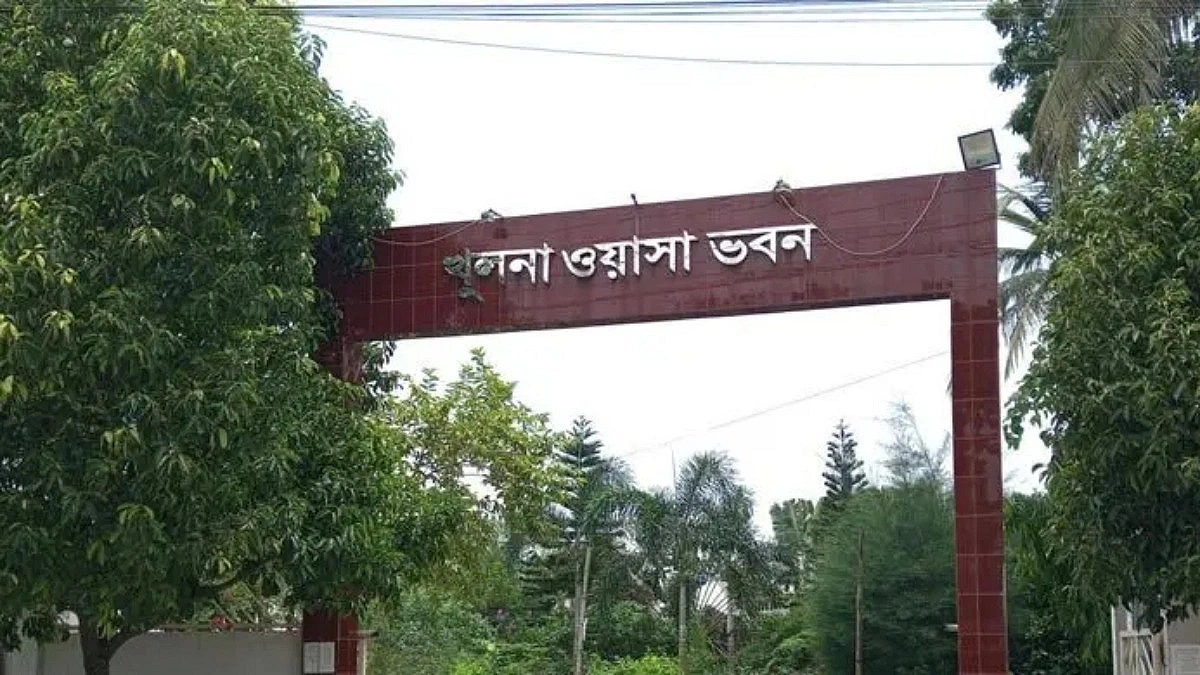
Collected Photo
Due to a dropping water aquifer this dry season, tube wells at households are failing to lift sufficient water. It now takes two hours of running a motor just to fill a 1,000-liter tank. Frustrated by this, tenants have started leaving. The family of Amena Akter Runu, a resident of Ward 1 (Phulbarigate area) under the Khulna City Corporation, has been suffering from this severe water crisis for two months. Fourteen neighboring families share the same plight. As an alternative, they collectively applied for a WASA connection, but they are yet to receive it.
Even after 18 years of establishment, Khulna WASA has failed to achieve its targeted goals. According to WASA data, one-third of the nearly 77,000 holdings under the City Corporation still do not have access to water connections or services. In particular, areas like Labonchora, Gollamari, and many alleys across the 31 wards of the city remain outside the water service network. Residents in these locations are facing immense suffering due to the dual crisis of a depleting water table and the lack of WASA connectivity. Furthermore, despite implementing a mega project worth 2,500 crore BDT, the distribution network was flawed due to a faulty design. This has significantly reduced the water supply to household connections. As a result, many are being forced to install deep-set pumps underground to secure water.
Following the establishment of Khulna WASA in 2008, 84 deep tube wells used to produce 40 million liters of water daily, serving 15,000 consumers. The organization's water production and consumer service capacity remained unchanged from 2008 to 2018. However, out of those 84 deep tube wells, only 38 are currently operational, producing 20 million liters of water.
On the other hand, work on Khulna WASA's Tk2,500 crore mega project began in 2011 and concluded in July 2019. Under this project, water is brought from the Madhumati River in Mollahat, Bagerhat, to a treatment plant in Samantasena, Rupsha. From there, water is piped to seven reservoirs and 10 overhead tanks across the city, before being distributed to households. This project currently produces 60 million liters of water daily.
However, consumers complain that they are not getting a proper water supply through this mega project's connections. In response to these complaints, WASA's internal engineering investigations have revealed evidence of mismanagement and inefficiency. The probe found that the water distribution network was poorly implemented based on an incorrect design. A major flaw includes connecting a 900 mm main pipeline to side pipes of only 350 mm. Because of this bottleneck, water cannot be distributed properly to many areas of the city. While many consumers have connections, they receive very little water, leaving them in severe distress during the intense heatwave.
Residents of Tootpara in the city shared that the trickling water supply from the WASA line throughout the day is insufficient to meet their family needs. Considering the hardships of summer, many consumers are now opting to install submersible pumps on their own.
Advocate Babul Howlader, an environmental activist and member secretary of Khulna Nagorik Samaj, highlighted that salinity has added to the suffering of low and irregular water supply. He stated that the water level in the Madhumati River has dropped, leading to a rise in salinity. During the dry season, the water remains saline for at least two months. Yet, this saline water was brought to Khulna through a mega project implemented at a massive cost, and it is now being sold to consumers. This situation is highly concerning as the salty water causes various illnesses and damages households and furniture. He demanded that advanced technology be used to convert the saline water into freshwater before distributing it to consumers.
Addressing the issue, Rezaul Islam, Executive Engineer (Engineer-1) of Khulna WASA, stated that nearly 1.5 million people reside in Khulna city. The daily water demand for this large population is 140 million liters. However, only 20 million liters are supplied through deep tube wells, and another 60 million liters are provided through the existing project. To meet the remaining deficit of 60 million liters, the ECNEC committee has approved a new mega project worth Tk2,600 crore. Tendering processes for various phases of this project are already underway.
Rezaul Islam added that the new project will focus on increasing the capacity of the treatment plants and reservoirs from the older project. Expanding this capacity will allow WASA to store larger volumes of water during the dry season, thereby reducing the concentration of salinity. Furthermore, the pipeline network will be extended to new areas to increase consumer coverage.
With these measures, officials anticipate that the water crisis will be resolved quickly and the salinity issue will be mitigated to some extent.

