"We work all day like men, yet our wages are lower"

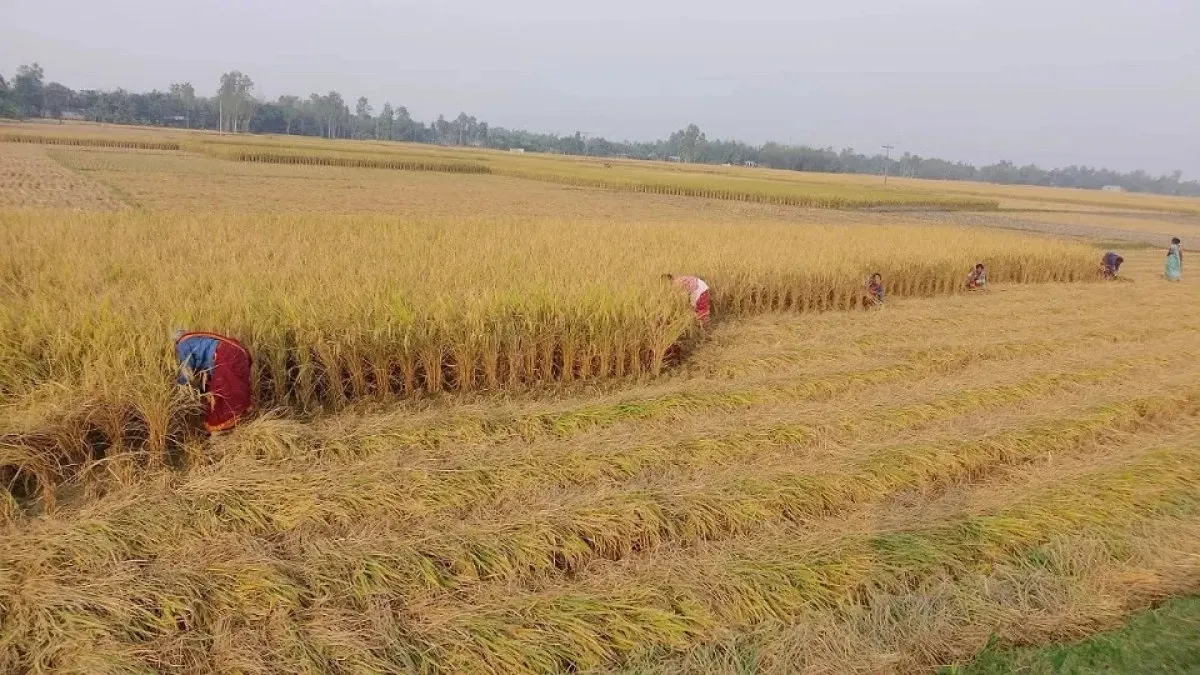
Photo: Agamir Somoy
From morning until afternoon, Palashi Rani (40) and several other women laborers cut paddy under the scorching sun. They work shoulder to shoulder with the male laborers, their bodies soaked in sweat. Yet at the end of the day, they receive lower wages than men. Frustration spills from her voice: "We work all day like men, yet our wages are lower."
Palashi Rani is not alone—many women workers engaged in paddy harvesting in Gangachara Upazila of Rangpur share the same experience.
Palashi Rani said, "From morning to afternoon I burn in the sun, cutting paddy competing with the men. I do all the work—cutting paddy, tying bundles. Yet they pay me less than them. I also have a family, children. It's hard to run a household with this money. I do the same work, so why won't they pay me the same? Are we not human?"
On Tuesday afternoon, visiting the paddy fields at Kaliar Mor at the No-hali Union of the upazila, several women were seen busy working together with the male laborers. Among them were Arti Rani (35), Palashi Rani (40), and Rupali Rani (30). They were doing various tasks including cutting paddy and tying bundles. Although there is little difference in the nature of the work, there is a big gap in wages.
Locally, male laborers receive daily wages of Tk 500 to 600. Women laborers are paid Tk 350 to 400. That is, for doing the same work, they receive Tk 100 to 200 less per day.
The women laborers said they have been working in farms for a long time due to the need for extra income for their families and for their livelihood. During the paddy harvesting season, their days are spent in the fields from morning to afternoon. They alleged that despite working as hard as men, braving sun and rain, they are paid less when wages are determined.
This scenario is not limited to Kaliar Mor—it is visible in various areas of the upazila during the harvesting season. Due to lower income compared to men, women laborers are struggling more to meet household expenses.
Women's contribution to agriculture—from paddy harvesting to bringing crops home—is important. Yet even while doing the same work, they are victims of wage discrimination. There has been a demand to eliminate this gap and ensure equal pay for equal work in order to properly value women's labor.