It is easier to harvest paddy in the haor than to bring it home

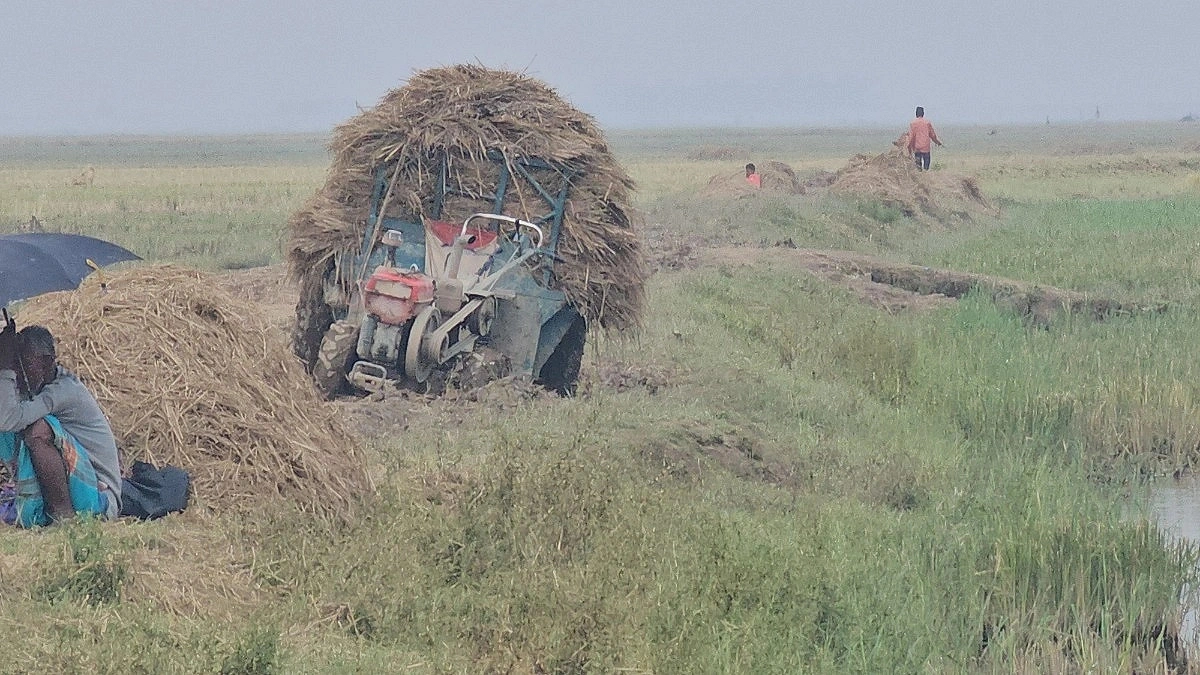
Photo: Agamir Somoy
Full of potholes, the submerged roads used for transporting paddy in the haor regions of Sunamganj, have been impassable, causing immense suffering to the farmers.
Locally, these roads are known as "Jangal" or "Gopat." Due to a lack of renovation and maintenance over the years, these paths have become nearly un-navigable. Even slight rainfall turns them into thick mud, making it a grueling task for farmers to transport harvested paddy to the "Khola" (the threshing and drying grounds).
Farmers complain that bringing the cut paddy home has now become more difficult than the actual harvest. Transporting crops across muddy and broken paths consumes significantly more time, labor, and money. In many cases, farmers are struggling to find available laborers or vehicles willing to navigate these routes.
Such roads exist across all major areas, including Matian and Shanir Haor in Tahirpur, Kharchar Haor in Bishwambharpur, and Dekhar Haor in Sunamganj Sadar. While these roads remain underwater during the monsoon, they serve as the primary transport routes during the dry Boro harvest season. However, due to prolonged neglect, most Gopats are now broken and hazardous, with some completely washed away.
Local farmers report that every Gopat has multiple breaches and large potholes. Recent rains have turned these paths into mud traps, making them inaccessible for vehicles and forcing farmers to seek expensive alternative methods to move their crops.
Morom Ali, a resident of Dhutma village in Tahirpur, said, "This year, continuous rain submerged the Jangal. We used trolleys for a few days, but the road conditions became so poor that no vehicle could move. We have never faced such hardship in bringing the paddy home."
Farmer Abdul Haque from Jamalganj village echoed this sentiment, stating that while these roads are essential for the Boro season, no effective initiatives have been taken for their development. He believes that if these Gopats were paved or properly reinforced, farmers could easily transport paddy even from distant fields, significantly reducing their toil and costs.
Farmers are demanding that these "Gopat" roads be paved with RCC casting and connected to the main road networks. They believe this would not only simplify paddy transportation and reduce production costs but also facilitate general movement for residents during emergencies.
According to the District Agricultural Extension Department, as of Thursday (May 7), 85% of the harvest in haor areas and 55% in non-haor areas has been completed, bringing the district’s total harvest to 77%. However, rainfall and waterlogging have damaged approximately 20,550 hectares of paddy land, with 16,395 hectares suffering significant damage.
Anwar Hossain, Executive Engineer of the Local Government Engineering Department (LGED), noted that while an initiative for a haor road development project was previously proposed, it did not move forward to the implementation stage.
Mohammad Omar Farooq, Deputy Director of the District Agricultural Extension Department, emphasized that these "Jangal" roads remain a primary hurdle for farmers. He explained that this year’s excessive rain has made them nearly impassable, forcing farmers to struggle immensely to reach the threshing grounds. Converting these paths into paved roads would drastically lower transport costs, and a formal proposal regarding this has already been sent to the ministry.
The suffering of the haor residents has also reached the National Parliament. Kamruzzaman Kamrul, Member of Parliament for the Sunamganj-1 constituency, has called for the urgent renovation and maintenance of these submerged roads, stressing that keeping them functional is vital for ensuring that farmers can safely bring their produce home.