
Millions of taka spent on lighting project, but roads go dark after sunset

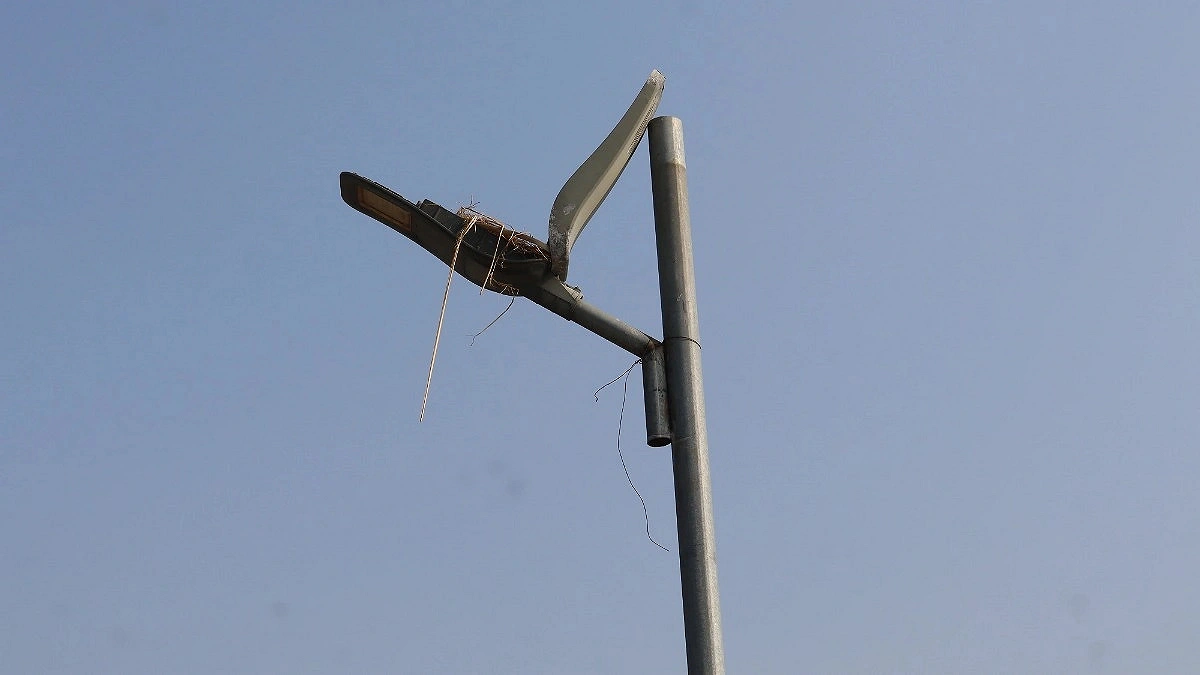
Streets of Nikli under Kishoreganj district go dark after the sun sets as solar panel and other equipment turn obsolete.
Almost all the solar lamp posts installed at a cost of millions of taka in Nikli upazila of Kishoreganj district are now out of order. Some lamp posts have no lights, while solar panels and batteries have disappeared from others. In some places, essential components lie damaged and unusable. Due to a lack of maintenance and theft, the poles standing beside roads have become evidence of the failure of a development project. As darkness falls, local residents and tourists are facing difficulties.
The solar lamps were installed in several phases under the Rural Infrastructure Repair (Kabikha) and Maintenance (TR) programmes at important public locations across the upazila, including various roads, hospitals, mosques, temples, graveyards and educational institutions. The project was intended to provide lighting on roads in the haor region at night and ensure safer movement for local residents and tourists visiting from different areas.
According to relevant sources, the government had a three-year contract with the contractor for installing and maintaining the solar lamps. However, many lights and components became damaged because regular maintenance was neglected even before the contract expired. In addition, solar panels, batteries and lights have disappeared from various locations due to theft. As a result, rural roads that were once illuminated have plunged into darkness again.
A visit to the area revealed that not a single one of the nearly 100 lamp posts along the Nikli-Karimganj road is operational.
The same situation was found at important locations in remote villages across the upazila's seven unions. Local residents are being deprived of the benefits of the project because the lights and essential components are missing.
In particular, the lack of street lighting at night has made movement difficult and raised concerns about safety. In the tourist area of Nikli, insufficient lighting on roads at night is also causing inconvenience to people travelling through the area.
However, the upazila's Project Implementation Office has not provided a comprehensive account of how many solar street lamps were installed across the upazila, how many are out of order and how many have had their components stolen. As a result, the current condition of the projects and the precise extent of the damage remain unclear.
Local businessman Tanmoy Saha expressed regret, saying that people could have benefited from the solar lamps if regular repairs and maintenance had been arranged after installation. He said damaged components should be replaced promptly. The government spent money on rural infrastructure development, but the benefits of that initiative are no longer being realised because of inadequate maintenance.
Masud Helali, a prominent businessman in Nikli upazila, said that most of the solar lamps along the Nikli embankment and newly constructed roads are out of order, making tourists from outside the area afraid to travel at night. He stressed that the lights should be repaired promptly, taking public safety and the convenience of tourists into consideration.
Contacted by Agamis Somoy, Upazila Project Implementation Officer Md. Delwar Hossain said the lamps were not currently being repaired because the government's three-year contract with the contractor had expired. No separate technical budget had been allocated for maintenance, he added. However, a letter had been sent to the ministry requesting funds to repair the lights.
