
Karnaphuli Tunnel Project
30 Bungalows, Suites, and a Pool: The Anatomy of the Perfect Resort Getaway!
- IMED: A clear example of highly ambitious and unnecessary expenditure.
- Plans: Authorities are considering leasing the project to the private sector.
- Reality: Feasibility study projected 47,129 vehicles daily by 2025, but only 4,000 actually run.

Collected Photo
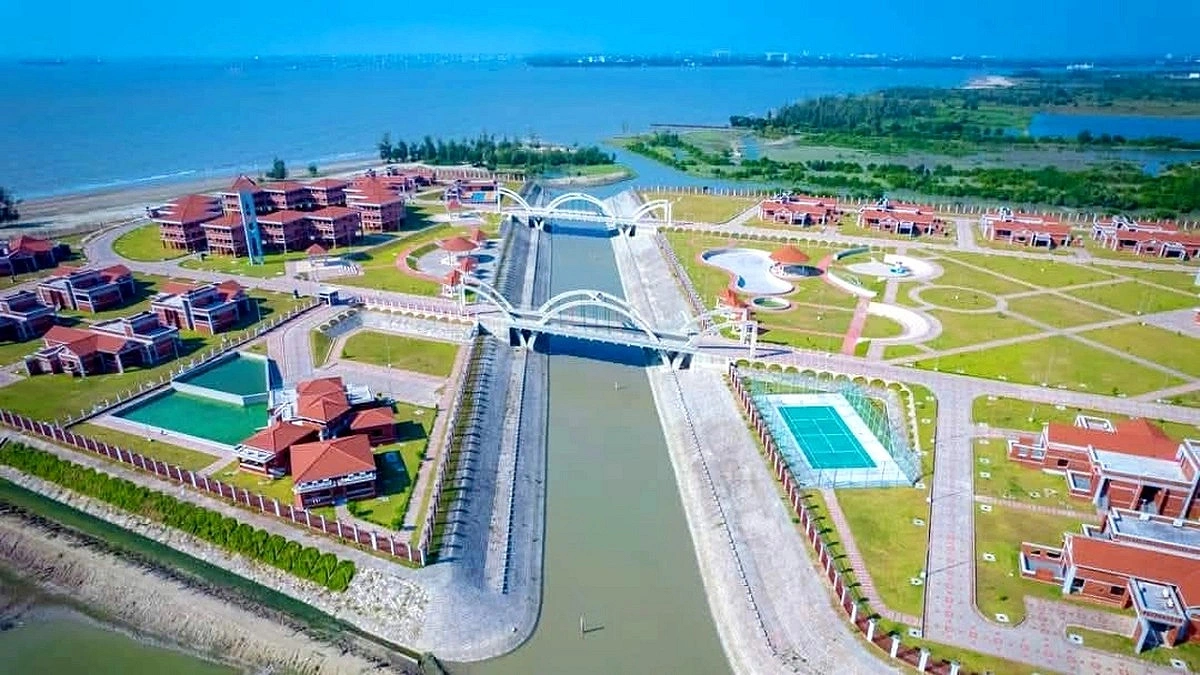
The 72-acre massive service area of the Karnaphuli Tunnel project is a clear example of extreme ambition and unnecessary expenditure. While a toll plaza, way bridges, and a control room are necessary to keep the tunnel operational, there was no justification for constructing 30 bungalows, VVIP suites, motels, a swimming pool, or an amphitheater. These facilities are now deteriorating due to prolonged non-use.
The draft of a study on the tunnel also states that enormous amounts of money have been wasted in the name of a South Asian iconic project. Far from making a profit, the tunnel is currently incurring a daily loss of approximately Tk 22 lakh (Tk2.2 million), which amounts to about Tk81 crore taka (Tk810 million) annually.
The Implementation Monitoring and Evaluation Division (IMED) of the Ministry of Planning is conducting an impact assessment study of the project. These findings have been presented in the second draft of the report, a copy of which has been obtained by Agamee Shomoy.
An IMED official said the report is still in draft stage and is expected to be finalized by the end of June. During the interim government's tenure, Advisor Dr. Wahiduddin Mahmud expressed widespread dissatisfaction with the project and showed great interest in its impact assessment. IMED has also given special attention to this evaluation.
According to the report, the main construction work of the project was carried out by China Communication Construction Company. Additionally, 229 acres of land were acquired for the project. The tunnel is currently being used by only 14 percent of the vehicle volume mentioned in the feasibility study conducted before the project was undertaken. Although the feasibility study concluded in 2013, traffic forecasts were made for 2017-2067 without showing the base-year traffic. Traffic growth was projected from 2012 to 2070. The vehicle volume for the base year 2013 was not accurately determined. No nationally or internationally recognized traffic models (such as the four-step model or activity-based model) were used. Only the zone concept was applied, which did not properly reflect administrative demographics.
Furthermore, the study report's data on environmental pollution are inaccurate. The service area and residential buildings constructed within the tunnel project area at a cost of Tk484 crore 19 lakh (Tk4.8419 billion) are generating no revenue. According to the feasibility study, 47,129 vehicles were expected to use the tunnel daily in 2025, but in reality, only about 4,000 vehicles are using it per day. Consequently, the daily loss is approximately Tk22 lakh (Tk2.2 million). Even doubling the toll rates cannot offset this loss. IMED believes that policy-level decisions, such as increasing truck diversion through the tunnel and expanding tunnel connecting roads, are needed to resolve the issue.
Those responsible for preparing the report visited the project site. According to them, the overall condition of the tunnel's segment lining is highly satisfactory, and no significant cracks, joint leaks, or signs of settlement were found. All other aspects are in good order.
While praising the construction quality, the report further states that the architectural style of the buildings and the overall construction quality are extremely high, and the plants and walkways used in the landscaping are visually appealing. The internal utility systems within the service area—such as power supply, water treatment plant, sewage, and drainage systems—have been built very robustly. The area has uninterrupted generator backup facilities 24 hours a day, seven days a week. The infrastructure of the mosque, health center, and museum located within the complex is currently in quite good condition.
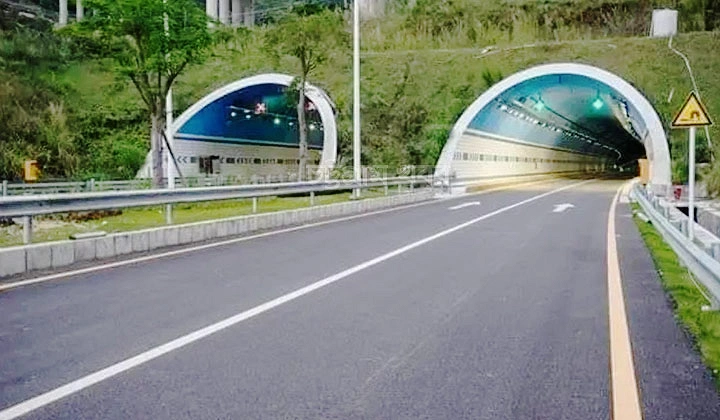
Photo courtesy: BSS
However, due to low foot traffic and minimal use, the landscaping and some infrastructure of the service area suffer from a lack of regular maintenance. Because of low usage, some sections remain completely neglected and clearly require minor repairs. Even at the main convention center, water seepage through windows has caused staining on the walls.
It is learned that a process is currently underway to lease this massive infrastructure to the private sector in order to cover its maintenance costs and increase commercial use. The report states that despite the entire area having tremendous commercial potential as a tourism and recreation hub due to its proximity to the sea and river, it is currently not being properly utilized.
Former Planning Secretary Mamun-Al-Rashid told Agamir Somoy, "The company that conducted the feasibility study should be held accountable first. They overestimated everything. They claimed that building hotels, motels, and tourist centers on the other side of the tunnel would yield huge profits. But now reality has proven the opposite. It is crucial to bring that company or firm under punishment to set an example." In his view, these facilities should be operated under government management rather than being handed over to the private sector.
IMED sources indicate that the Bridges Division began work on the project in November 2015 with the goal of completion by June 30, 2020. The original cost was Tk8,446 crore and 63 lakh (Tk84.4663 billion). Later, the cost increased to Tk10,689 crore and 71 lakh taka (Tk106.8971 billion). The project was finally completed on June 30, 2024. And, the total expenditure amounted to Tk10,025 crore and 52 lakh (Tk100.2552 billion).
The main components of the project included 9.39 kilometers of road including the tunnel, and a 3.32-kilometer main tunnel consisting of two tubes, of which the tunnel length is 2.45 kilometers. Additionally, the project included 5.35 kilometers of approach roads on both sides, a 727-meter viaduct, a 79,600-square-meter toll plaza, two police camps, two fire stations, two service areas, substation installation, land acquisition, as well as the purchase of one tugboat and management software.
