
As trees decrease, weaver birds lose habitats

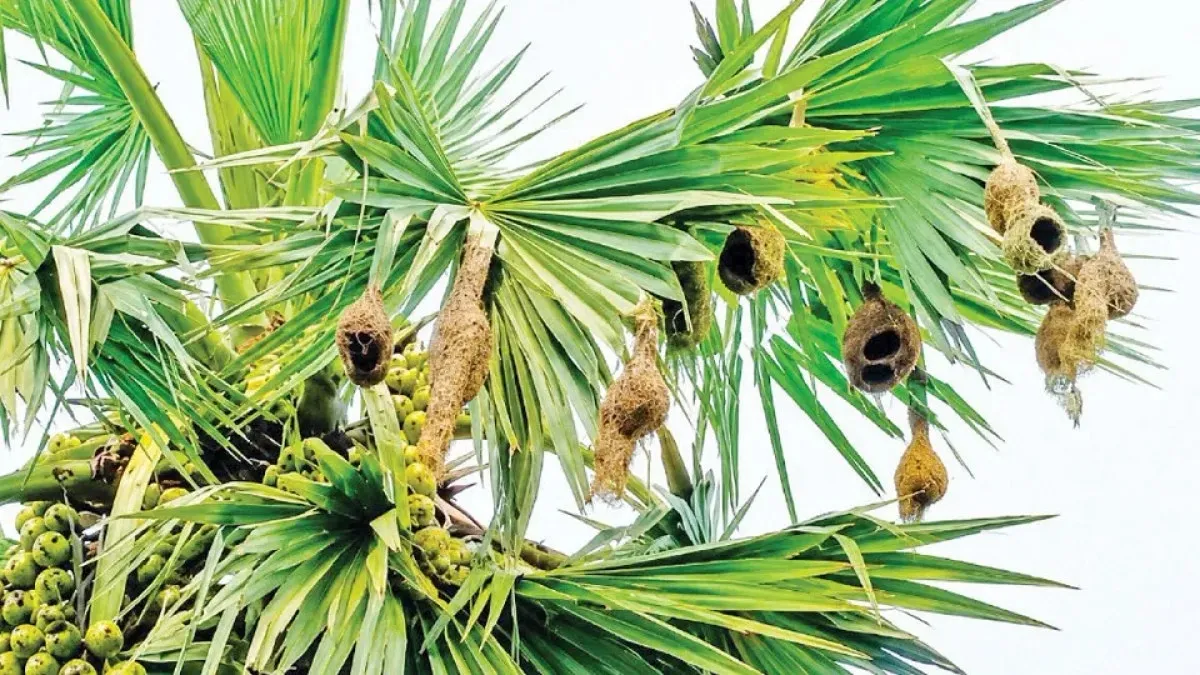
Collected photo.
At one time, rows of weaver bird nests hanging from certain tree branches were a common view across the country. Those small homes, made with delicate weaving from grass, straw, and tree fibers, would swing in the wind. This familiar scene of rural Bengal is no longer easily seen.
Due to tree felling, the crisis of safe habitats, and environmental change, the number of these birds is gradually decreasing. The artwork of this tiny artisan of nature, along with a familiar tradition of rural Bengal, is on the verge of disappearing.
In Sonatala village of Sridharpur and Siddipasha unions in Abhaynagar upazila of Jashore, weaver bird nests can still be seen on some tree branches. However, the scene that remains in the memories of local elders is no more. At one time, countless nests used to hang on palm, date palm, and coconut trees in the village. Weaver birds could also be seen in household yards, on trees beside fields, or by the roadside.
The technique of building nests by weaver birds is different from many other birds. The male weaver bird collects grass, straw, and soft tree fibers and weaves a nest with its beak. The entrance to the nest is also made in such a way that predatory animals cannot easily enter. Because of this extraordinary skill in nest building, the bird is known as the "weaver of nature" or "artist bird."
However, the environment for the survival of this artist bird is gradually shrinking. According to local schoolteacher Mahabub Hazra, tree felling, excessive use of pesticides in agricultural land, food crisis, and the decrease of safe habitats are prime reasons for weaver birds population to fall. Along with this, an important part of the nature and tradition of rural Bengal is being lost.
Local residents think that the crisis will not be solved only by taking initiatives to increase the number of birds. According to them, it is also important to ensure safe habitats for weaver birds. In the words of Omar Ali, a resident of Pachuria village in Abhaynagar, along with stopping bird hunting, an environment suitable for their living must be created. Palm, date palm, coconut, and other native trees need to be planted in household yards, roadsides, and various places in the village. At the same time, people need to be made aware about not destroying weaver birds' nests.
Md. Firoz Alam, former chairman of Paira Union, said, "The weaver bird's nest is not just a bird's home; it is part of the nature and tradition of rural Bengal. Therefore, initiatives should be taken to protect the areas where nests still exist."
Regarding these demands of local people, Sheikh Salauddin Dipu, Upazilla Nirbahi Officer of Abhaynagar upazila, said that importance is being given to ensuring that the habitats of weaver birds are not destroyed. Efforts are underway to ensure the necessary environment for the bird's normal living.
