
Meherpur fish farmers struggle as govt hatcheries stay shut 20 years

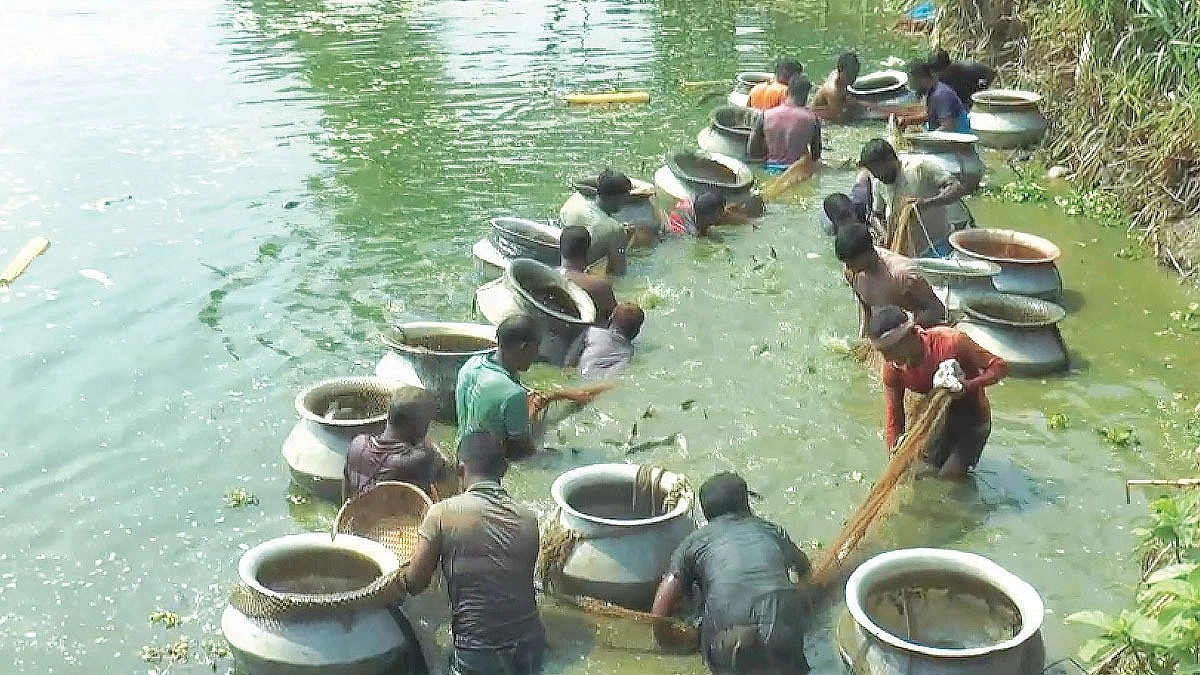
Photo: Agamir Somoy
When fish farming season begins, farmers must hurry from one district to another to buy and transport fish spawn and fry from Jashore, Jhenaidah, Naogaon, or Shantahar.
Many fry die while being transported over long distances, which increases transportation costs and heightens the risk of financial losses. Yet, these fry were once readily available at government hatcheries in Meherpur.
After meeting local demand, they were also supplied to neighboring districts including Chuadanga and Kushtia. Production at the district’s two government fish hatcheries is shut down, with the hatchery in Gangni remaining closed for nearly 20 years. Although the scope of fish farming has expanded, farmers must still rely on outside districts for quality fry.
According to data from the District Fisheries Department, there are 6,438 farmable ponds across the three upazilas of Meherpur: 3,995 in Gangni, 1,829 in Meherpur Sadar, and 614 in Mujibnagar.
Moreover, the district features 16 open water bodies. Nearly 13,000 tons of fish are produced annually from these ponds and water bodies. Yet, local government hatcheries play no role in producing the necessary spawn and fry for such a large fisheries sector.
Gangni Upazila Government Fish Hatchery has been closed for 20 years, while the government hatchery in Sadar has also been out of production for a long time. Due to prolonged mismanagement and neglect, production ceased, machinery broke down, and there are allegations of government land being encroached upon.
According to fish farmers and entrepreneurs, fry were produced at the Gangni Government Fish Hatchery from 1996-2005 before shutting down due to administrative complications, manpower shortages, and damaged machinery.
Fish farmer Jiyarul Islam said, “Every year, I have to buy fish fry worth over Tk 1,00,000 from outside districts. Purchasing fry from private hatcheries often leads to being cheated, and many fry die during transportation. This creates uncertainty in fish production alongside extra expenses.”
Fish farmer Ansar Ali added, “At one time, the government hatchery in Gangni was the main reliance for local farmers. Since fry were produced there, demand could easily be met. If the hatchery is reopened, farmers will directly benefit.”
Fisheries entrepreneur Ansarul Islam said, “There was a manpower shortage at the Gangni government hatchery, and operations ceased because various production machinery broke down. Having been closed for a long time, restarting the hatchery now requires infrastructure renovation and new machinery.”
It is not just private fish farmers; even government initiatives must source fry from external sources. Every year, the District Fisheries Office uses government funds to buy fry and release them into various water bodies. Had the local government hatcheries been operational, part of this demand for fry procurement could have been met locally.
Farmers said failing to collect fry on time during the fish farming season disrupts production plans. Bringing fry from distant hatcheries increases transportation costs, and fry deaths during long transit times raise the risk of financial loss, increasing overall farming expenses without guaranteeing profit.
Meherpur District Fisheries Officer Robiul Islam added that although fish farming in the district has expanded, reliance on outside districts for quality fry remains due to manpower shortages, damaged machinery, and unprofitable production. Prolonged closure has rendered local fry production capacity effectively inoperative.
He noted that preparations are underway to bring the district Sadar government hatchery into production next year, which will reduce reliance on outside districts, lower transportation costs and mortality risks, and simplify production planning.
However, farmers demand that alongside reopening the Sadar hatchery, the Gangni Upazila Government Fish Hatchery - closed for two decades - must also be renovated and returned to production quickly. Ensuring local production of quality spawn and fry will reduce procurement costs, boost production, and unlock profit potential for thousands of fish farmers across the district.
