
Rooppur plant completes valve tests, eyes Dec grid supply

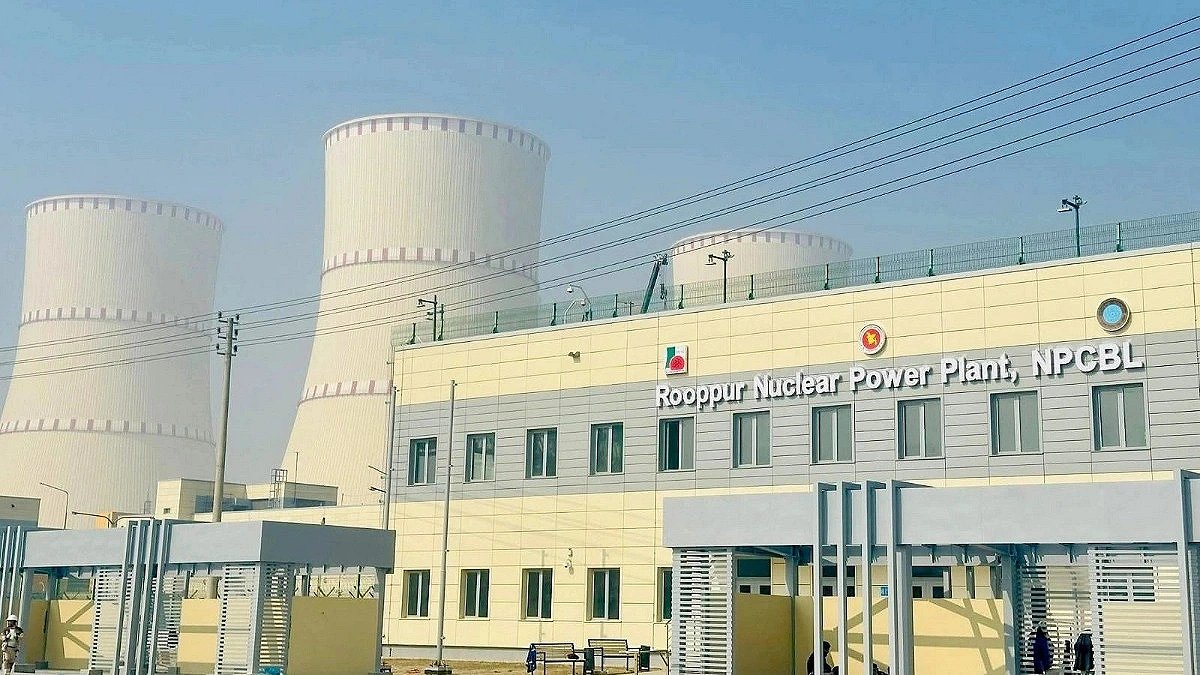
Photo: Agamir Somoy
Engineers and technical teams at the Rooppur Nuclear Power Plant in Ishwardi, Pabna, have completed all testing on the automatic pilot-operated relief valves / power-operated safety valves (PORV/POSV) for the facility’s first unit.
On 30 September, technical teams executed 12 experimental operations during the first stage, maintaining an operating pressure of 16.1 MPa (megapascals) and a temperature of 280 degrees Celsius.
Although an initial issue surfaced during the subsequent testing stage at a pressure of 18.65 MPa, engineers later completed that test as well.
Nuclear Power Plant Company Limited (NPCBL) confirmed the matter on Wednesday night, adding that these tests create the potential for experimental electricity supply to the national grid by December.
Following the initial valve malfunctions, Bangladesh requested technical assistance from its construction partner, Russia, to repair the equipment. A Russian expert team then arrived in Rooppur from Moscow, systematically repairing nine valves before engineers initiated multi-stage testing and evaluations.
Project officials explained that during the 18.65 MPa pressure testing stage, the second and third valves were designed to open simultaneously to release excess pressure and safeguard the plant.
However, the second and third valves initially failed to open at the designated pressure, causing the test to encounter initial difficulties in meeting established success benchmarks. Senior NPCBL officials confirmed that when pressure reached 18.1 MPa, the first of three valves opened to release excess pressure and protect the plant, completing that test.
Officials expect that completing all necessary preparations and obtaining required regulatory approvals will enable experimental electricity transmission to the national grid by December.
Technical teams conducted tests simultaneously from two command centers: the Main Control Room (MCR) and the Emergency Control Room (ECR). Through these operations, engineers finalized all testing related to pressure control and pressure reduction for the first unit.
During the process, teams closely monitored valve opening and closing times, response speed, warning signals, and essential pressure and temperature data required for operational activities.
Stakeholders emphasize that the next major milestone facing Rooppur is achieving “First Criticality”. Initiating First Criticality requires formal authorization from the Bangladesh Atomic Energy Regulatory Authority (BAERA).
Once BAERA grants permission, a stable and self-sustaining nuclear chain reaction will commence inside the reactor. This step will formally transition the reactor from a stationary state into an active, operational nuclear facility.
Nuclear experts said during the physical start-up phase, operators will run the reactor at less than one percent of its total rated thermal capacity to reach “Initial Criticality”. At this stage, the first self-sustaining nuclear chain reaction or First Criticality will begin.
Specialists will monitor and verify key reactor parameters, various operational systems, safety mechanisms, and control equipment functionality. The entire physical start-up process, including First Criticality, will take around 30-40 days, after which operators will incrementally increase reactor capacity if test results prove satisfactory.
Upon completing the physical start-up, the project will transition into the “Power Start-Up” phase. During this phase, activities will involve gradually increasing reactor power, synchronizing turbines, and ultimately connecting the generator to the national grid. To proceed, the operating organization must obtain a trial operational license from BAERA.
The power start-up phase presents critical technological and organizational challenges that demand real-time, highly coordinated communication among internal plant components—including the reactor, turbines, and safety systems. Officials must maintain strict, controlled technical and regulatory coordination with various external entities outside the plant.
These off-site entities include BAERA, the Ministry of Science and Technology, national power grid organizations, the armed forces, security and law enforcement agencies, the Nuclear Emergency Management Organization, and other government bodies and ministries.
Project officials said after safely linking the first unit of Rooppur NPP to the national grid, operators will initially raise power generation capacity from 3 percent to between 20 and 25 percent in stages before supplying power to the national grid.
Experimental generation could continue for 7-8 consecutive months following the initial start of production. Once grid power transmission commences, Bangladesh will join the global community as the 33rd nuclear power-producing nation, ushering in a new chapter in the country’s energy security, scientific advancement, and technological progress.
Authorities originally set the completion deadline for the Rooppur project for December 2025, but extended it twice through June 2028. Although the project duration increased in accordance with the contract with the contractor, the agreement offers no provision to increase contractor costs.
However, fluctuations in the US dollar exchange rate pushed project expenditures up by around Tk 26,000 crore. As a result, total construction costs for the Rooppur Nuclear Power Plant stand at Tk 1,38,686 crore.
