Uranium shipment for Rooppur nuclear plant reaches Pabna

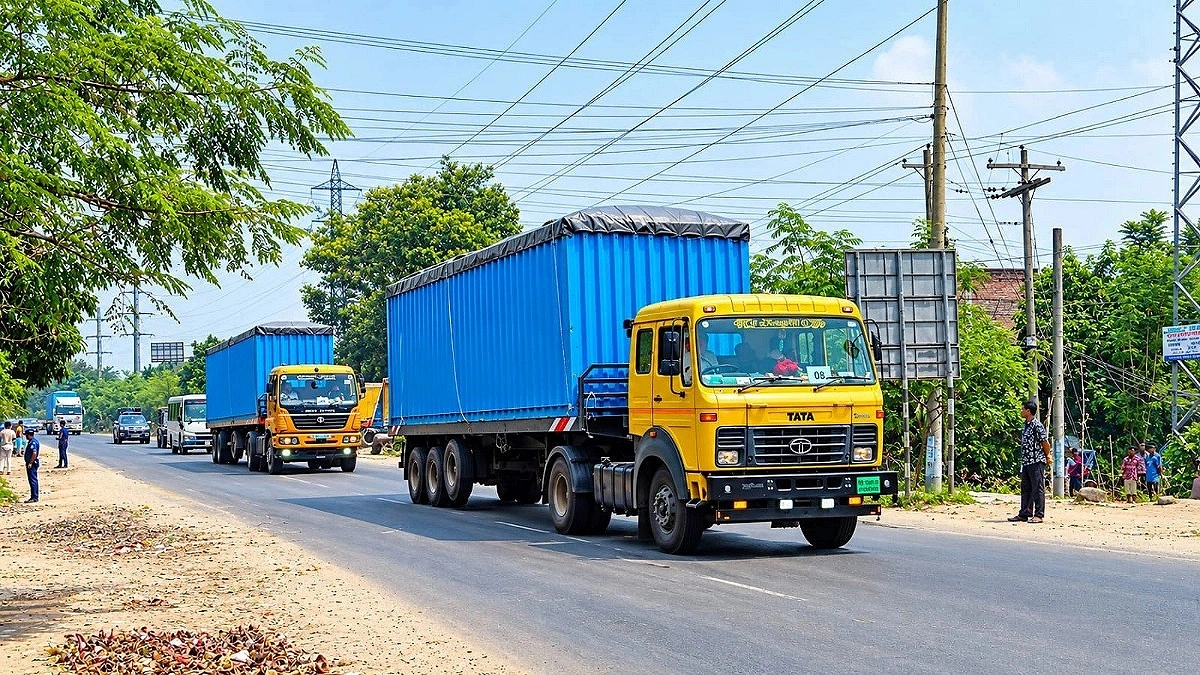
Photo: Agamir Somoy
The uranium for the first unit of the Rooppur Nuclear Power Plant reached Ishwardi, Pabna at 12:20 pm on Saturday.
Vehicles carrying the uranium entered the Rooppur project area under special army security. The aircraft transporting the nuclear fuel arrived in Dhaka from Russia around 11:45 pm on Friday.
Officials from the Bangladesh Atomic Energy Commission took delivery of the fuel shipment after the plane landed at Hazrat Shahjalal International Airport (HSIA). Around 7:15 am on Saturday, the convoy carrying uranium departed from the airport toward Rooppur in three lorries.
Bangladesh will import 163 uranium assemblies across seven cargoes for the second unit of Rooppur, alongside 48 additional uranium assemblies across two cargoes for refueling the first unit.
These uranium consignments will arrive in the country from Russia across nine flights via Kazakhstan, Turkmenistan, Pakistan, Afghanistan, and India between November and December.
Russia’s State Atomic Energy Corporation (Rosatom) said, “The entire fuel supply will be completed by December.”
Previously, the initial fuel shipment for the first unit arrived at the plant on 29 September 2023, followed by four additional consignments reaching in October and November 2023. Authorities loaded that nuclear fuel into the reactors in May 2026.
However, because technicians must replace one-fourth of the unit’s used fuel after around a year and a half, officials are procuring the required fuel in advance. According to the agreement, Russia will supply fuel for the first three years, after which Bangladesh must import it at designated intervals for routine fuel replacements.
The two units of the plant possess a combined generation capacity of 2,400 megawatts. Although workers completed fuel loading in the first unit, various technical complexities delayed the power generation schedule.
Although authorities planned to start electricity production, a defect in an automatic pressure relief (safety) valve prevented the launch. The first two tests succeeded, but the third test failed to yield the desired result, prompting preparations for a retest of the third valve. Technicians must complete several more critical tests before power generation can commence.
Once these tests are successful, the first unit will feed its generated electricity directly into the national grid. At the same time, construction and commissioning work for the second unit continues to progress.