
Hilsa Eludes Meghna Fishermen

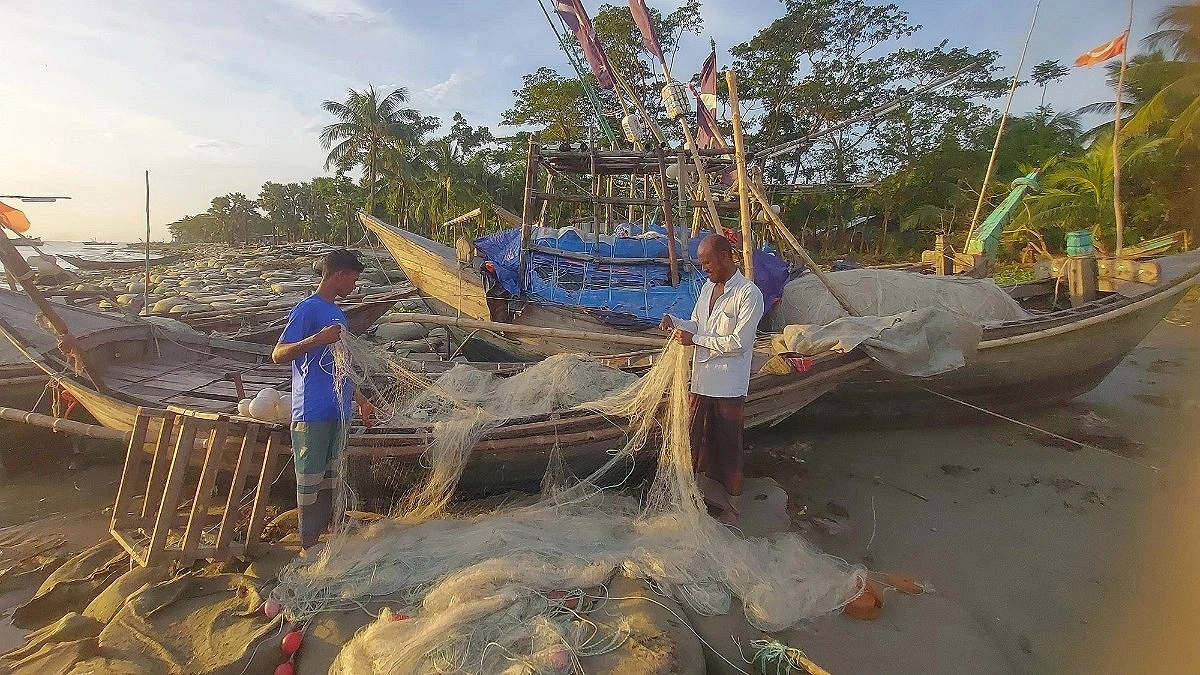
Photo: Agamir Somoy
After a two-month government-imposed ban, thousands of fishermen have returned to the Meghna River in Lakshmipur to resume hilsa fishing. However, their nets are failing to yield the expected hilsa. The situation has left fishermen, fish traders, and wholesalers in deep frustration, with many returning empty-handed despite borrowing money to go fishing.
To conserve jatka (baby hilsa) and boost hilsa production, the government enforced a ban on hilsa fishing in the Meghna River throughout March and April. After the restriction ended at midnight on April 30, fishermen entered the river with renewed hope. But even after several days, the fishing remains far below expectations, deepening disappointment across the coastal region.
A visit to riverine areas including Ramgati, Kamalnagar, Char Alexander, Motirhat, Hajirhat, and Char Folkon in Lakshmipur shows a lack of activity at around 30 small and large landing stations. Many fish markets remain idle, with traders waiting for fishermen to return. Even when boats come back, most carry very small quantities of fish. As a result, fishermen are not getting any profit and are instead accumulating losses.
Fisherman Abdul Malek from Motirhat in Kamalnagar Upazila said, “We had no work for two months. We survived by borrowing money. Now we are going to the river with hope, but we cannot even recover fuel costs. Every day brings losses.”
Fisherman Shahin Majhi said, “Earlier, we used to get good amount of hilsa at night in the river. Now, even after casting nets all night, we are returning with only two or three fish. We are struggling to support our families. We do not know what lies ahead.”
Fishermen also said fuel shortages have worsened their difficulties alongside the low fish catch. Rising diesel prices and limited fuel availability are preventing many from taking their boats to the river.
Wholesalers are also facing hardship due to the lack of hilsa. With little fish arriving, customer presence in fish markets has dropped sharply. Many traders said that although the hilsa season has begun, market activity has collapsed due to low supply.
A wholesaler at Motirhat fish landing station said, “Everyone expected abundant hilsa after the ban ended, but the ghats are now almost empty. The business is nearly at a standstill.”
Meanwhile, complaints have also emerged regarding government food assistance during the ban period. Many fishermen claimed that even after being listed, they did not receive adequate support. Some also alleged that non-fishermen were included in the beneficiary lists while genuine fishermen were excluded.
District Fisheries Officer Delwar Hossain said, “Disruption in the natural movement of hilsa due to navigability problems in the river, underwater sandbars, and environmental changes at the river mouth is affecting the catch. After spawning, many hilsa move to deeper sea areas, which is why fewer are being caught in the river now. However, we expect the catch to increase in the coming days despite the initial decline.”
According to the Department of Fisheries, Lakshmipur district has about 54,000 registered fishermen along the Meghna coast, of whom 40,955 hold fisherman cards. During the ban period, 29,060 fishermen received food assistance. Authorities conducted 300 river patrol operations during the same period. Additionally, mobile courts filed 26 cases through 15 drives and sentenced 20 fishermen to imprisonment.
Despite returning to the river with new hope after the two-month ban, thousands of fishing families along the coast are now facing growing uncertainty as hilsa remains scarce. Stakeholders fear that if catches do not improve soon, their livelihoods and household stability will come under further strain.
