Saudi pop music is thriving — but for the right reasons?

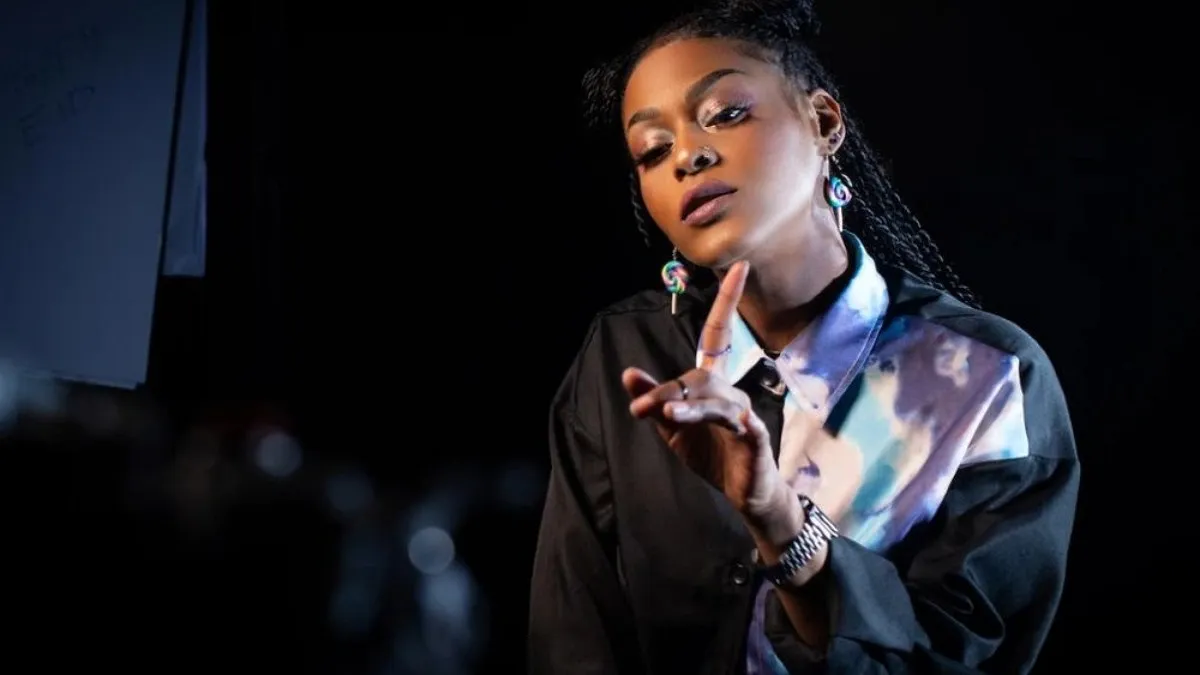
Asayel Bishi, popular Saudi rapper. Collected photo.
As part of Vision 2030, Saudi Arabia's music industry has transformed dramatically owing to government funding and backing. Homegrown artists and DJs are hopeful. Yet are they truly only aiding in sustaining an authoritarian regime?
Previously, other Saudi rappers have landed in jail for comparable, purported offenses. The reason Bishi's tale unfolded differently is likely partly because the 31-year-old's professional trajectory mirrors that of the Saudi pop music sector overall.
Music as a component of Vision 2030
The speed of growth accelerated in 2019 following the nation's hosting of its inaugural large-scale festival, Soundstorm, a yearly gathering that currently attracts prominent global performers and more than 400,000 attendees. MDLBEAST was established at that time, chiefly as the event's organizer. Since then, it has additionally grown into a recording label, radio broadcaster, distributor, promoter, and talent development hub.
A recent analysis for the Saudi Music Commission indicates the music industry might be valued at $500 million (€455 million) by 2034. However, determining how well Saudi pop is genuinely performing at present is challenging since independent oversight of the sector started only fairly recently.
Streaming service Spotify said that listeners of Saudi-produced music within Saudi Arabia rose by 195% from 2020 to 2024. Nevertheless, the most-played artists inside the nation remain foreign.
Currently, rapper Asayel Bishi stands among Saudi Arabia's emerging hip-hop talents, contracted to the nation's largest label for new music, MDLBEAST. Yet not long ago, she was generating global headlines for an entirely different cause.
Asayel Bishi, has changed the cultural landscape of Saudi Arabia. Collected photo.
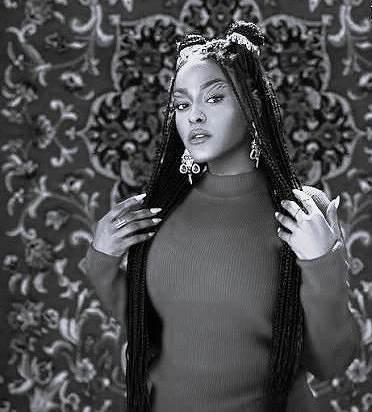
In 2020, following Bishi's release of a music video for a track, "Bint Mecca," or "girl from Mecca," showing individuals dancing in a nearby cafe, Mecca's governor demanded the apprehension of Bishi's entire production crew. He claimed the video breached the sacred city's regional customs and traditions. Ultimately, the matter was settled through a conversation regarding filming permissions.
And by early 2023, Bishi had signed with MDLBEAST and has since accumulated hundreds of thousands of streams on music platforms such as Spotify. Under Saudi ruler Mohammed bin Salman's Vision 2030 blueprint, unveiled in 2016 and intended to shift the nation away from economic reliance on oil, the country has invested billions into the domestic music industry.
The speed of growth accelerated in 2019 following the nation's hosting of its inaugural large-scale festival, Soundstorm, a yearly gathering that currently attracts prominent global performers and more than 400,000 attendees. MDLBEAST was established at that time, chiefly as the event's organizer. Since then, it has additionally grown into a recording label, radio broadcaster, distributor, promoter, and talent development hub. People arrive at the MDLBEAST Soundstorm music festival in Banban, on the outskirts of Riyadh, on December 11, 2025.
A recent analysis for the Saudi Music Commission indicates the music industry might be valued at $500 million (€455 million) by 2034. However, determining how well Saudi pop is genuinely performing at present is challenging since independent oversight of the sector started only fairly recently.
Yet the most-played performers within the nation remain foreign.
'Bound to the fate of the crown prince'
Although a largely concealed Saudi music landscape existed prior to this latest surge, analysts say the expansion of the Saudi music industry is not spontaneous.
It is entirely about constructing a sector from the top downward, Amr Abdelrahim, an investigator at Sciences Po in Paris, noted in a 2024 research paper. "Following 2016, young middle-class artists and creative professionals, who had been cautious about avoiding official scrutiny of their countercultural pursuits, abruptly became essential to the state's aspirations," he wrote.
The professional paths of young Saudi performers — such as Bishi, for instance — "grew bound to the fate of the crown prince," the investigator clarified.
The Saudi royal family has for a long time distributed funds from Saudi oil revenues to its citizens, in order to guarantee economic reliance and allegiance. However, Abdelrahim contended, "what is novel about Saudi cultural investments under MBS is an unmatched level of centralization and the rise of fresh clientelist networks around the country's de-facto ruler," employing a widely used abbreviation for Crown Prince Mohammed.
Those engaged "are unintentionally taking part in the strengthening of the Saudi regime," he contended.
Analysts say many of the emerging music enterprises are imprecise about their connections to the state. Yet it is evident they could not function without the state's monetary backing and consent.
"Nearly all significant events are arranged by the state or financed by entities with close ties," a representative from Saudi-focused organization ALQST for Human Rights told DW. "This shapes the kind of music created, since artists must be conscious of what is permissible. This concerns not only the music they create, but also how they behave and what they tell their fans."
ALQST holds that Saudi artists have even less creative liberty under the new musical framework than previously, when they would have performed privately. They can forfeit their contracts and incomes, be barred from performing, or even be detained, ALQST's representative said.
Concealed for two decades
"Formerly, the music landscape was unregulated," clarified the guitarist and bassist for Saudi black metal group Al-Namrood. But now that it is regulated, the state can more closely track artists who once remained concealed and performed only in private, the musician, known as Mephisto, told DW.
Al-Namrood is one of the uncommon instances of a Saudi act that does not operate with state backing. The group initially formed in 2008 but have never performed at home and have kept their identities hidden for nearly twenty years.
"The trade-off is obvious: You wish to perform, it must be under our terms," Mephisto went on. "And I completely grasp the viewpoint [of some artists]. But generally the artist must abstain from any criticism of the religious or authoritarian. [The state] does not necessarily purchase an artist's allegiance, it merely establishes incentives that render criticism progressively expensive."
For Al-Namrood, who have frequently denounced Saudi conservatism, religion, and politics in their music, that is not a possibility. "We want nothing to do with them," Mephisto said.
Source: DW