
National Street Children’s Day
Street children in Cox’s Bazar losing life on sidewalks

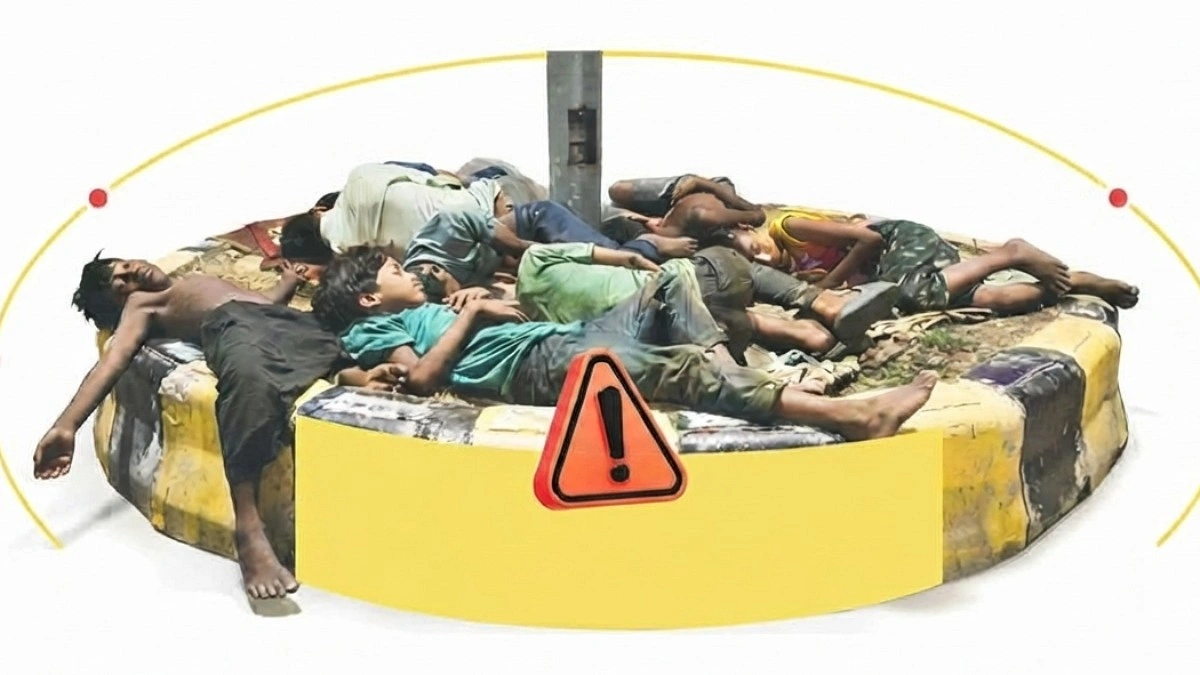
Graphics: Agamir Somoy
During the day, Cox’s Bazar town remains bustling with tourists. At Kalatoli, Sugandha Point, or Laboni Point, there is continuous busyness, shop lights, and the movement of people who have come to see the ocean.
But when the night falls, a different picture of the same town comes forward. Beside closed shop shutters, on sidewalk corners, or along roadside edges, a group of children curl up and sleep.
Nobody has a roof over their head, nor a mother or father beside them. An old sack, torn cloth, or piece of cardboard serves as the night bed for many. After waking up in the morning, another uncertain day stands before them.
Someone has a sack for collecting bottles, someone stands before pedestrians holding out a hand, someone runs looking for work in hotels and restaurants. Someone works as a bus helper, someone sells tea and cigarettes. They do not know how much money they will make at the end of the day or whether they can get food at all. Amid this uncertainty, their childhood is gradually being lost.
Such scenes were observed while visiting various areas of Cox’s Bazar town. Street children spend a major part of the day in busy areas including Kalatoli Intersection, Sugandha Point, and Laboni Point.
Due to the lack of food security, some of them pick up and eat leftover food from garbage dumps. When night comes, they return to the sidewalks or in front of closed shops in search of safe shelter.
One street child said, “We often stay without food day and night. Out of hunger, we have to do many things. We also want to build a life like other children. If the government provides opportunities for shelter and education, we will also be able to build a life like others.”
Within these words, their greatest deprivation is reflected. They are not only lacking food or shelter; they are also losing education, security, and the opportunity for a normal childhood. Along with being deprived of educational opportunities, there are health risks for these children.
Many lack facilities for regular baths, safe water, and sanitation. Spending nights in open spaces, mosquito bites, unsafe food, and an unclean environment are their daily reality. When sick, many do not have the opportunity to receive medical treatment. However, the greatest risk arises in the darkness of night.
These children can easily come into contact with drug addicts and criminal syndicates. According to locals, some are becoming involved with various drugs including cigarettes, Dendrite (dandy), and cannabis at a young age.
Concerns are also arising that they may get involved in various crimes including theft and mugging to arrange money for drugs. There are allegations that some syndicates make children engage in begging or minor crimes and take a share of their income. However, no official information was obtained from the authorities regarding these allegations.
Cox’s Bazar Nagorik Andolon Member Secretary H M Nazrul Islam said, “For whom is development? No country can move forward with only infrastructural development. If the protection of street children is not ensured, this development will not be meaningful.”
He added that urgent rehabilitation is needed for these children. Initiatives can be taken to launch rehabilitation centers at the district and upazila levels. Alongside returning children to their families, safe housing arrangements need to be made for those who do not have the opportunity to return to their families.
National children and youth organization Khelaghar Cox’s Bazar District Committee General Secretary Poet M Jasim Uddin noted, “Those who are children today will take up the responsibility of society and the state one day. Yet a large portion of underprivileged children still remains in darkness.”
He added that looking only to the government for these children will not do. Voluntary organizations, affluent people of society, and general citizens must also step forward. Alongside establishing adequate rehabilitation centers, education and other basic rights must be ensured.
According to the Convention on the Rights of the Child, every person up to 18 years of age is a child. Therefore, ensuring a safe life, education, health, and protection for street children is not only a humanitarian responsibility but also part of protecting child rights.
Simply removing street children from the sidewalk will not solve the problem. Where they will be taken, what they will eat, where they will study, who will provide them security, and who will stand beside them if they fall sick - the answers to those questions must also be given.
