Bangladesh has no demand for large shipments of sodium perchlorate
- The vessel detained in Indonesia was carrying 405,000 kilograms
- Nearly 591 times the country’s total imports over 17 years

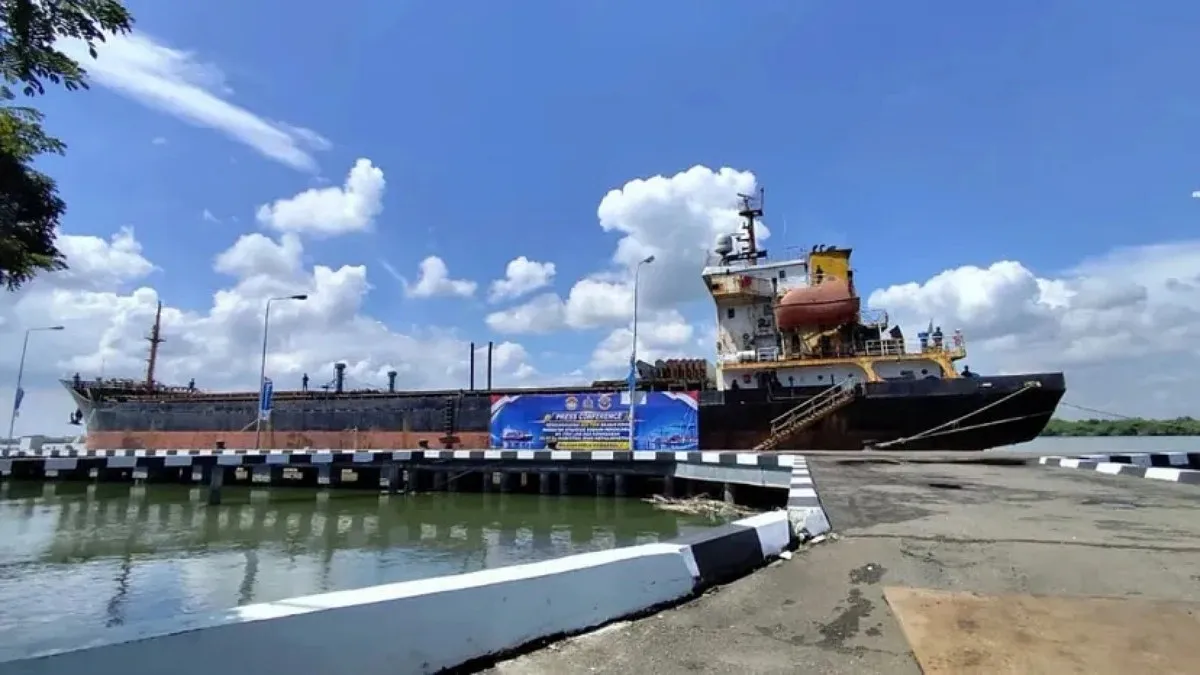
Photo: Agamir Somoy
A foreign vessel named MV Star Line has been detained in Indonesia with 405 tonnes of the hazardous chemical sodium perchlorate on board. According to the vessel’s declaration, the chemical shipment was being transported from China to Mongla Port in Bangladesh. However, a review of the National Board of Revenue’s (NBR) import records over the past 17 years reveals a completely different picture.
From 2010 through November 22 this year, not a single gram of sodium perchlorate was imported into Bangladesh from China. Not a single shipment of the chemical was cleared through Mongla Port. All seaborne shipments entered through Chattogram Port. A small portion arrived by air through Dhaka airport.
In Bangladesh, sodium perchlorate is used as a reagent in quality control laboratories of specialized pharmaceutical industries and in chemical research. Only 685 kilograms of the chemical have been imported over the past 17 years. Most of it was brought in by pharmaceutical companies. Records also show commercial imports by a small number of companies. However, the single vessel detained in Indonesia was carrying 405,000 kilograms, nearly 591 times the country’s total imports over 17 years.
This has led port users to suspect that Mongla Port may have been used as a dummy destination. Mongla Customs Commissioner Gias Kamal said, "I examined the matter very carefully with considerable interest. The vessel’s Import General Manifest (IGM) was not submitted to the Customs’ ASYCUDA system. The vessel’s authorities did not submit it at any stage. Therefore, officially, there is no basis for identifying Mongla as its destination."
Information from international vessel-tracking websites VesselFinder and MarineTraffic also listed Mongla Port as the vessel’s destination. However, such a declaration alone is not considered acceptable in the shipping sector. Under the law, an IGM containing detailed information about a vessel’s cargo must be submitted to the customs authorities of the destination country within 24 hours of the vessel departing its last port. Once the vessel’s Bangladeshi shipping agent submits the IGM, the port and customs authorities can confirm that the vessel is scheduled to arrive in the country. Until then, there is no scope to confirm its arrival.
The vessel was scheduled to leave China’s Lianyungang Port on September 12 and reach Mongla Port on November 8. However, it took until November 7 to reach Belawan in Indonesia. The vessel took an unusual 55 days to travel from Lianyungang to Belawan, a journey that should take no more than 17 days. This has raised another major question.
Maritime security analysts believe that large shipments of sodium perchlorate from China are subject to strict international and US surveillance. They suspect that Mongla may have been listed as a dummy or paper destination to evade such monitoring. Whether there was a plan to divert the cargo to another destination at sea will now become clear through an examination of the IGM seized by Indonesian authorities and the questioning of the detained crew members. So far, there have been no reports that Indonesian authorities have sought information on the matter from Chattogram Port, Mongla Port or the NBR.