
Antivenom Breakthrough: Early Success in Snakebite Research

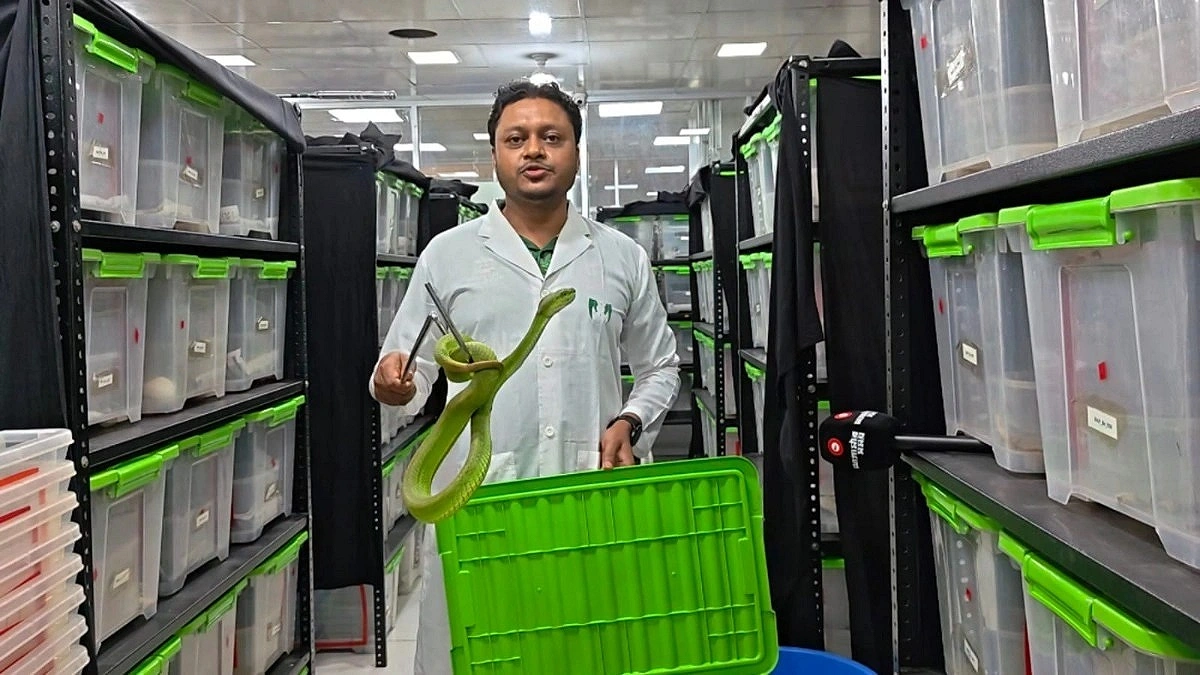
Nearly 350 venomous snakes of various species are being kept and studied at a venom research facility inside Chattogram Medical College (CMC), where researchers are working to develop an antidote from snake venom. The Venom Research Centre (VRC) has been carrying out the work for the past eight years, and early results have shown promise. Researchers have already succeeded in generating antibodies from Russell’s viper venom through trials conducted on chickens.
A report on the successful trial has been submitted to the Ministry of Health. Once the report is reviewed and approved, researchers will move on to the next phases, including preparation for clinical trials. However, despite this initial success, concerns remain over the future of the project due to funding shortages. Financial allocations have been suspended for nearly two years, leaving the research team under pressure.
Associate Professor Abdullah Abu Sayeed of CMC, a researcher involved in the project, said around 400,000 people are bitten by snakes every year in the country, with about 7,500 fatalities. He noted that the antivenom currently used in Bangladesh is imported from India. “Due to differences in geography and snake species, these medicines do not always work effectively. That is why developing antivenom from locally found snakes is extremely important, and the project must continue,” he said.
A new detailed development project proposal (DPP) has been submitted to the Ministry of Health to address the funding crisis, and the Planning Ministry has also been informed. Until approval is granted, the research is being continued at a slow pace. The project has effectively reached a standstill, with reduced manpower and no scope to increase the snake population. Researchers are now mainly focused on maintaining the existing snakes.
Principal researcher Professor Aniruddha Ghosh Joy described the challenges and prospects of the VRC project to Agamir Somoy. He said operational activities under the Directorate General of Health Services were halted in 2024, and the project is currently in a transitional phase toward a development project. “During this time, we are facing financial difficulties and a reduction in staff. Even feeding the snakes has become difficult. We are now collecting and preserving venom, but we cannot increase the number of snakes,” he said.
He further added that antibodies against Russell’s viper venom have been successfully developed in chickens. “These antibodies can neutralize snake venom. They are no less effective than conventional antivenom. The report has been submitted, and once evaluation is completed, we will move to the next stages. We also plan to develop antidotes for other snake species,” he said.
The research is being conducted under the non-communicable disease control wing of the Directorate General of Health Services. In collaboration with CMC, the project involves the Department of Zoology at the University of Chittagong, the Bangladesh Association for the Advancement of Tropical Medicine, the Medical Toxicology Society of Bangladesh, and Germany’s Goethe University.
A recent on-site visit to the Venom Research Centre at the CMC campus found snakes kept in rows inside plastic containers. The facility houses small, medium, and large snakes, including Russell’s vipers, cobras, pit vipers, and green pit vipers. As visitors approached, some snakes raised their hoods while others hissed from inside their containers.
Research associate Mizanur Rahman said the center currently holds around 350 venomous snakes across 11 species. About half were collected from different parts of the country, while the rest were bred at the facility. Venom is extracted and preserved on a monthly basis.
In an adjacent room, mice are being bred for feeding the snakes, with around 5,000 currently kept there. More than 2,000 mice are needed each month to feed the 350 snakes. The mice are fed rice, wheat, and other grains.
At present, only five staff members are working at the Venom Research Centre, down from ten previously due to funding cuts. Their responsibilities include collecting snakes from different areas, maintaining them, breeding mice, and extracting venom.
