
Chattogram walks on 60% of trips, gets 2% of road budget

Graphics: Agamir Somoy
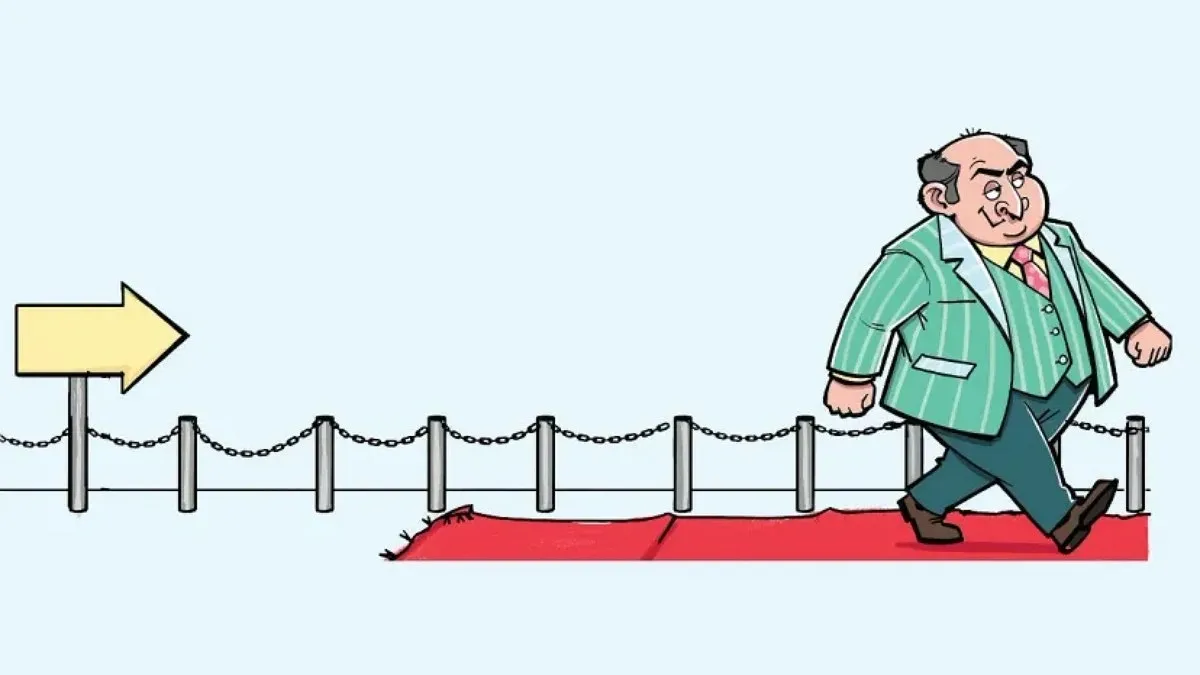
In Chattogram, 60 percent of residents walk to work daily. Yet over 16 years, only 2 percent of the Tk 18,000 crore road infrastructure budget went to pedestrians, while 98 percent favored vehicular traffic.
As a result, vehicular speed on the roads has increased, while the city has become unsafe for pedestrians. Statistics show that 56 percent of those who lose their lives in road run-over accidents in the city are pedestrians.
While walking on the roads, people are coming into conflict with vehicles, and ordinary citizens are losing their lives.
Data from a report by the US-based Bloomberg Philanthropies Initiative for Global Road Safety (BIGRS) reveals that 762 people were killed on the roads of Chattogram city between 2017 and 2025.
Among them, 427 were pedestrians. While 35 pedestrians were killed in 2017, the number of deaths reached 59 in 2025. Over an eight-year interval, the pedestrian fatality rate on the roads surged by 69 percent.
Experts say pedestrians are at the greatest risk on the city’s roads because there is no continuous sidewalk for them to walk on. According to the master plan of the Chattogram Development Authority (CDA), 71 percent of the existing sidewalks are illegally occupied. Forced to walk through the gaps between vehicles on the main roads, ordinary people are getting crushed.
To pedestrians, walking in this city now carries the constant fear of being injured or killed in severe accidents.
While preparing the Traffic and Transportation Master Plan, the CDA conducted 12 types of surveys on the city’s roads, collecting travel data from nearly 11,000 households. The findings revealed that walking is the most popular mode of travel, with around 60 percent of people walking to their destinations.
Apart from walking, 12 percent travel by autorickshaw, 11 percent by rickshaw, 10 percent by public transit, 3 percent by motorcycle, 2 percent by bicycle, and 1 percent each by car and other transport.
From the 2010-11 fiscal year to 2025-26, the Chittagong City Corporation (CCC) spent Tk 5,235 crore on road infrastructure development. Out of this, it spent only Tk 274 crore on constructing and reconstructing foot overbridges and sidewalks, while spending Tk 4,961 crore for vehicular travel.
During the same period, another agency, the CDA, spent Tk 12,487 crore on expressways, flyovers, overpasses, road construction, and road expansion. In contrast, the agency spent only Tk 58 crore on sidewalk construction.
Together, the two organizations spent a total of Tk 17,722 crore. Out of this, Tk 17,394 crore - representing 98.13 percent of the total expenditure - was spent to facilitate vehicular traffic, while only Tk 332 crore - just 1.87 percent of total expenditure - was spent on pedestrian facilities. Expressing surprise at these figures, the master plan highlighted the need to increase importance and support for this sector.
According to CCC figures, the city has 1,420 kilometers of roads, compared to only 281 kilometers of sidewalks. The master plan notes that 200 kilometers of sidewalks are occupied by shops, construction materials, and street hawkers.
Field researchers say the remaining 81 kilometers of sidewalks are also not continuous; in some places, they are sloped to allow vehicles to enter and exit buildings and establishments, while in other places, they are broken and uneven, making comfortable walking impossible and forcing pedestrians onto the main road.
Under the standards of the Bangladesh National Building Code (BNBC) 2020, sidewalks are required on both sides of the city’s 1,420 kilometers of roads, meaning Chattogram should have 2,840 kilometers of sidewalks.
However, CCC data reveals that the city has only 281 kilometers of sidewalks, representing a mere 9.89 percent of total demand, leaving a deficit of 2,559 kilometers of sidewalks compared to actual requirements.
In 2014, the CDA expanded the city’s Pathantooly Road at a cost of Tk 40.39 crore. Recently, it was observed that both sides of the sidewalk along this 850-meter-long stretch from Kadamtali to Agrabad Choumuhani are occupied by shopkeepers, forcing people to walk on the main road.
Asif Chowdhury, who regularly walks along this route to his business establishment, said, “Part of the products of the shops occupies the entire sidewalk. That is why it is impossible to walk on the sidewalk. Forced by circumstances, one has to walk on the road risking one’s life.”
The city’s Sirajuddaula Road was expanded at a cost of Tk 24 crore. Today, one side of that road is occupied by a market, while the other side is taken over by illegal parking, and the sidewalks along the road have also fallen into the hands of shopkeepers.
As a result, the expanded portion of the road is of no use to pedestrians or commuters. Data from the master plan shows that not just sidewalks, but a section of 97 percent of the city’s roads has been illegally occupied.
According to a report published by Bloomberg Philanthropies in November 2025, CDA Avenue (from Bahaddarhat to Tigerpass) is one of the 10 high-risk roads in Chattogram city, where 20 people were killed in the last three years.
An on-site observation at the Lalkhan Bazar intersection of the road on 28 October between 7 am and 8 am revealed no zebra crossings, signal lights, or traffic police. Ordinary citizens were seen crossing the road by raising their hands in front of speeding vehicles.
Sanjida Lina, a homemaker who crosses this road daily to take her young child to and from school, said, “Every day I cross the road with panic. In the morning, vehicles run fast anyway. On top of that, having no signal light or zebra crossing makes crossing the road very difficult.”
Meanwhile, automated signal lights are virtually nonexistent at any intersection in the city. Yet, every year, the CCC spends a large sum of money on maintaining automated signal lights, having spent Tk 3.32 crore over the past 14 years.
Humayun Kabir Chowdhury, chief accounting officer of the CCC, added, “There are some automated signal lights in the railway line areas passing through the city. The Railway has no allocation for repairing these. To avoid accidents, the City Corporation repairs them and keeps them operational.”
Bloomberg Philanthropies has been working on road safety in Chattogram city for five years. Involving the CCC and the Chattogram Metropolitan Police, the international organization has already published four reports. These reports emphasized developing the city to make it suitable for walking and cycling, rather than relying solely on cars.
The recommendations of the report say to ensure pedestrian safety, sidewalks must be widened and made continuous. Moreover, raised crosswalks, pedestrian islands, and curb extensions must be constructed. To control reckless vehicular speed and facilitate unimpeded pedestrian crossings, the report also recommended reducing the number and width of vehicle lanes.
The report also recommended developing important city roads, intersections, and plazas into completely pedestrianized zones.
Kazi Md Shifun Nawaz, surveillance coordinator of BIGRS Chattogram and assistant professor at the Accident Research Institute of BUET, said, “The work of creating an accident database on the initiative of the police has progressed significantly. But the practice where the CCC uses this data to undertake infrastructure development or construct sidewalks has not yet begun. Investment is still centered around vehicles. Pedestrian-centric investment remains very low.”
Ahmed Anwarul Nazrul, chief engineer of the CDA, was unwilling to accept responsibility for pedestrian safety being neglected in road construction. He noted, “CDA primarily builds roads. Constructing or maintaining sidewalks is the responsibility of the CCC. Therefore, we cannot comment on this matter. Besides, we are not constructing any new roads inside the city; whatever is happening is outside the city.”
Anisur Rahman Sohel, chief engineer of the CCC, said, “Drives are being conducted regularly to keep sidewalks free of occupation. We are working on constructing sidewalks. Where there are no slabs over drains, slabs are being installed.”
He also expressed that a radical change will be visible in the city’s sidewalks and walking environment after December.
