

Two Attractive Local Proposals For Chittagong Port’s NCT

Collected Photo
After UAE-based DP World and local conglomerate MGH Group, a new domestic consortium has submitted a proposal to operate the New Mooring Container Terminal (NCT) to the Chittagong Port Authority. Formed by three companies, the consortium is led by Saif Powertec and includes two berth-operator firms owned by members of parliament from the ruling BNP.
Despite three proposals being on the table, the government is moving forward only with DP World’s offer. Asked about the possibility of considering other bids, Shipping Ministry Secretary Zakaria said, “We are continuing discussions on DP World’s proposal. There is no scope to consider any other proposal at this stage.”
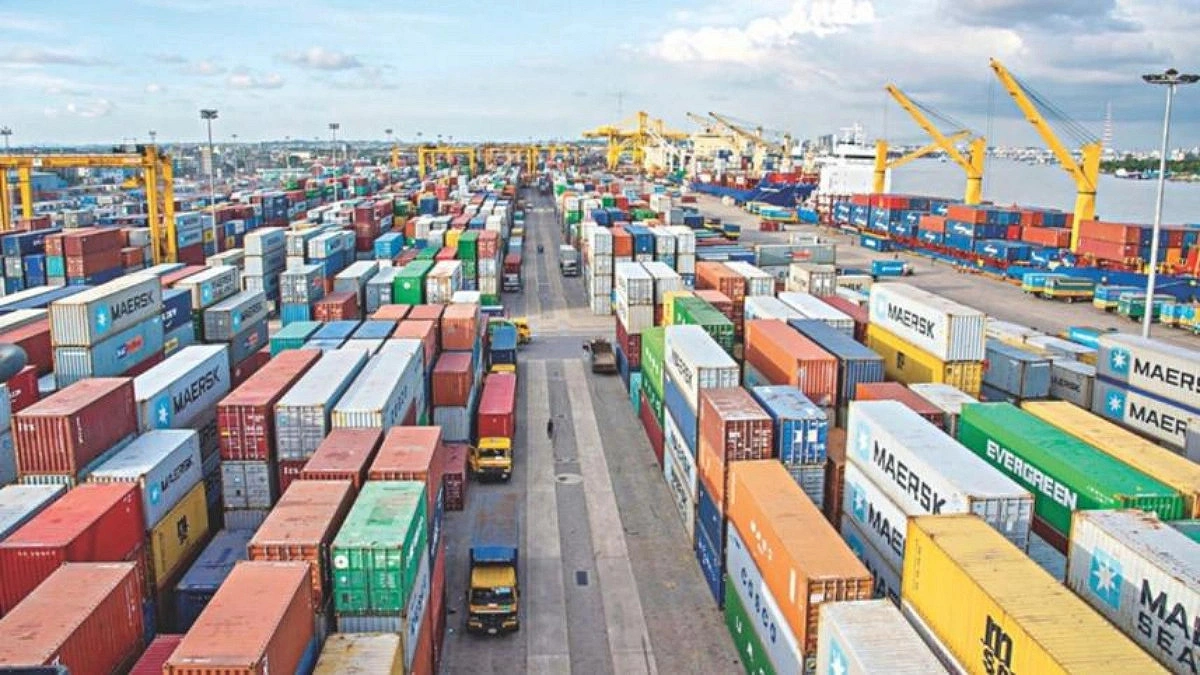
Chittagong Port earns around Tk 50 billion in annual revenue, of which NCT alone contributes about Tk 15 billion. Known as the “heart” of the port, the terminal handles roughly 45 percent of total container throughput. It is capable of accommodating the largest vessels, and with its modern equipment, cargo can be discharged within 48 hours.
Given these advantages, both local and foreign firms have shown strong interest in operating what is effectively a ready-made terminal. DP World was the first to submit a proposal. During the tenure of the now-banned Awami League government, a policy decision was taken to implement that proposal. After an interim government assumed office, the process advanced to the stage of a final agreement. However, when labour unrest paralysed the port, the interim government was forced to suspend the contracting process on 9 February. During the BNP government’s tenure, discussions quietly resumed. On 4 June, the Ministry of Shipping decided to proceed with negotiations on DP World’s proposal, a process that is currently ongoing.
Amid this back-and-forth, the “Saif–Cosmos–Everest Port Services Consortium” had already submitted a formal proposal to the Ministry of Shipping on 28 April, though it only became public on 8 June.
Saif Powertec, the consortium leader, had been operating Chittagong Port’s two most modern terminals—NCT and CCT—since 2006. When its contract expired in 2025, operation of NCT was taken over by the state-owned Chittagong Dry Dock Limited, while Saif Powertec continues to operate CCT.
Another consortium partner, Cosmos Enterprise, has been involved in stevedoring—now known as berth operations—at the port since 1989. The company is owned by BNP lawmaker and whip ABM Ashraf Uddin Nizami, who represents Lakshmipur-4 constituency. The third partner, Everest Port Services, has been working as a jetty or berth operator at the General Cargo Berth (GCB) since 1988. Its owner is ruling-party lawmaker Shahadat Hossain Selim from Lakshmipur-1.
Explaining how their proposal differs from others, Saif Powertec Managing Director Tarafadar Ruhul Amin said, “Ownership and control of the terminal will remain entirely with Chittagong Port. For 15 years, we will handle manpower, fuel, electricity, equipment maintenance, and container handling operations. Without any investment from the port, the authority will earn 92 dollars per container.”
According to an audit report by the port authority, Chittagong Port earns $161.82 from handling each container, while the cost per container is $56.15. After expenses, the net income stands at $105.67 per container.
So why should the port consider a consortium’s proposal offering a lower return instead of retaining this $105 net income? Responding to that question, Saif Powertec Managing Director Tarafadar Ruhul Amin said: “Over the next 15 years, the port would need to invest at least Tk 5 billion in equipment procurement, maintenance, and operations. Under our proposal, the port would be free from this investment burden. We would make that investment on behalf of the port.”
On the same day—28 April—local multinational MGH Group also submitted a proposal to operate NCT under a public–private partnership (PPP) model. MGH has offered $5 more per container in revenue than that of DP World and proposed an upfront fee of $25 million, compared with DP World’s $20 million. While DP World’s proposal would generate about $1.54 billion in revenue for Chittagong Port, MGH estimates total port earnings of around $1.68 billion under its plan.
MGH Group Managing Director Anis Ahmed said, “At every level, we have proposed higher revenue for the port. This would benefit both the country and the port. We would also get business, and the money would remain in the country. The Patenga Container Terminal is operated by a foreign company, and to this day they have failed to deliver even 50 percent of the productivity they committed to Chittagong Port. Despite that, talks are being held with another foreign operator, excluding us.”
MGH argues that because it owns its own inland container depot (ICD) and has contracts with seven foreign shipping lines, container flow at the terminal would be ensured from day one. As a fully locally owned company, its dividends would be reinvested domestically, and there would be no risk of a strategically important national infrastructure coming under the control of a foreign state.
Meanwhile, the process is underway to lease the entire NCT to DP World for 15 years under either a PPP or government-to-government (G2G) framework. Under this arrangement, the operator would be responsible for terminal operations, fee collection, and all commercial activities. DP World, a global-standard operator with extensive worldwide shipping connectivity, would provide these services in exchange for a fixed revenue share with the Chittagong Port Authority—the exact amount of which is still under negotiation. Under existing rules, DP World would be entitled to repatriate all of its profits abroad.

