
Adani Launches World’s Second-Largest Battery Energy Storage System

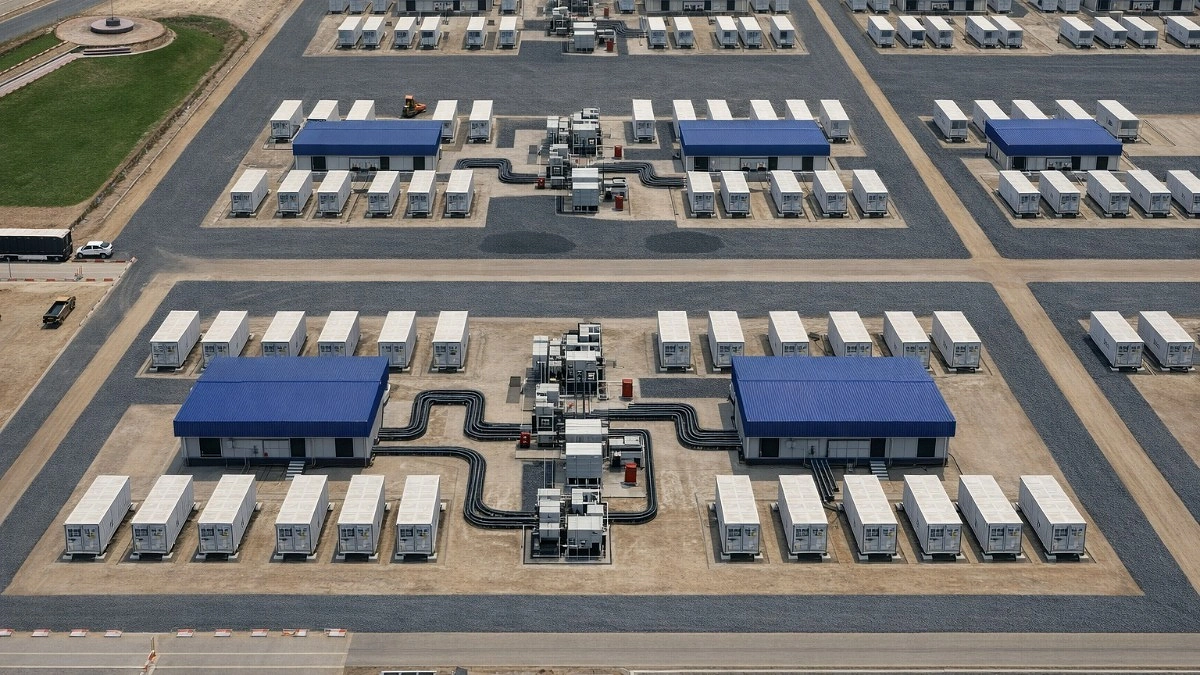
Collected Photo
Adani Green Energy Limited (AGEL), India’s leading renewable energy company, has commissioned a 3,370 megawatt-hour (MWh) battery energy storage system (BESS) at Khavda in Gujarat, India, making it the world’s second-largest battery storage network.
The battery bank will be charged using eco-friendly solar power, enabling it to deliver a continuous supply of 3,370 MW of electricity for one hour even in the absence of sunlight.
In simple terms, the system can store enough clean energy to power nearly one million homes for an entire day. Alternatively, the stored electricity can keep more than 12 million LED bulbs illuminated continuously for ten hours.
The facility also represents the world’s largest single-location battery storage deployment outside China and ranks among the fastest-executed projects globally.
As fossil fuel reserves decline and environmental concerns grow, the adoption of renewable energy is accelerating worldwide. There is a growing global focus on deploying battery storage alongside solar plants so that energy generated during the day can also be used at night. Many developed countries are now prioritizing battery storage capacity equivalent to at least 20 percent of their total installed solar capacity to ensure a more consistent power supply.
As part of this strategy, AGEL had earlier commissioned a 2,000 MWh BESS at Khavda in Gujarat, India. With the addition of a further 1,370 MWh system at the same site, the total capacity has now reached 3,370 MWh.
The company completed construction of the project in just 10 months, setting a global record for utility-scale battery storage deployment.
The commissioning of the project marks a major milestone in improving grid reliability, meeting peak-hour demand, and enabling round-the-clock availability of renewable energy. The battery storage system is expected to strengthen grid stability and ensure a continuous supply of green power.
The conglomerate plans to scale up its BESS capacity to at least 10,000 MWh in the 2027 fiscal year and further expand it to 50,000 MWh over the next five years.
Sagar Adani, Executive Director of Adani Green Energy Limited, said, “As renewable energy capacity scales rapidly, BESS infrastructure becomes critical for delivering reliable, round-the-clock clean power. This project is playing a major role in India’s clean energy transition. Our investments in battery storage reflect a long-term commitment to building future-ready clean energy infrastructure at global scale.”
The project integrates high-efficiency lithium-ion batteries with advanced technology for optimal energy storage.
AGEL is working toward a target of generating 30,000 megawatts of power at Khavda by 2029. Of this, power plants with a capacity of nearly 10,000 megawatts are already operational.
