
Transforming supply chains through empathetic leadership

Representational image collected.
A farmer in Rangpur is getting ready to head back home after loading his truck up with potatoes at four in the morning. By noon, a driver is eating a cold meal in his vehicle as he drives down the Dhaka-Chattagram highway. In Gazipur, a sewing operator is ending up her third night of overtime, as her buyer just demanded some design changes at the last minute. In Dhaka, a rider is delivering a parcel in the rain, as the customer complains that the delivery is nine minutes late.
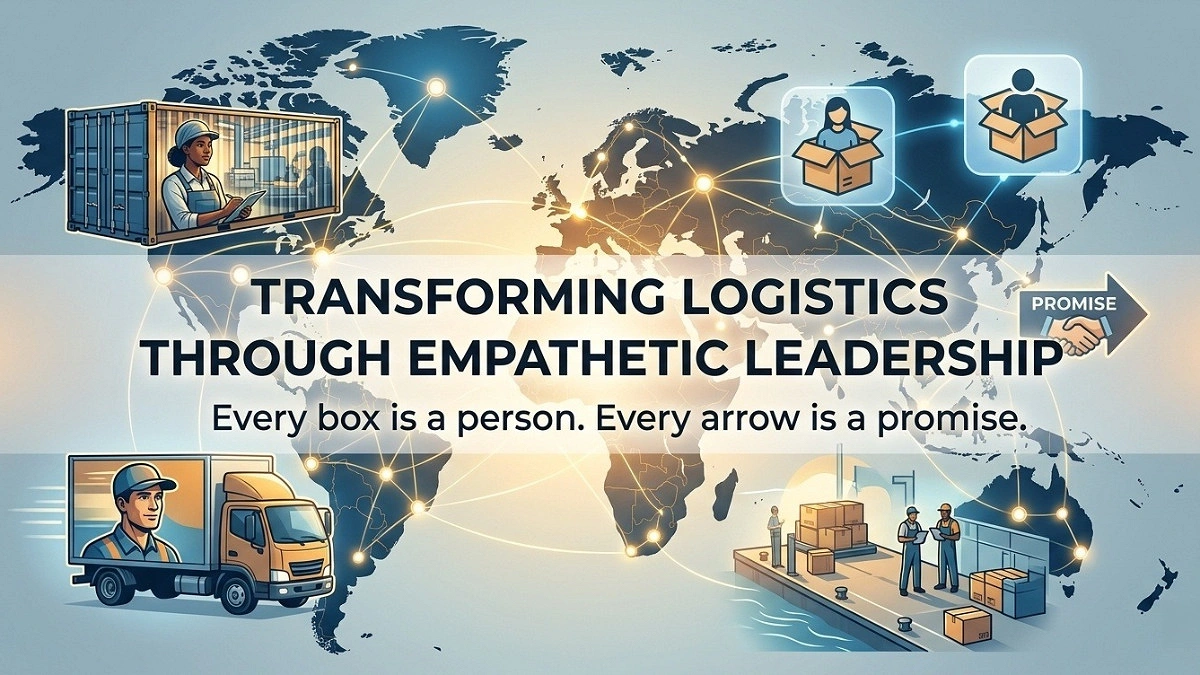
All of these people belong to one system. We call it a supply chain. We draw it as boxes and arrows. We measure it in lead times, landed costs and inventory turns. But every box is a person and every arrow is a promise that someone must keep. When we overlook this, our processes fail - first quietly, then loudly.
End-to-end supply chain management means seeing the whole journey of a product as one interlinked flow, from the field or the factory to the customer and back again through returns and recycling. Most of our organizations are not built this way. Procurement is judged on buying cheaply. Production is judged on volume. Logistics is judged on spending little. Sales is judged on promising much. Each department wins its own scorecard and the system as a whole grows slower and more fragile.
There is a painful truth here. Pressure always travels downward. When a brand squeezes price, the factory squeezes its subcontractor. When the subcontractor is squeezed, it squeezes wages, maintenance and rest hours. When a retailer delays payment by ninety days, a small supplier borrows at high interest to survive. The saving appears on one dashboard. The cost lands on the person least able to refuse it. That is not only unfair, but it is also unstable. Tired workers make defects. Underpaid farmers plant less. Sleepless drivers crash.
Fatematuz Zohora CSCM.
Bangladesh paid an extremely high price for this oversight. Rana Plaza was not only a structural disaster but also a supply chain disaster, where speed and costs were measured with great precision while measuring the impact on people's safety was not a priority. The reason for this is that we cannot manage what we have not measured. For too long we neglected to measure the impact on people. Empathy is not an act of charity in this field; it is a matter of designing and building a process that is based on realities of the people who have to implement it and not on the assumptions of the people who drew the flowchart.
Consider the everyday scenario when any merchant accepts unrealizable shipment date because declining it might appear as the indicator of an unwillingness to help. A planner realizes that it is impossible but remains silent, and the supervisor closes the unsolved issue by forcing extra hours from the employees. The quality of shipments suffers, resulting in rejections and losses due to air freight. The actions of all parties are rational, but the system reacts in an irrational manner. Empathy would allow the creation of a solution where the planner could state that the date is unacceptable and provide the date that can be achieved.
So weak processes in supply chain management are the opposite of empathy. By keeping forecasts secret, drawing up unclear rules and ignoring complaints, companies cause people to internalize the shock of supply shocks in their own bodies and in their savings accounts. Good design diffuses the shock. Sharing out forecasts allows others to make preparations. Setting lead times that a working day can absorb means paying vendors on time, because a missed salary is a missed meal for some family somewhere. Planning warehouse shifts around the last bus home treats the driver's siesta as a working part of the day, not an opportunity to squeeze in extra work.
World is moving towards compulsory due diligence across supply chains. Traceability will become a condition of market access, not a marketing bonus. A supply chain is finally a chain of promises between people who never meet. Every process exists to help them keep those promises. Design that way and empathy stops being a slogan. It becomes the most practical thing.
Author is a Certified Supply Chain Manager, ISCEA (USA).
